

Experts Talk: Modernising Movable Bridges With Raphael Costa
Experts Talk is an interview series with technical leaders from across our transportation program.
Practical Engineering Solutions for the Movable Bridges of Tomorrow
Movable bridges keep people and commerce flowing by providing flexible crossings that accommodate pedestrians, vehicles and trains without restricting water traffic. But in many cases, these structures were designed and built generations ago. Aging machinery that often requires on-site operators has owners looking for practical ways to replace or upgrade these complex structures with more efficient and streamlined processes.

Raphael Costa has focused on movable bridge engineering for about 25 years and has spent more than a decade at HDR. He leads our movable bridge program, supporting owners of all types of movable bridges — including bascule, lift and swing bridges for roadways, railroads and pedestrians. The team Raphael leads addresses every aspect of movable bridges’ life cycles, from advisory services and planning to design, construction support and asset maintenance. In this conversation, Costa shares what he’s excited about in movable bridges, what is new and where the field is headed.
Q. Many movable bridges are 50, 75 or even 100 years old. What modernisation tools should owners be aware of and exploring?
A. Any modernisation effort should start with information. Historically, data sat idle on the bridge systems until a problem occurred, at which point it was only downloaded to understand what happened.
Today, owners can stream that information to their office or devices through secure channels and track a bridge’s behaviour over time. That includes tracking faults and alarms, power quality, equipment temperatures and operating trends. They can use that information to schedule adjustments or component replacements before a failure sidelines traffic. Owners are also adding cameras, channel intrusion sensors, lidar sensors and more so they can confirm conditions visually and electronically.
On the controls side, today’s industrial computing systems with redundant processors, standardised inputs and clear alarm messaging give operators better situational awareness and faster troubleshooting. Depending on the bridge and its use, remote operation can also be explored, offering new efficiency and reducing demand for labour. Remote operation can provide notable benefits, but it does require reliability upgrades, thoughtful contingency planning and coordination with the Coast Guard and Army Corps of Engineers.
Q. What innovations has the movable bridge industry seen in the past few years, and what do you expect to gather more attention in the next few years?
A. There is constant innovation in this sector as owners and engineers push for better solutions and improved efficiencies, refusing to stick with what’s always been done before. Remote operation has really moved to the foreground, for example. Several owners now control bridges from centralised locations — an option that provides consistency and flexibility that otherwise would require staffing bridges on-site around the clock. I expect more owners to explore this option moving forward as their movable bridges are upgraded and can increasingly provide reliable electrical and mechanical diagnostics and monitoring information that make remote operation reliable and safe.
Another innovation in recent years has been the introduction of lightweight solid-surface deck options, especially orthotropic aluminum panels. These are creating weight- (and depth-) neutral replacements for aging open grid decks, allowing owners to gain a safer and smoother deck, and protect underdeck components against corrosion without a wholesale overhaul of machinery or supporting systems. Several projects are in design or installation now, and we will have stronger performance data within a few years.
We’ve also seen a growing use of hydraulic machinery in regions where concerns about cold weather once limited adoption. The technology is stable and cost-effective, easier to install than many mechanical systems, and engineered to perform in harsher climates.
Finally, supply chain realities and Build America/Buy America compliance are also pushing innovation. Teams are rethinking elements like submarine cables, specialty brakes and other long-lead components, sometimes shifting to alternative technologies or construction approaches to avoid bottlenecks.
Q. There aren’t many engineers who specialise in movable bridges. What makes movable bridge engineering such an exclusive club?
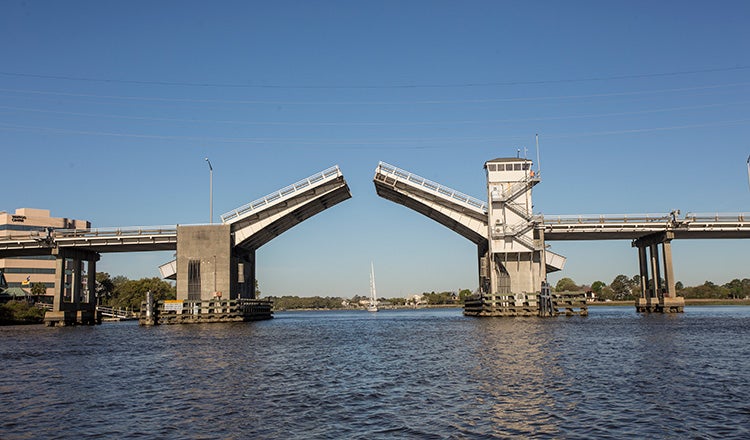
A. I believe there are a little under 2,000 movable bridges in the U.S. However, the work sits at the intersection of three disciplines. A movable bridge is a large machine that also happens to be a bridge. Its design and maintenance require coordinated expertise in electrical, mechanical and structural engineering. So the demand for constant maintenance is balanced by the limited number of these structures. There are only a few hundred engineers who concentrate on this niche across the U.S.
HDR is positioned to provide the specialised expertise that can help design and maintain these complex structures. Within HDR, our team comprises people with backgrounds in all of these disciplines who work together to develop and implement the custom solutions movable structures demand.
Q. What movable bridge projects are you particularly proud of?
A. I’ve been privileged to work on a number of notable projects, but the work we’ve done for CSX and its automation program has been a favourite because of its scale and return-on-investment to the owner. Over the past decade, our team has helped standardise controls and improve redundancy across dozens of movable bridges for the railroad in multiple states, pairing remote operation with structural, mechanical and electrical upgrades so the sites are reliable and safe to run from centralised control centres. It took time to align standards, messaging and construction practices, but the payoff is a system that operates with the same look and feel across each bridge while significantly reducing operating and maintenance costs for CSX. We’ve already assisted in work on two dozen or so bridges, and that effort continues, with almost 40 bridges to ultimately be upgraded.
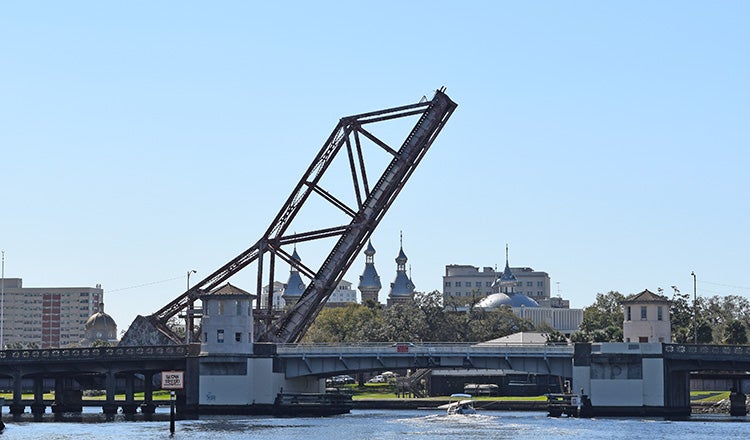
A smaller example that means something to me is the Hillsborough River Bridge in Tampa, just a few miles from the HDR office I work in. The historical rolling lift bascule bridge is more than 110 years old yet now operates remotely thanks to a carefully tailored upgrade that respected the historic structure.
Q. Movable bridges can have more asset management and maintenance complexities than fixed bridges. What technologies can owners employ to address those concerns?
A. Movable bridges will always need more care than fixed spans. Prudent owners make steady investments in information gathering and modernisation, then build toward bigger decisions with real data. That approach fits how our teams work, with experienced people spending the time to do things the right way, collaborating across disciplines and focusing on results that stand up to daily use.
For these complex structures, owners should consider a layered toolkit that provides multiple levels of quality control and monitoring.
- Standardised programmable logic controller (PLC) architecture and interfaces. Redundant processors, clear alarm nomenclature and common screens shorten diagnostics and training.
- Sensing where it matters. Proximity, lever type and rotary cam switches for gauging positions, channel intrusion detection to protect vessel traffic and cameras with preset views to verify conditions.
- Power quality, surge and lightning protection. Multilevel surge devices and inspected grounding protect sensitive equipment.
- Reliable communications. Hardened fibre, ethernet, cellular or satellite paths maintain a steady “heartbeat” between local and remote PLCs. If the heartbeat fails, systems default to safe mode.
- Data logging and analytics. Event histories, fault trends and drive health data support targeted maintenance and incident reviews. Owners decide what to capture, where it lives and how it will be viewed.
Add routine inspection, parts standardisation and training, and you get fewer surprises and shorter outages while extending the serviceable life of these aging assets.
Q. When is a new or replacement movable bridge the right answer, and how do you approach those designs?
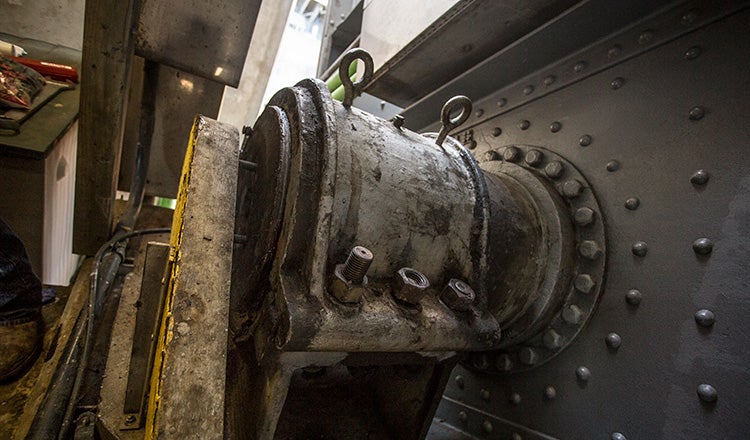
A. If a replacement is not driven by volume (adding traffic lanes or railroad tracks) or unknown foundation, replacement becomes a realistic path when rehabilitation pushes too many systems beyond their useful life. Deck systems, counterweights, machinery and electrical components interact closely; sometimes a deck change triggers machinery replacement, which then triggers electrical system changes and further structural upgrades… These cascading effects can quickly add up.
Owners can compare costs and risks by pairing monitoring data, incident records and expected service life. We help owners test these scenarios in planning, then carry concepts through preliminary and final design. One current project nearing construction right now is an architecture-driven pedestrian bridge in Wisconsin, for instance. The same multidisciplinary team that rehabs and automates bridges brings lessons learned into new designs, from deck selection to machine layout and construction staging, all meant to maximise operational efficiency and service life of new bridges.
Inspiration & Advice
Q. How did you become interested in being a movable bridge engineer?
A. It was almost accidental. I’m an electrical engineer by training and figured I would land in the power industry. Growing up around large infrastructure, I liked the idea of systems that serve a community. A job posting for an electrical engineer working on drawbridges caught my eye soon after college, and one interview made it clear the work blended field and office work with everything I enjoyed: controls, power and civil infrastructure. I switched paths and never looked back.
Q. What advice do you have for someone who is considering a career in movable bridges?
A. Constructability and maintainability will be a big focus of a movable bridge engineer. Figuring out how elements and systems come together and are maintained will help you design reliable and durable structures. A great way of mastering these concepts is to spend as much time in the field as you can early on. Seek field experience and spend time on construction sites and inspecting bridges.
Each Experts Talk interview illuminates a different aspect of transportation infrastructure planning, design and delivery. Check back for new insights from the specialised experts and thought leaders behind our award-winning, full service consulting practice.


