

Experts Talk: Safer Rail Crossings With Sara Clark
Experts Talk is an interview series with technical leaders from across our transportation program.
How Data-Driven Planning and Engineering Strategies Advance Rail Crossing Safety
The ongoing challenge of highway-rail grade crossing incidents, along with billions of dollars in federal funding opportunities, has renewed focus on enhancing crossing safety in the United States. According to U.S. federal data, 2,271 highway-rail grade crossing incidents were reported in 2025, consistent with levels in 2023 and 2024. In response, transportation agencies, communities and railroads are embracing innovative planning, design and engineering strategies that improve safety, operational efficiency and mobility at critical grade crossings and across corridors.
Sara Clark, P.E., is a principal rail planning manager in our freight rail practice. She brings 25 years of experience working with public agencies and railroads to develop practical and corridorwide solutions that improve safety at highway-rail grade crossings. In this interview, she shares how the planning and design of crossings are shifting toward more corridor-wide approaches, where technology is making a difference, and why community outreach is critical to delivering projects that improve safety and mobility.
Q. What new planning and design approaches are changing rail crossing safety?
A. There is a renewed focus by transportation agencies on low-cost, high-impact solutions that address safety across a corridor rather than just at individual crossings. Solutions such as high-visibility traffic signs and dynamic envelope pavement markings help increase driver awareness and are effective when broadly applied across multiple crossings. These improvements are quick to add and provide meaningful safety benefits without the cost of major infrastructure improvements.
Design strategies address gaps that traditional warning devices do not resolve. A leading cause of incidents at highway-rail grade crossings is vehicles getting stuck on tracks at “humped” crossings. This is often caused by skewed crossings, limited space between intersections and tracks, or uneven road profiles. Addressing these issues requires a better understanding of existing conditions across the corridor.
HDR identifies these problem areas by analysing publicly available data on crossing profiles and roadway geometry with a customised analytical tool to produce 3D models that identify potential improvements. This allows agencies to prioritise crossings where warning devices or roadway improvements may be most beneficial, while also updating information in the U.S. DOT Crossing Inventory for future planning.
In Wyoming, for example, HDR supported the State Rail Plan and Grade Crossing Action Plan by evaluating 388 public grade crossings across multiple corridors. Using an innovative approach that incorporated United States Geological Survey elevation data, we identified complex vertical profiles that could cause trucks and buses to become stuck on crossings. This allowed the state to better understand conditions across the corridor and make more informed investment decisions.
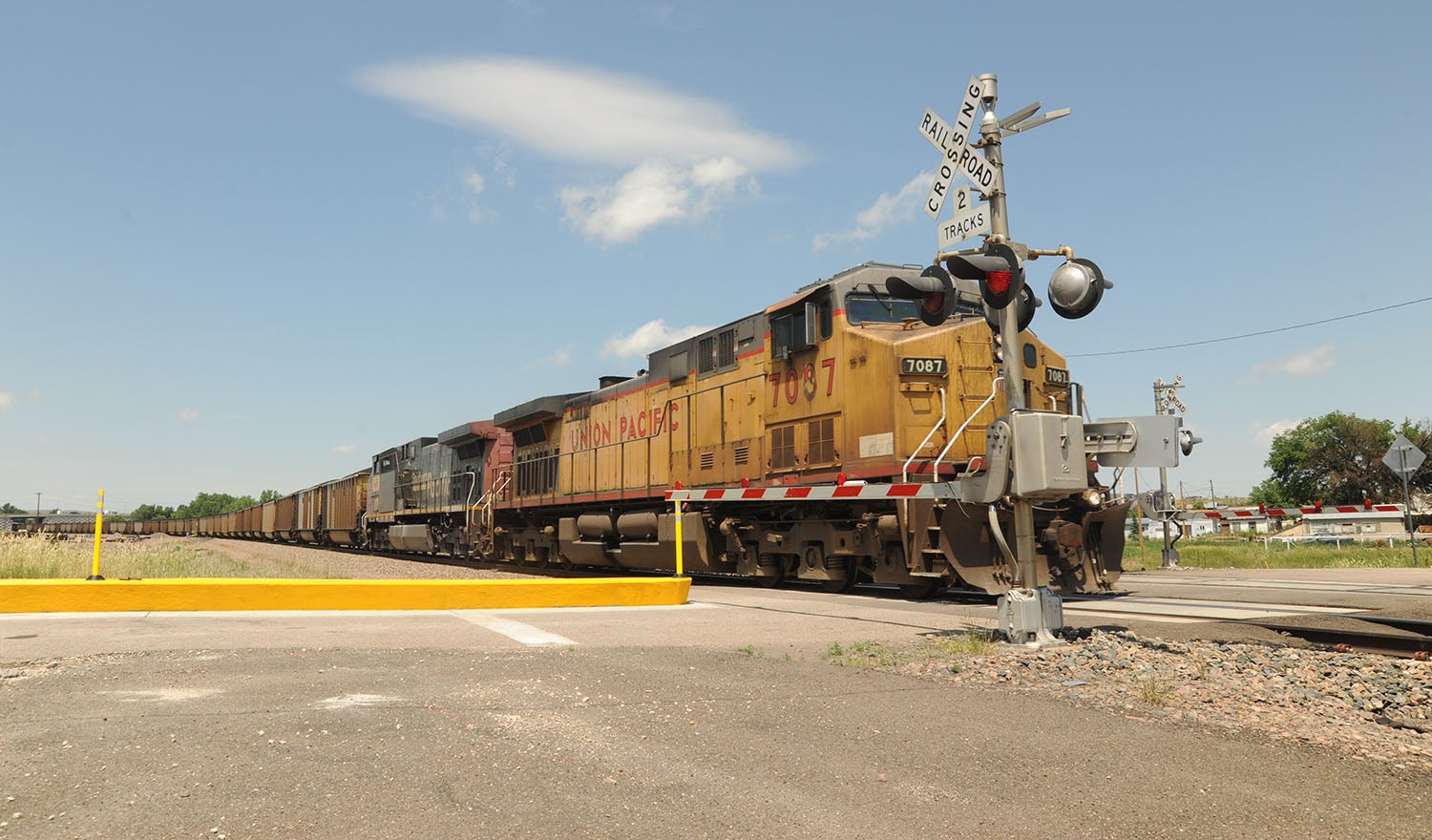
This analysis complements broader corridor-wide planning. By combining accident history, train traffic, vehicle counts and track geometry, agencies can prioritise safety measures and investments that benefit an entire network rather than reacting to individual crossings. This approach helps agencies target investments where they can reduce risk most effectively, improving safety outcomes across the network rather than at isolated locations.
Q. What about new technologies? With more information available than ever before, how is that data being used to improve crossing safety?
A. New technologies are reshaping crossing safety beyond traditional intersection traffic control, helping agencies and railroads move from static warning systems to more coordinated and real-time approaches. One key advancement is traffic signal integration through preemption. Preemption signal timing starts when a train is detected, allowing vehicles to clear the crossing and move traffic away from the tracks.
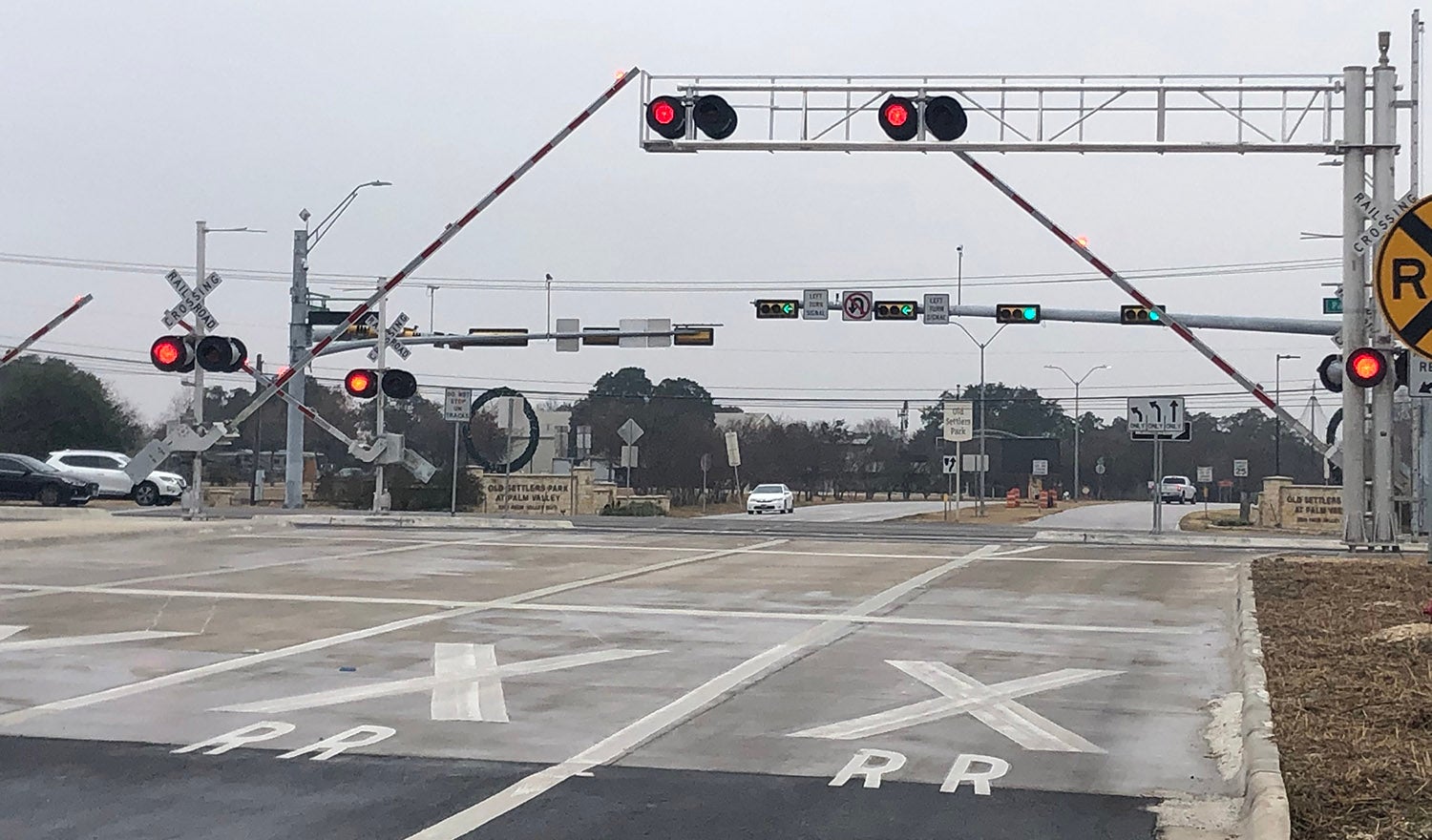
More advanced signal preemption modules are taking this further. By incorporating train speed, length and location, signal systems can begin adjusting traffic patterns at an intersection before a train arrives. HDR developed a dynamic system concept called Signal Management Alternative Rail Timing, or SMART. It uses real-time data from traffic controllers, detection systems and rail equipment to coordinate signal timing even before preemption is triggered. By identifying an approaching train several signal cycles ahead, the traffic management systems can help clear more vehicles from crossings, reduce unnecessary stops and improve overall traffic flow, all prior to the train’s arrival.
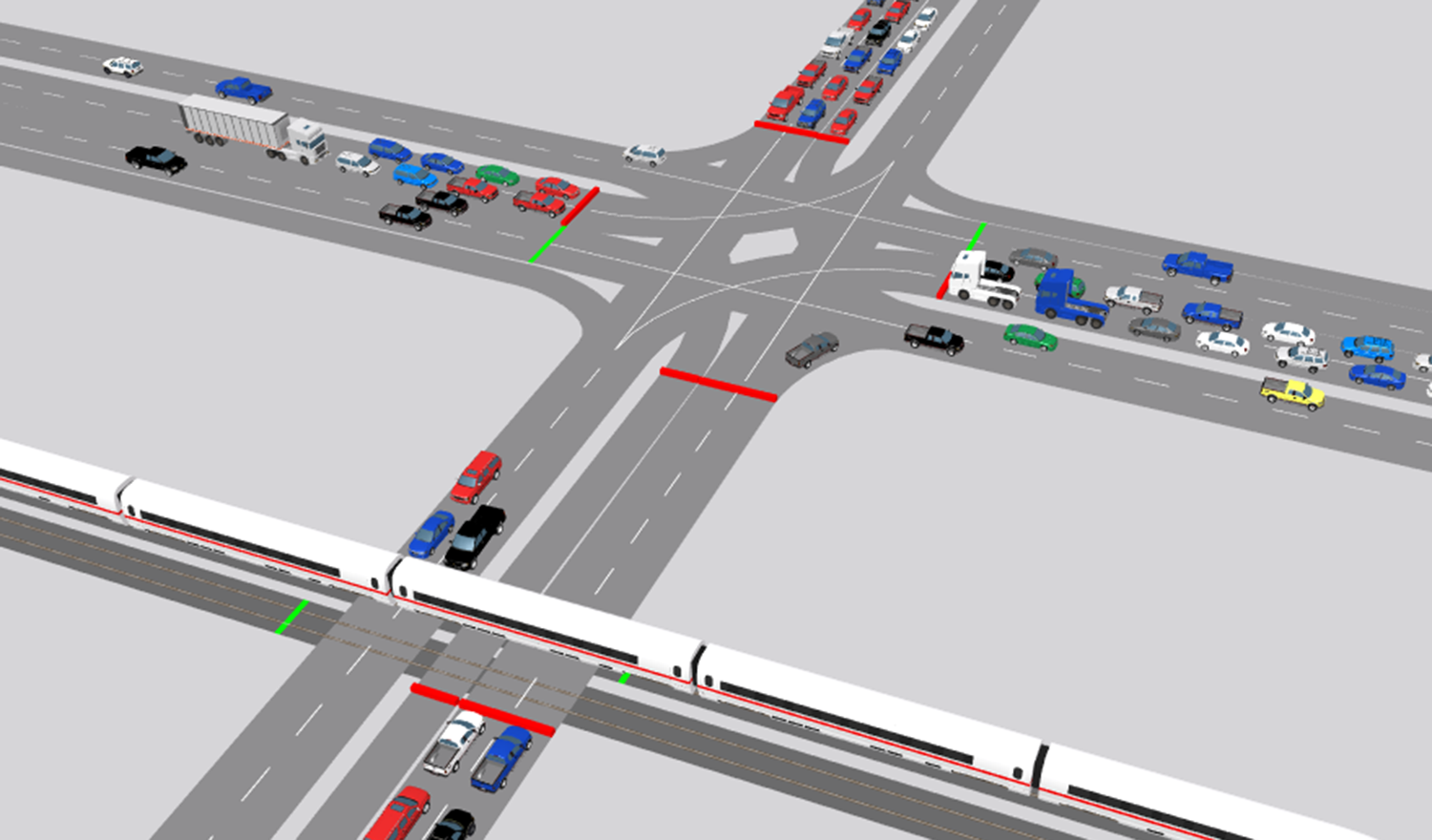
Rail crossing information systems (RCIS) are another area of rapid innovation. Stopped or slow-moving trains can disrupt emergency response routes and create major travel delays in communities that have developed around rail corridors, industry facilities, and railyards. RCIS uses real-time train data and predictive analytics to estimate arrival times and how long a blocked crossing could last. It shares that information through navigation apps, digital roadside signs and traffic management centers, providing informed, on-demand decision-making that helps agencies improve emergency response times and reduce the impacts of train-occupied crossings.
Q. How have communities and infrastructure owners pursuing safety improvements altered their strategies?
A. Agencies are exploring more corridor-wide strategies that combine improvements to increase safety, including crossing eliminations, grade separations, signal upgrades or roadway improvements. These strategies can also address pedestrian and bicycle activity at crossings, particularly in areas with higher foot traffic.
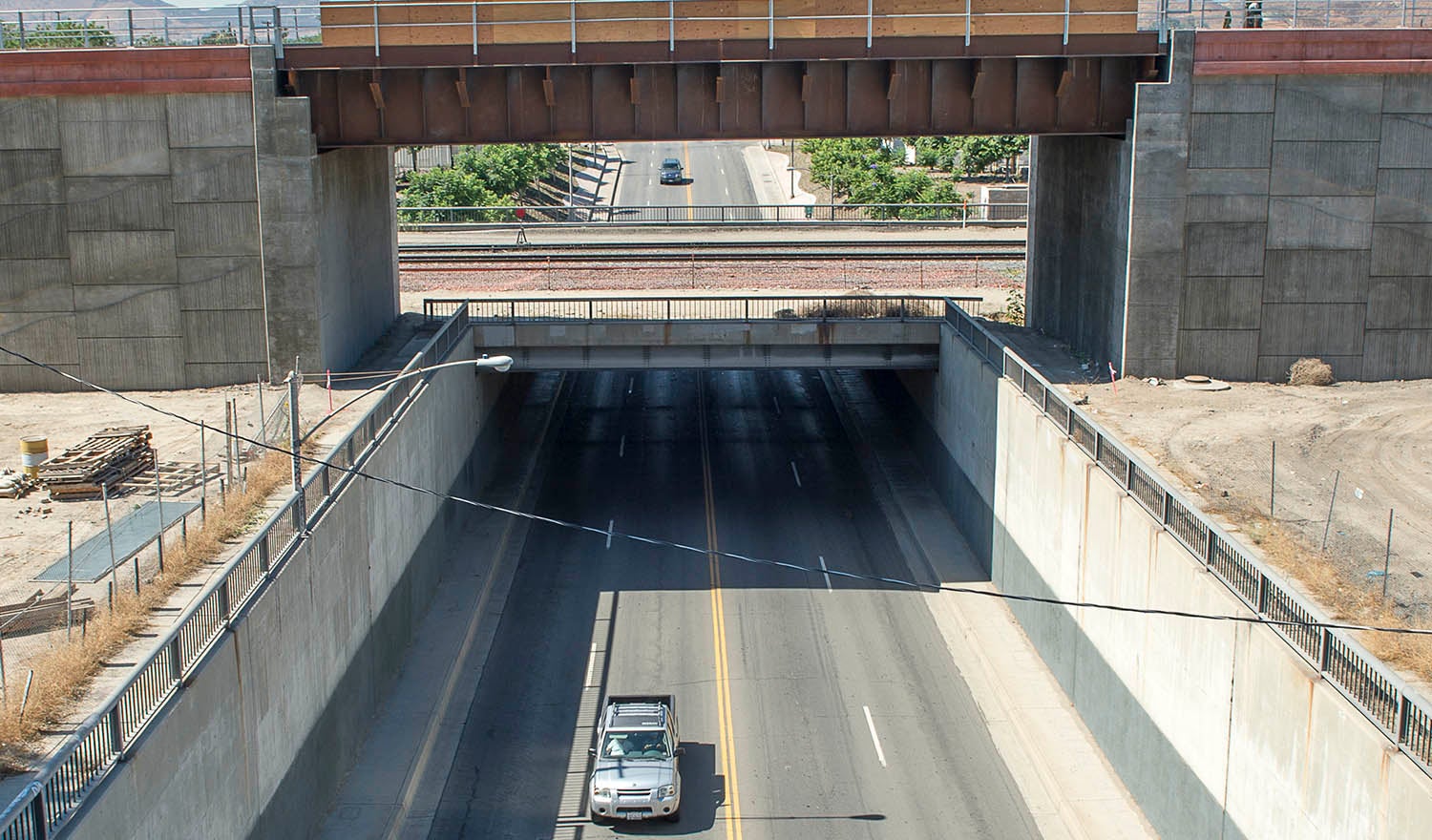
While warning devices remain essential, they alone will not drive the next generation of rail safety performance. Closing redundant or low traffic volume crossings while improving nearby locations can reduce conflict points, enhance safety, and improve both roadway and rail operations. This approach also aligns with the goals of federal discretionary grant programs, which prioritise projects with clear safety benefits.
Another shift is that agencies are purposefully advancing safety projects through the project life cycle before pursuing construction funding. By completing planning, preliminary engineering and sometimes final design, agencies can better define safety benefits, costs and expected outcomes while building consensus early among stakeholders. For example, HDR supported a multimillion-dollar Railroad Crossing Elimination grant in Ohio that advanced preliminary engineering and environmental review for an eventual grade separation and crossing closure, setting up the project for future construction funding.
Q. How can communities and railroads work together to deliver safer solutions?
A. Improving safety at crossings requires agencies and railroads to align operational priorities and make joint decisions about how corridors function. While their perspectives may be different, their goals are the same: fewer conflicts, fewer incidents and more predictable movement.
Engagement should start early with a shared understanding of existing conditions, including traffic patterns, train operations, emergency response routes and crash history. This often involves working sessions tied to major project milestones, allowing stakeholders to evaluate trade-offs and identify solutions that improve mobility and safety across a corridor. In Emporia, Kansas, collaboration between the city and BNSF is advancing crossing safety improvements. While still in progress, the ongoing coordination and community involvement are leading to mutually supported solutions that boost safety while improving mobility for drivers, pedestrians and bicyclists.
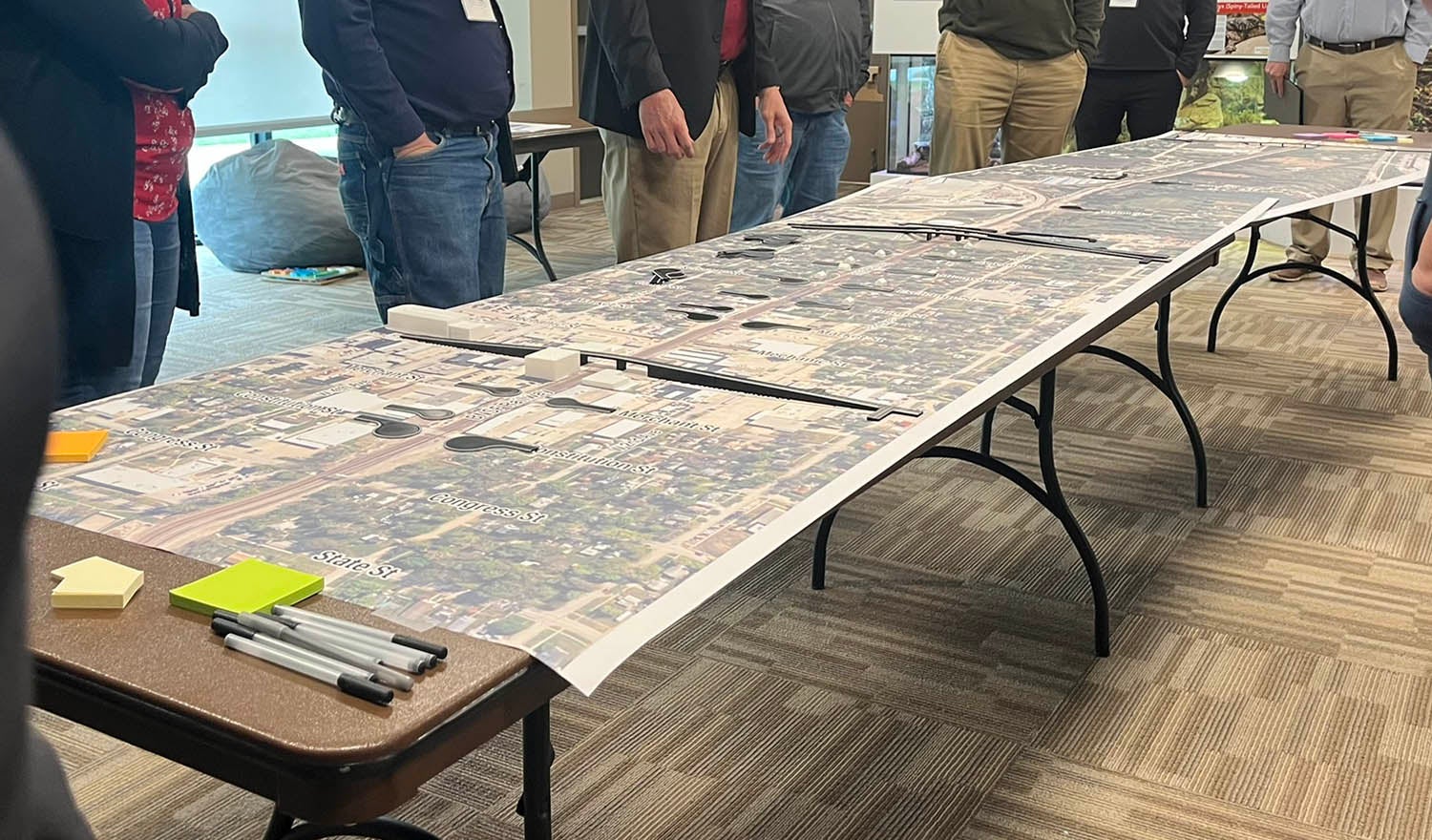
Just as important is how the conversations are framed and understanding when discussions may need to be paused. Reducing technical jargon and focusing on shared benefits, such as improved safety, reduced delays and more reliable operations makes it easier to build support among stakeholders and the public. At times, as I’ve experienced during rail crossing improvement projects, differences in priorities or constraints may stall progress. In these cases, stepping back to reassess objectives and explore alternatives can lead to stronger and more widely supported solutions.
Q. What considerations should be made for safety as rail, vehicle and pedestrian traffic continue to grow?
A. Agencies are increasingly incorporating rail corridors into transportation planning as rail, vehicle and pedestrian traffic continue to grow. This shift helps communities identify where grade separations or crossing closures work best while designing infrastructure that can accommodate future operational changes or capacity needs.
Just as important is incorporating the needs of pedestrians and bicyclists earlier in the planning process. This includes pedestrian signals, high-visibility crosswalks, sidewalks, and bike lanes increasing overall safety and connectivity while reducing the need for costly changes later.
Land use planning plays another significant role. Coordinating land-use decisions with transportation planning helps agencies avoid new safety challenges as new development occurs along rail corridors. This includes avoiding driveways too close to crossings, providing sufficient space to prevent vehicles from queuing on tracks, preserving space for future grade separations and maintaining emergency responder access.
Taking a corridorwide view allows agencies, railroads and practitioners to anticipate and mitigate risks proactively rather than responding after issues arise.
Inspiration and Advice
Q. How did your career lead you to this specialty?
A. My path to railroad crossing safety really started early in my career working in small, rural communities. I quickly learned that projects are more than just solving an engineering problem; they’re about improving people’s lives. You’re working with communities where project design can carry real impacts on community assets and the way people move through their day. That experience taught me to listen first, understand local context and look beyond the technical solution. Over time, that perspective naturally led me to understand that the challenge is not only designing effective improvements, but making sure they truly work for the communities they serve.
Q. What advice do you have for others considering a career improving railroad crossing safety?
A. A career in crossing safety is more than just an engineering assignment. Railroad crossing safety is about improving real-world outcomes at the intersection of infrastructure, operations and human behavior. I recommend that every early career professional spend time in the field, learn how railroads operate and get comfortable working with data to tell a compelling safety story. Safety work can be complex, but the impact of helping prevent injuries and saving lives in communities every day is tangible. That sense of purpose is what makes this field so rewarding.
Each Experts Talk interview illuminates a different aspect of transportation infrastructure planning, design and delivery. Check back regularly for new insights from the specialised experts and thought leaders behind our award-winning, full service consulting practice.
