

Experts Talk: Planning Passenger Rail in Shared Freight Corridors With Anna Lynn Smith
Experts Talk is an interview series with technical leaders from across our transportation program.
Evaluating Transit Opportunities and Setting up Projects for Success Before Design Begins
As state departments of transportation (DOTs), transit agencies and other transportation authorities look to expand passenger rail service, many are exploring existing freight corridors as part of the solution. For some, that means securing trackage rights or a temporal separation from a host railroad. For others, it means acquiring a rail corridor to create greater flexibility for future passenger service.
The decisions made before design can influence costs, service levels and operational flexibility for decades. For agencies evaluating freight corridors, early choices often determine whether a project advances efficiently or faces significant hurdles.
Anna Lynn Smith, AICP, intercity and high-speed rail lead, helps agencies identify and evaluate viable corridors and move projects from early planning into design and implementation. She currently manages the preliminary engineering and environmental phase of the $1.38 billion Charlotte Area Transit System (CATS) Red Line project in North Carolina. In this interview, she shares how agencies can evaluate opportunities, navigate trade-offs and position shared corridor projects for success.
Q. How does an agency decide between purchasing freight rail corridors for passenger rail projects or securing operating access?
A. When we conduct alternatives analyses for passenger rail agencies, we look at everything from existing rail corridors and highway medians to utility corridors and entirely new greenfield alignments. Freight routes are attractive options because they typically offer the shortest route between urban destinations.
While passenger rail has always been interested in utilising freight routes, there has been a recent growing interest in agencies acquiring freight lines. Ownership provides agencies additional flexibility to offer more frequent service, expand operations, streamline infrastructure projects and perform construction projects.
I’ve seen this trend toward acquisition play out at state DOTs, transit agencies and regional transportation authorities. For example, the Virginia Passenger Rail Authority (VPRA), which was created to expand and improve passenger rail service across the commonwealth, has made corridor acquisition part of its long-term vision. Another example can be seen in Charlotte, where the city acquired its Red Line corridor from Norfolk Southern (NS). In that case, the freight railroad sold the property to the city and reserved operating rights over the line.
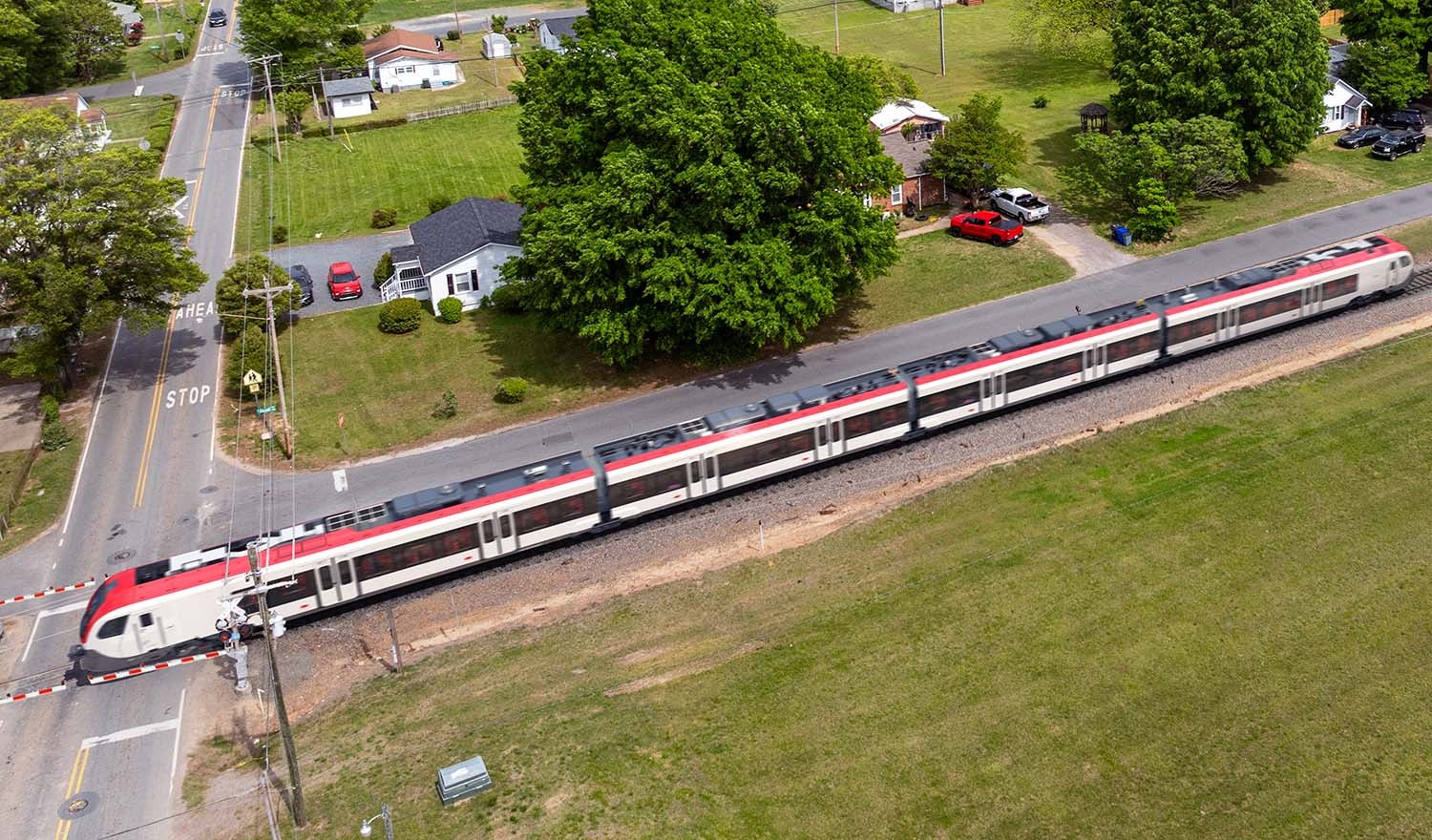
However, ownership is not always the right choice. Corridors with high volumes of freight traffic have less availability for passenger rail. To help agencies determine the best path for them, I focus early discussions around three key questions:
- How much passenger service is desired or needed?
- How important is future operational flexibility?
- How valuable is the corridor to the freight railroad that owns it?
Understanding the answers to these questions helps clarify whether the benefits of ownership outweigh its costs and responsibilities. Agencies should carefully evaluate ownership and leasing options to select an approach that aligns with their risk tolerance, financial capacity and long-term objectives.
Q. When is a freight corridor a good candidate for passenger rail? When is it not?
A. The process starts with understanding potential ridership. Before evaluating rail infrastructure options, I want to understand where people want to travel, where growth is happening and what transportation challenges exist today. In addition to demand, I’m assessing geographic constraints and land use patterns to determine whether commuter rail, light rail or another mode is the most appropriate solution. State rail plans and long-range transportation plans frequently serve as a starting point by identifying future mobility needs, understanding stakeholder priorities and defining long-term goals.
Once a travel market has been identified, the next step is to evaluate potential corridors. Often, the strongest options connect major population or employment areas, support future growth and have low freight traffic volumes. Lightly used freight corridors usually offer more flexibility because adding passenger service typically requires fewer operational changes and less infrastructure investment. Existing station buildings and potential for multi-modal connectivity will also influence corridor selection.
The Charlotte Red Line is a good example. Population growth north of the city, combined with the NS O-Line's north-south alignment and light freight activity, created an obvious opportunity to explore the potential to connect growing communities with key destinations in the city via this freight corridor. Looking at the corridor on a map, the opportunity is fairly intuitive, with the rail line passing through the centre of multiple municipalities along the way.
Heavily used mainline freight corridors change the equation. While passenger rail can be successful on those corridors, accommodating it while maintaining freight operations requires major investment to support the increased rail traffic, such as adding track capacity, creating passing sidings, upgraded signals, new interlockings and grade separations. Ultimately, the more critical a line is to freight operations, the more complex and expensive passenger rail implementation may become.
It is also important to recognise when an existing freight corridor may not be the right solution. High-speed rail is a good example. On the Cascadia High-Speed Rail program in the Pacific Northwest, planners determined early in the process that existing rail alignments may limit the speed and reliability of HSR. Accordingly, the program is instead exploring a new alignment.
Q. What should agencies understand about working with host railroads before a project advances?
A. The most critical thing an agency can do is engage with the host railroad early. Initial analysis of public data can provide freight traffic volumes, track speeds and operational characteristics, but the host railroad must be part of the conversation before a project advances. Its operating requirements and priorities will guide the development of the official working agreement. Agencies that have the most success begin building relationships long before they need formal participation, creating a foundation of trust and communication. Often, I work closely with my freight railroad colleagues who understand the nuances of the freight industry, know the appropriate railroad stakeholders and can help establish those connections.
Operations modelling can be invaluable in showing how freight and passenger trains will interact, where operational conflicts could occur and what infrastructure improvements may be needed to mitigate these conflicts. Agencies can then use those findings to have data-backed discussions with host railroads about capacity, risk and future investment needs. On the Charlotte Red Line, operations modelling is helping evaluate future interactions between passenger service, Norfolk Southern freight traffic and nearby CSX operations, providing information that will inform future coordination and infrastructure decisions.
Also essential is the critical insight that host railroads can bring in early discussions, highlighting important capacity issues or other concerns that are not initially apparent. Being aware of challenges early helps agencies create realistic expectations of project cost, complexity and schedule.
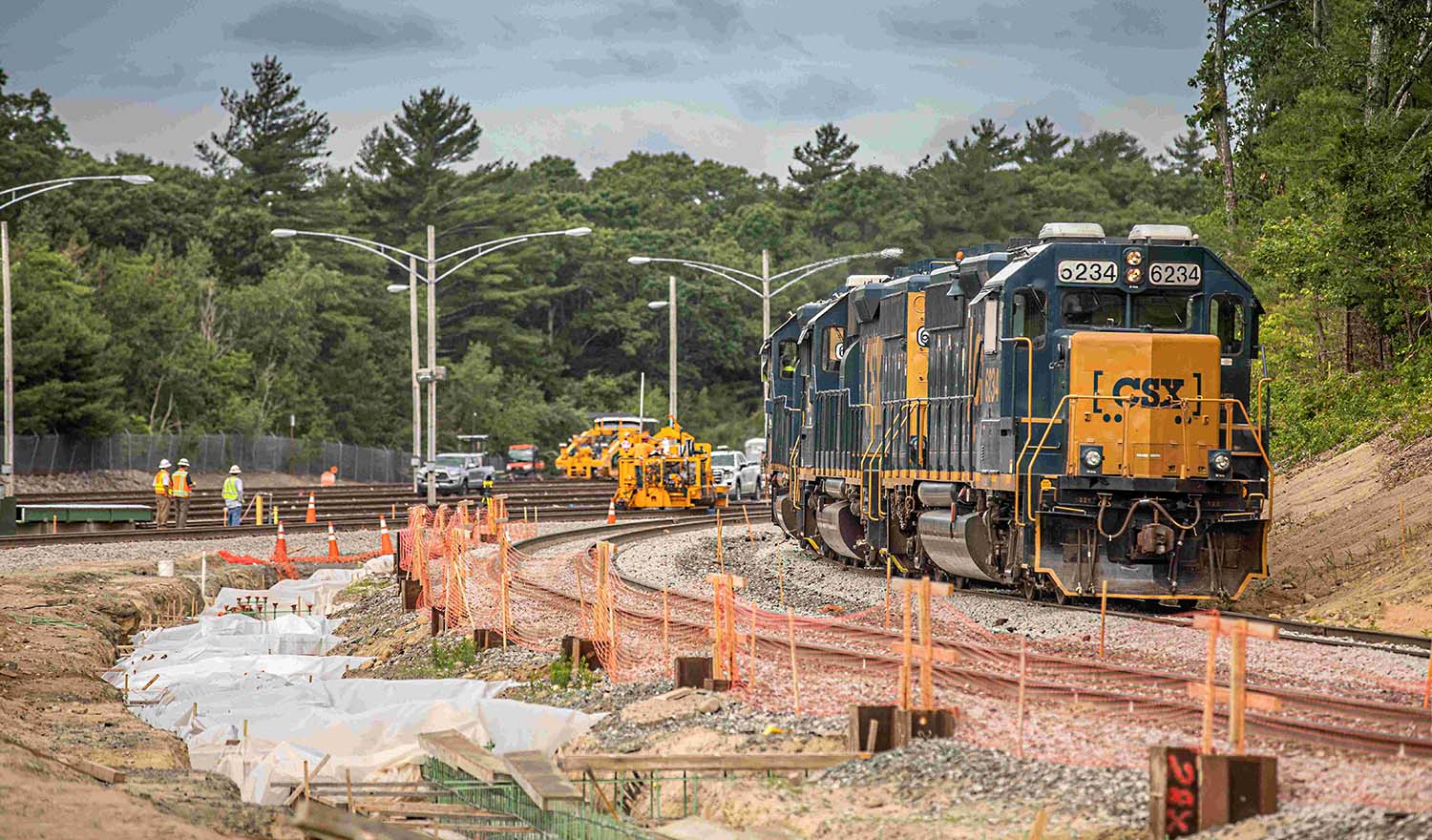
In many cases, simply getting a freight railroad to the table can take longer than expected. Building realistic project schedules, identifying funding mechanisms to reimburse railroad stakeholders for their time and approaching conversations with an understanding of railroad priorities can help projects gain traction. While agencies see the benefit of examining alternatives during the planning stage, railroads prefer a clear service plan. Although plans can evolve during the project, too many scenarios can discourage a host railroad’s participation. Ultimately, agencies should view railroad coordination not as a single milestone but as an ongoing process.
Q. How can shared corridors create value for both passenger and freight rail operations?
A. A misconception I often come across is that shared corridor projects are a competition between passenger and freight interests. And initially, railroads may not be interested in collaborating on passenger rail projects if they see no clear benefit to their operations and business priorities. But in my experience, successful projects can create value for both passenger rail agencies and freight railroads.
For example, a passing siding that accommodates passenger service can also improve freight flexibility. Additional track capacity can support freight performance while creating room for new passenger operations. Upgraded signals, new interlockings and grade-separated crossings can also improve safety, capacity and operational flexibility for both service types.
Funding opportunities can help align interests. The National Railroad Partnership Program, the Consolidated Rail Infrastructure and Safety Improvements (CRISI) program, and other federal discretionary grants can be used for infrastructure improvements that benefit both passenger and freight operations. In some cases, this investment can help advance mutually beneficial projects that improve mobility, safety and operational performance for both passenger and freight rail operations.
The Charlotte Red Line is a prime example of how shared corridors work best when agencies and railroads focus on practical solutions rather than competing priorities. In this case, a lightly used corridor created an opportunity for passenger service while addressing infrastructure and maintenance responsibilities that the railroad no longer viewed as central to its operations. The result can be a true win-win-win for railroads, agencies and the communities they serve.
Q. Once a corridor is identified, what does it take to keep the project moving forward?
A. Passenger rail projects take years or even decades to move from idea to service. During that time, leadership can change, funding priorities shift and stakeholder support wanes. Maintaining momentum requires a clear vision, devoted project champions, dedicated funding and a strong understanding of the process ahead.
Advancing a shared corridor rail project heavily depends on coordination with rail corridor owners. The transition from planning into preliminary engineering and formal National Environmental Policy Act (NEPA) processes requires formal agreements between the parties that establish clear expectations, define roles and responsibilities, and create a framework for ongoing coordination. These agreements also establish how railroads will be compensated for the staff time and resources required to support project development and design reviews.
Once that coordination is underway, agencies should stay engaged. Continuing regular meetings, having clear agendas and setting realistic review schedules keeps projects moving forward while creating opportunities to address concerns early. Agencies should also remember that railroads have their own operating requirements, priorities and resource constraints, and productive long-term working relationships can take time to develop. Those priorities could also change during project development. Experienced project teams account for this reality by maintaining communication and adapting strategies as railroad needs and operating conditions change.
Advice & Inspiration
Q. How did you become involved with passenger rail planning?
A. I have always been drawn to the “bigger picture” perspective of infrastructure projects, beginning with my engineering internships as an undergraduate. This perspective became focused over the years on non-highway modes of transportation and has afforded me numerous opportunities to become involved in the early stages of passenger rail projects throughout my career. Most recently, my focus has been on commuter, intercity and high-speed rail.
Q. What advice do you have for emerging professionals who are interested in rail planning?
A. Be open to learning about different modes of transportation! I will admit a (slight) bias, but I always encourage young engineers and planners to consider getting involved in a transit or rail project to see if it is a good fit. There is always a need for professionals with this type of specialised modal experience, and you may find yourself a career opportunity that you did not consider, or at the very least, have an appreciation for the role that transit and rail play in our everyday lives.
Each Experts Talk interview illuminates a different aspect of transportation infrastructure planning, design and delivery. Check back regularly for new insights from the specialised experts and thought leaders behind our award-winning, full-service consulting practice.


