

Experts Talk: Sustainable Bridge Design With Rob Richardson and Don Nguyen
Experts Talk is an interview series with technical leaders from across our transportation program.
Incorporating Sustainability into Bridge Design Starts During Initial Planning

Over the past decade, sustainable bridge design has evolved from being an implicit outcome of good engineering to an intentional, measurable objective. Today’s owners balance cost, risk and long-term performance while expectations around resilience and environmental impact continue to increase. The most effective strategies start early, when teams can influence decisions that shape a bridge’s full life cycle. From planning to the end of a bridge’s useful life, sustainability can be incorporated into the process.

Rob Richardson, P.E., ENV SP, is our West region bridge leader and past bridge and structures sustainability program leader. He has more than 30 years of experience in project delivery of all phases from early planning to final plans and specifications. He believes that sustainable bridge practices begin during the planning stages.
Don Nguyen, P.E., SE, ENV SP, STP, is our current bridges and structures sustainability program leader. He has experience in project management, design, analysis, construction services, specifications and inspections. He has the technical expertise to help clients determine the best way to incorporate sustainability in bridge design, from small to signature bridges.
Q. Why is sustainability a core consideration for bridge owners today?
Don: Sustainability remains a core consideration because bridge owners must balance limited public funding, regulatory requirements and long-term performance expectations. One way to be good stewards of taxpayer dollars is to design sustainable structures, making the most efficient use of the money allocated. By designing structures with the entire life cycle in mind, as well as maintaining existing structures before they deteriorate to the point of no return, we can extend their usable life. Designing a bridge with sustainability in mind can increase the initial cost of new structures in some cases but save money in the long run.
Rob: As a society, we should constantly be looking for ways to enhance the sustainability of our infrastructure. We work with limited natural resources.
In many ways, bridge construction has always included elements that are now considered sustainable. For example, bridge design codes require a minimum 75-year design life, and specifications for concrete mix designs make use of waste products like blast furnace slag and fly ash that would otherwise end up in a landfill. Bridges also utilise a significant amount of steel, either structural steel or reinforcing bars, largely made from recycled steel.
But now many owners are looking to go further, sometimes spurred by increasing public interest in sustainable practices that enhance community resiliency. At the agency level, effective leadership and a strong commitment to reaching sustainability goals will help an organisation move toward sustainable design.
This requires engagement across the entire team, including lead designers. To deliver a high-performing bridge, the team must think about its lifespan from conception to decommissioning while accounting for community needs, responsible resource use and long-term resilience. Resilient design enhances public safety, protects economic activity and minimises environmental impacts associated with the need for reconstruction.
Q. What makes a bridge sustainable?
Rob: A sustainable bridge should address all the aspects associated with the broad term “sustainability,” and that starts with asking, “Is this the right project?”
Key questions as you conceive a bridge project:
- Has the alignment been coordinated with structural needs to minimise impact?
- If we change the span length or arrangements, how much could we reduce the impact on a greenfield?
- Are we connecting communities or dividing them with our structure?
This last question can come into play when we consider using retained fill instead of bridges to reduce construction costs. Yes, it might be cheaper in the short term, but it also creates a visual and physical barrier that could have detrimental effects on a community in a way that a bridge that’s open underneath would not.
Bridge engineers should be involved earlier in the planning phase to answer questions like these and help the right project move ahead to design.
Don: Once a project is identified, the three Es of economy, ecology and equity can help make it as sustainable as possible. True sustainability requires balancing all three. Sustainable practices can reduce overall cost, protect the natural and built environment, as well as support local communities.
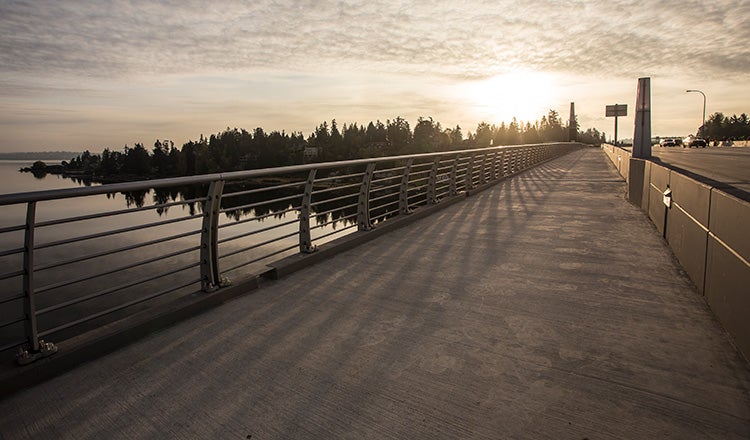
The SR 520 Bridge Replacement Project is a good example of this. The old floating structures were reused elsewhere for docks, artificial reefs and wharfs. The new floating structures were designed to treat water runoff on site, within the pontoons. The bridge includes a multi-use path for pedestrian and bicycle use, and it also supports future light rail transit expansion. The program considered both historic resources as well as connections to Native American tribes in the planning phases.
Additional considerations include:
- Using recycled materials
- Diverting waste
- Sourcing materials locally
- Using alternative fuels during construction
- Public benefit
- Sourcing local labor
- Using materials with a longer service life such as rebar alloys and carbon fiber
Q. How can material and design choices improve performance without undue cost?
Rob: The most resource- and energy-intensive components of a bridge are cement and steel.
It takes significant energy to create Portland cement (the main ingredient in concrete), as well as structural steel and reinforcing bars. Extensive research is being conducted on cement replacement options that require less energy to produce, such as Portland limestone cement (PLC), which has been accepted by Caltrans. There is also ongoing research on concrete durability, aiming for less cracking and deterioration to help bridges maintain their serviceability well beyond the current basic design life expectations.
More agencies are accepting the use of high-strength steel in girders and reinforcing bars. The high-strength options do not require significantly more energy to create, and we can use fewer of them, reducing material use and requiring less material hauling.
Don: Additionally, the aggregate selection for concrete can also be a source of embodied carbon reduction. Rather than using virgin aggregate, you can use alternatives such as recycled, crushed concrete (even better if it is made from the bridge you’re replacing) or new, innovative materials that mineralise sequestered carbon dioxide. Applying these different options will help move toward a net-zero carbon footprint.
Besides concrete, you can look at the entire project using a life cycle assessment to examine all sources of embodied carbon. Balancing site material cut and fill reduces the need for hauling. Supporting carpool lanes, transit or multimodal usage decreases operational carbon. Discuss with your design team and the community to better understand how the needs and wants of the project can align with sustainable choices.
Q. How can owners evaluate whether a sustainability certification aligns with project priorities, performance and stakeholder goals?
Rob: In the building world, a strongly credentialed LEED structure signals that an owner is committed to efficient, responsible use of materials and long-term performance. Companies that want to promote the fact that they share those values want to rent space in LEED-certified buildings and will often pay a premium to do so.
In the bridge and infrastructure sector, similar certifications are becoming more common worldwide. Some well-known and respected global infrastructure sustainability certifications include Envision, Greenroads, BREEAM Infrastructure (formerly CEEQUAL) and Infrastructure Sustainability (IS). Like LEED in the building sector, these infrastructure certifications can show a community that an owner values sustainable building practices and materials as well as long-term performance on their behalf.
Don: Conduct an initial assessment to see if using a sustainability rating system is right for you and your project. Assessing a recently constructed project can give an owner a baseline sustainability level, and if the bridge fits the certification standards, the owner could even retroactively pursue the rating. For the next project, the owner can consider whether it is cost-effective to pursue a rating and gauge the level of community support. This assessment also might help identify opportunities to quickly elevate sustainability levels and reach goals. If everyone on the project team is not up to date on this hot topic, consider doing focused training to get everyone up to speed.
Even if you don’t want to officially rate your project, the framework that the rating systems provide can give guidance on sustainability performance and guide decision making. The rating systems provide sustainability metrics for each sustainable design decision so you can see if your choices will improve, enhance, conserve, or even restore the natural or social system. You can also use it to collaborate between the owners, stakeholders, contractors, designers and community.
Q. How can we build sustainability into the bridge development and delivery life cycle?
Rob: There is only so much bridge engineers can do from a sustainability perspective once the project hits their desk for development of plans, specifications and estimates. Truly sustainable projects start from the planning phase, and it is important that bridge engineers are part of the effort on projects where bridges are considered. We, as problem-solving bridge engineers, need to make a concerted effort to keep out of the weeds in the planning phase and focus on larger picture items that work toward the goal of building the right project. Understanding a bridge project’s environmental and community considerations plays an important role in delivering a sustainable bridge and goes beyond the structural analysis and design typically emphasised by bridge engineers.
Step outside the structural design comfort zone and consider how the infrastructure might affect the community — both positively and negatively — to help plan a better project.
Don: Innovations and sustainable advancements can more easily emerge using different project delivery methods. Consider the methods that allow for earlier input from the engineers and the contractor. Design-builds and public-private partnerships allow the collaboration needed to find out what works early on and to get buy-in from all parties. When everyone has sustainability in mind, innovative, sustainable solutions can arise.
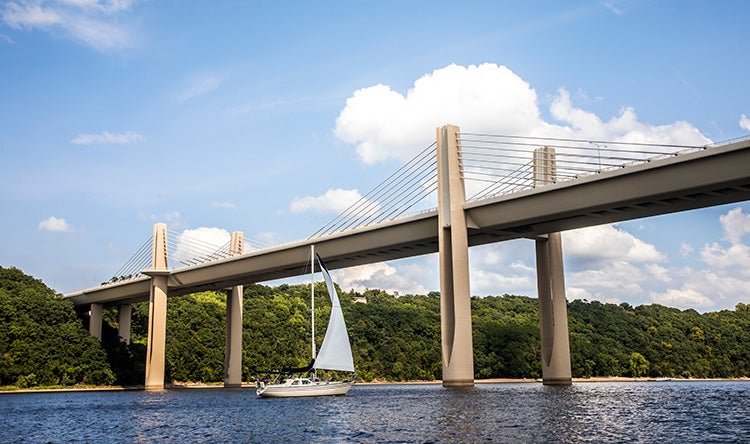
The St. Croix Crossing project between Minnesota and Wisconsin included co-location of designers with Minnesota Department of Transportation staff at a project office. This collaboration led to innovation in the form of using an extradosed bridge, which allowed for reduced tower heights compared to a cable stayed bridge and longer spans, thereby reducing the number of towers in the river.
With the Los Angeles International Airport Automated People Mover, a public-private partnership, the owner held early meetings with the entire team. This brought everyone to the same page regarding sustainability and set the team on the right track. It earned an Envision Gold Award for sustainable infrastructure from the Institute for Sustainable Infrastructure (ISI).
Inspiration & Advice
Q. How did you get involved in sustainable bridge design?
Rob: I’d say it started more from a resiliency design perspective, really. I was a student assistant with Caltrans when the Loma Prieta earthquake caused the partial collapse of the Cypress Viaduct in Oakland, California. The destruction and loss of life was very disturbing to me. It became especially important to me to pursue seismic retrofit and change the way we design bridges to prevent that from ever happening again. Combine that with the fact that I have been recycling for as long as I can remember and I’ve always been the guy who turns out the lights in an empty room, so I couldn’t help being involved with sustainability.
Don: I’ve always been a strong proponent of community involvement. With my involvement with Bridges to Prosperity and the American Society of Civil Engineers, I’ve gotten to help my local community as well as the community of Seguidules, Panama. Civil engineering is a career that works toward the betterment of society. Applying the lens of sustainability onto that allows me to be even more community focused.
Q. What advice do you have for bridge designers wanting to get involved in sustainable design?
Rob: First and foremost, be curious! And then follow through by looking for ways to get involved and learn more. I think most of us became civil/bridge engineers because we wanted to do something to benefit our fellow citizens now and into the future. With that in mind, an understanding of sustainable and resilient design is an absolute must.
Don: You start by attending webinars, talking to others in the field or getting a credential in a sustainability rating system. It all stems from the desire to learn more. Learn about what steps you can take on your own projects to be just a little more sustainable. Develop your own innovative ideas or consider whether you can apply the latest advancements in technology or innovations from other projects. Advocate for the benefits of sustainable design to your peers and clients to make it more commonplace in our industry.
Each Experts Talk interview illuminates a different aspect of transportation infrastructure planning, design and delivery. Check back regularly to discover new insights from the specialised experts and thought leaders behind our award-winning, full service consulting practice.


