

Stormwater Utilities and Enterprise Funds: Management Strategies That Fight Floods
A Key Step for Resiliency and Affordability
Uncontrolled stormwater runoff is directly linked to urban flooding, water quality impairments, and erosion. These negative impacts make communities less safe, ecosystems less healthy, and property less economically attractive. In many areas, flooding is becoming more frequent for a couple of reasons.
As development continues to replace natural ground cover with concrete and asphalt, the amount of runoff from precipitation increases because the water cannot permeate the soil. More frequent extreme weather events, such as intense and heavy rainfall, also increase runoff that can physically exceed the capacity of our drainage networks and, in combined sewer systems, overwhelm our treatment plants.
Despite public awareness of devastating flooding and increasing demands for better stormwater management, this type of infrastructure improvement isn’t typically prioritized in municipal budgets. Unlike potholes in roadways, stormwater management efforts are noticeable only when flooding occurs or a drainage system’s tolerance is tested. This infrequent attention makes funding stormwater management projects challenging when forced to compete for general fund dollars with other public safety demands.
Be the First to Know
Subscribe to receive our Water Insights
According to the Western Kentucky University Stormwater Utility Survey 2025, taxpayers often see stormwater spending as a regulatory obligation rather than a vital community investment in public health, resilience and quality of life. People usually won’t support a tax increase for something they don’t think they need, so municipal drainage system maintenance, renewal and repair projects are often underfunded.
Federal and state funding has also recently become uncertain. In many cases, stormwater is the forgotten utility with limited funds for large-scale projects, the survey found. Projects identified in stormwater master plans and capital improvement projects (CIPs) remain unconstructed and become outdated, despite studies showing $1 of stormwater mitigation spending can save $6 to $13 in recovery expense.
Prioritize Stormwater Infrastructure Resiliency
One strategy for many communities across the U.S. and Canada to provide greater flood risk reduction and organizational resiliency is to establish a stormwater utility (SWU). The Western Kentucky University survey identified 2,147 SWUs in the U.S. and 82 in Canada in 2025.
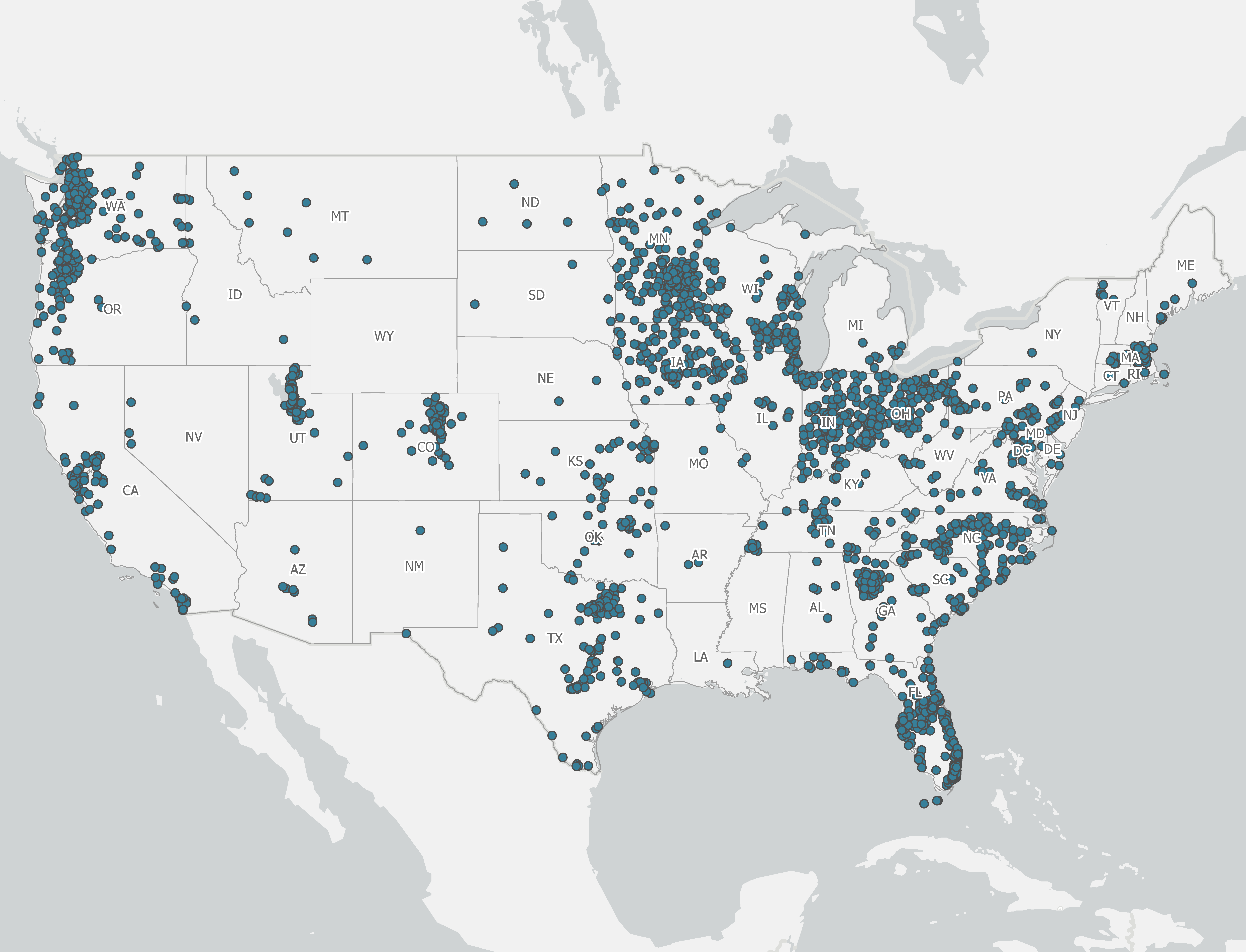
A SWU aims to provide a greater level of service for its customers. A well-developed SWU provides communities:
- Effective local day-to-day management of stormwater.
- Administration, planning, maintenance, rehabilitation, repair, monitoring and reporting for a comprehensive, cohesive and consistent stormwater program.
- Coordination of responsibilities previously dispersed among several departments or divisions (such as public works, parks, engineering, etc.).
- Funds to provide operating expenses and long-term capital improvements that cannot be redirected to uses other than those associated with providing stormwater services.
It is important when establishing a SWU to consider all these objectives. If the only reason a municipality has for establishing a stormwater utility is to generate revenue and free up general funds for other uses, the SWU is likely to face legal challenges. When customers see a new line item on a bill for stormwater services but are not aware of the increased level of service provided, they may feel they are being unfairly charged.
A durable SWU that can withstand legal challenges and garner public support must effectively communicate its value, equity and adequacy to customers and policymakers.
The Value of an Enterprise Fund
To secure cash flow to adequately respond to costs associated with current development conditions and climate events, aging drainage systems, regulatory requirements and shrinking municipal, state and federal budgets, communities in 43 U.S. states have moved to a fee-for-service system, or enterprise fund. Commonly used by water, sewer, gas, and electric utilities, an enterprise fund consists of fees collected exclusively to cover the costs of providing services to each property. In other words, utilities charge, collect and administer user fees.
Key advantages of an enterprise fund are:
- Stability. Funds are not subject to changes in the annual budget process as general fund priorities, property values or revenues from sales change.
- Transparency. The utility’s financial position, including documentation of operating expenses, depreciation, capital outlays, and revenue, is made public.
- Sufficiency. The stormwater fee is based on a program for which costs have been determined.
- Flexibility. Fees can be structured in multiple ways, and the program can be managed to fund activities based on changing priorities and needs.
- Equity. Depending on how fees are structured, costs can be assessed based on user demand placed on the stormwater system.
An enterprise fund also provides the SWU with better access to public funding programs such as state revolving funds and federal Water Infrastructure Financing and Innovation Act loans. Local matching funds for grants may also be available to an SWU enterprise fund if capital reserves are insufficient to cover immediate needs.
Fee Structure Drives Equity
Generally, enterprise funds are seen as more equitable than taxes based on overall property value or local sales. Like other utilities, a proportional charge or fee is levied based on the demand a property owner places on the system. In the case of stormwater, when a natural area is paved or covered with impervious materials, it contributes a greater volume of runoff and increased demand on the drainage system.
Stormwater is generated at larger volumes with quicker runoff rates from larger properties that have greater impervious surfaces. Infrastructure improvements must be assessed, planned, designed and constructed to prevent flooding and reduce the environmental harm caused by pollutants discharged into groundwater and waterways in communities with greater impervious surfaces.
How SWU rates are structured will determine its equity. We believe the best way to guide policy and rate decisions when developing a stormwater utility is to start with the end in mind. Creating a new rate structure provides an opportunity to reassess current customer conditions, affordability thresholds and related customer assistance programs. HDR collaborates with its water sector and municipal clients to establish rate structures that emphasize several key principles and best practices including:
- Tiered residential rates to allow properties with less impervious area to pay less toward the stormwater utility. The goal of this policy is to provide some relief to lower-income residents.
- Rate structures with caps to limit the amount owed by industries with larger areas of impervious cover. Industrial owner acceptance can be critical to the success of a project. A rate structure with a maximum limit allows the industry to predict costs and support the utility while still generating revenue necessary to fully fund the stormwater program.
- Rate structures that can be billed easily through the existing utility billing system.
- Processes for residents to earn stormwater credits by participating in source runoff reduction programs. These credits can range from providing green infrastructure and onsite detention, to items as small as using rainfall runoff to irrigate onsite landscaping.
- Processes for billing within local taxing districts by creating files necessary to bill SWU clients seamlessly.
SWU Successes
With the goal of providing greater customer equity, a county agency in Washington state asked HDR to evaluate its flat-rate residential stormwater fee structure. We collaborated with county staff to develop six conceptual rate structures for review and discussion. Three alternative rate structures were then calculated based on impervious area data for each parcel, ranges of impervious area, and other similar structures. By categorizing rates based on the degree of stormwater impact to individual properties, the county provided a more equitable fee structure for its customers.
HDR also developed a comprehensive stormwater rate study for a municipal utility in California. We worked with the city to analyze required revenue, cost of service and rate design. The revenue requirement analysis informed proposed rate adjustments to adequately fund the annual operating and capital needs of the city’s stormwater utility for five years. The cost-of-service analysis provided the basis for establishing the proposed stormwater rate on a per equivalent unit basis. The proposed rates validated the current rate structure and required adjustment of only the rate levels.
Because public acceptance is key to successful rate adjustment, our analysis for the utility included robust customer outreach. Numerous touchpoints included virtual and in-person open houses and meetings with residents and the business community. The resulting study will be presented to the city’s advisory committee, council water committee and city council later this year. The city expects our thorough analysis and transparent engagement with customers will enable sufficient funding for aging infrastructure and deferred capital improvements.
Where is My Money Going?
Besides establishing a rate structure to collect enterprise funds, SWUs must also have clearly communicated goals on how they will spend them. Each community’s SWU goals will be different. Supported by clear, proactive education and outreach campaigns for elected officials, special interest groups and customers, we’ve helped clients identify projects that create ripple effects across communities. We’ve also helped them advance broader economic, societal and environmental goals. And we’ve empowered decision-makers to choose legacy projects over least-cost alternatives.
Enterprise funds for an SWU can accomplish a range of objectives:
- Functional storm sewer infrastructure — Years of neglect, largely driven by lack of funding, have left many communities vulnerable to repeated flooding caused by clogged or damaged inlets and pipes. Dedicated funding from stormwater utility fees has made it possible to service and restore the system, so it operates as intended.
- Reduced runoff quantity – Many communities have experienced repeated flooding during heavy rain events and are implementing a stormwater utility with dedicated funding to reduce the frequency of those events.
- Improved runoff quality – HDR has worked with SWUs that have goals to improve water quality and support recreational water features that are essential to the community’s economy.
- Building green infrastructure – A recent project included stormwater mitigation features such as landscaped medians, increased park space, and used pervious concrete for new basketball courts and other public assets. These features, accompanied by a stormwater detention pond, help to reduce flooding and enhance the quality of life by revitalizing historically underserved areas with more park space.
- Regulatory compliance – Some of our clients have determined that creating a SWU is the best way to comply with federal and state requirements. HDR has helped them develop plans to meet regulations, estimate the cost to comply, and determine a rate structure to generate necessary revenue.
- CIP – In some communities, a lack of funding has meant that projects identified in municipal stormwater master plans and CIPs weren’t built and have become outdated. HDR has worked with clients to develop rates and financial policies to generate funds to construct large-scale projects necessary to respond to multiple stormwater concerns.
- Asset management for stormwater systems – Utility and enterprise revenue can be used to pay for commonly underfunded operations and maintenance, repair and renewal programs, and to build a local workforce.
- Enhanced customer assistance programs – A new fee or modified fee is the right time to reassess current customer conditions, affordability thresholds and related customer assistance programs.
When to Get Started
Like planting trees, the best time to create a SWU was ten years ago. To get started, choose the right partner to help build an effective, equitable and legally durable SWU. This partner can investigate feasibility by compiling information that decision makers and the electorate need to make an informed decision that a SWU with an enterprise fund is in the best interest of the community. The study should examine in detail what services, activities and projects the funds will be used for, the most fair and equitable method for allocating program costs to each customer, and how to collect fees.
Successful communities begin public education and outreach at the beginning of the feasibility study. A well-planned information campaign shares information across multiple channels to build a consensus of support from elected officials and beneficiaries to gain support from the entire community. Greater awareness of flood resiliency and clean water will help customers remember the value of stormwater management even when it’s not raining.
Our team provides utility formation and rate planning services to communities across the U.S. Our successes working with communities to implement new rates and billing systems and report out related program metrics are a direct result of our rate analysts working hand-in-hand with community representatives and our in-house network of stormwater management planners, infrastructure designers, asset management specialists and strategic communications experts. If you’re ready to start building a stormwater utility, please email us at Water [at] hdrinc.com (water[at]hdrinc[dot]com).


