

A New Model for Neurodiversity-Informed Pediatric Behavioral Health at Lurie Children’s
Designing Dignity, Choice and Safety
Pediatric behavioral health is at an inflection point. As awareness of neurodivergence grows, health systems are reimagining environments to foster self-regulation, family connection and therapeutic progress. That shift from control to agency guided our design of a high-acuity, sensory-supportive expansion to Ann & Robert H. Lurie Children’s Hospital of Chicago’s inpatient psychiatric unit. The project, funded by an Illinois Department of Children Family Services Grant, expands the existing 24-bed unit, adding a fully self-sufficient unit within a 4,200-square-foot footprint including four specialized beds, crafted around choice, safety and dignity, principles increasingly central to the future of pediatric care.
From Safety Versus Experience to Safety Through Experience
Neurodivergent patients often experience heightened sensitivity to light, sound and touch, and may regulate through movement or repetitive behaviors. Traditional behavioral health spaces often prioritize protective measures first, with patient experience being an expected result instead of the initial driver for outcomes.
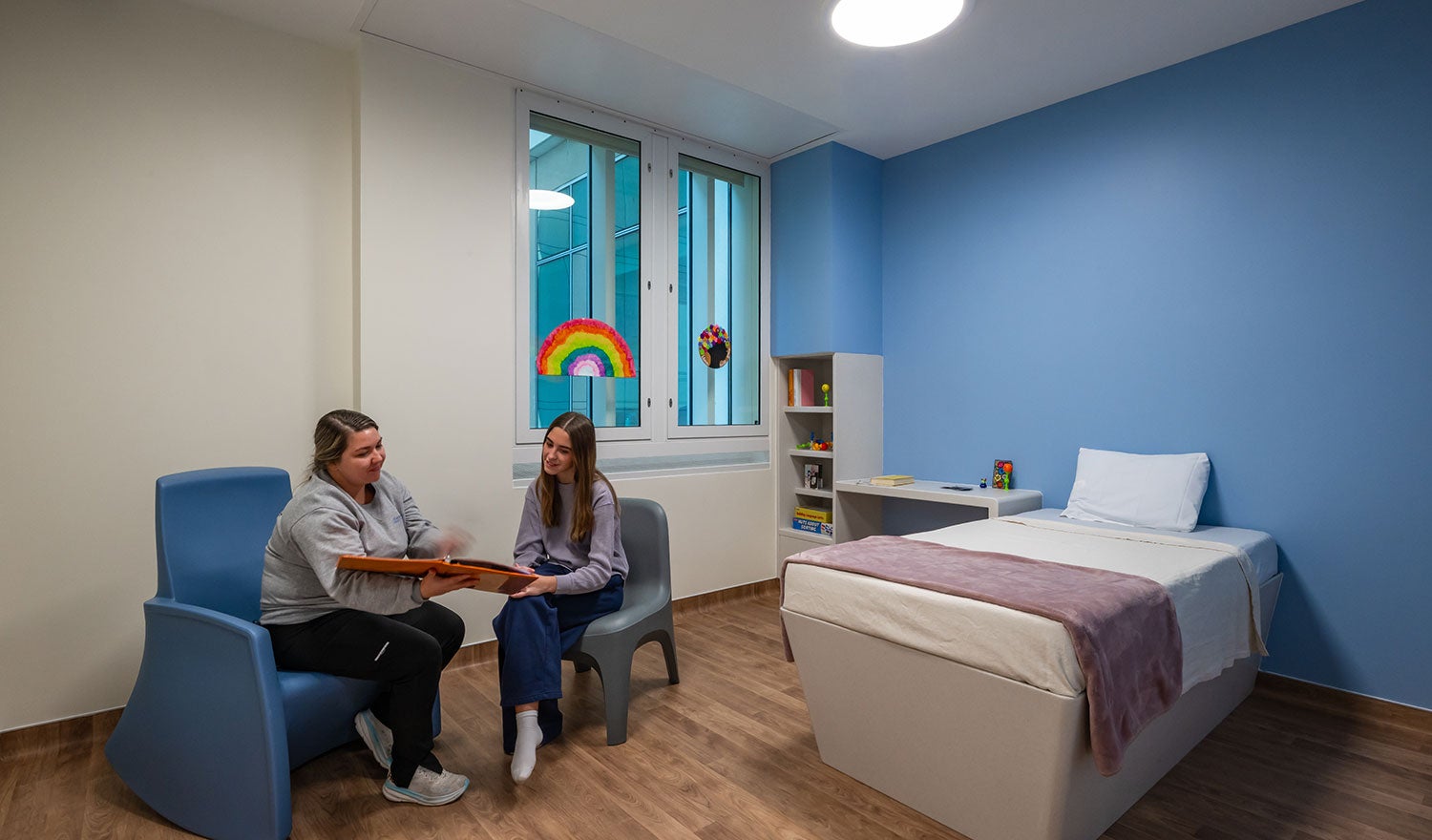
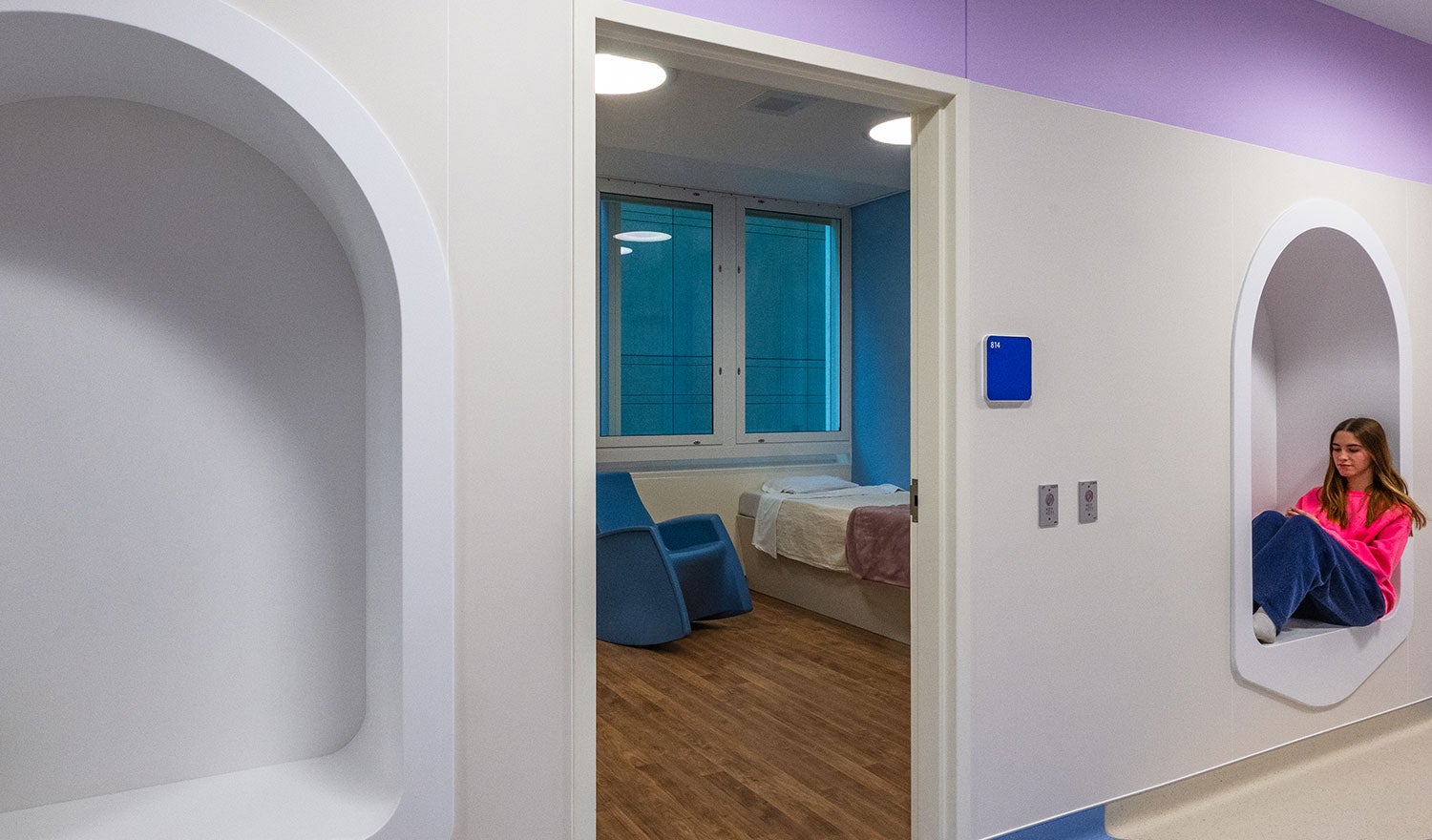
At Lurie Children’s, safety is achieved by shaping experience. Alcoves outside patient rooms offer semi-social places where patients can be present without direct engagement. A dedicated sensory room creates a low stimulus refuge with a fiber optic “starry night” ceiling and soft seating to support de-escalation. A separate sensory gym enables structured movement and interactive projection therapy, giving clinicians the space to tailor experience to patients’ unique needs. These calibrated choices reduce triggers, shorten paths to de-escalation and preserve dignity in moments of high stress.
These design features directly impact treatment. By creating opportunities for regulation, movement and choice throughout the unit, the environment becomes an active part of the care model, helping patients feel secure while giving clinicians more opportunities to respond to individual needs.
Designing for Agency in High-Acuity Settings
In high-acuity pediatric behavioral health, durability and predictability contribute directly to therapeutic potential. Selected materials resist picking and tampering, and furniture is sturdy, difficult to throw, or built-in. Initial intake, exam and consult spaces connect directly to the unit so early high-stress interactions feel sequenced and safe. Together, these elements build a continuum of interactions that aim to reduce anxiety, allow for safe family involvement and reduce use of restraints and seclusion of patients.
This patient population has diverse needs that constantly change. The unit’s planning anticipates those variations. Clear sight lines to all rooms, controlled entries and anti-ligature strategies are integrated alongside elements patients can control, such as lighting levels, lighting color, furniture arrangement and level of engagement. The facility uses design strategies often implemented in pediatric settings to engage patients with the physical space, including tactile wayfinding elements and adjustable lighting, but prioritizes sensory tools that can be tuned to clinical goals and keep the environment simple enough to be safe in a crisis.
A Flexible Process Built on Curiosity
Our design process is driven by curiosity: What is the shortest path from a patient room to both quiet and active sensory spaces? How can alcoves enable social presence without direct engagement? Where might family-staff interactions feel most natural?
Caregivers, patients and families worked alongside the project team to develop adjacencies, identify impactful care experience details and spaces to help determine materials that meet both functional and aesthetic needs. Decisions evolved through construction, such as reducing back wall protection in favor of painted reinforced walls with plywood backing to prioritize non-institutional cues through a more traditional wall treatment with vibrant color.
In a relatively compact unit, every square foot matters. Rather than concentrating within designated rooms, the entire unit serves as a therapeutic environment. The safety interventions allow patients greater freedom and choice while allowing clinicians to engage them in the most effective way for each patient. This flexibility supports different treatment approaches while allowing care to evolve over time.
Staying Ready for the Path Ahead
Designing for neurodivergence in acute pediatric settings is a test for health systems and designers. When environments empower choice and reduce sensory harm while embedding safety into the background, children, families and care teams experience environments and treatment differently. We are building toward a future of pediatric behavioral healthcare that normalizes all conditions and needs, invites agency and treats space as a therapeutic partner.


