
Alberta Passenger Rail Master Plan

Alberta Passenger Rail Master Plan
A Transformative Passenger Rail Master Plan for Alberta
Alberta is one of Canada’s fastest-growing provinces or territories, with over five million residents in late 2025, and could more than double over the next 60 years. An estimated 86% of that future population, more than eight million people, are projected to live in the corridor between Alberta’s two largest cities: Calgary and Edmonton.
Without more transportation options, livability and economic development will be constrained, traffic congestion will increase with negative environmental consequences, and access to jobs and recreation will become more challenging.
In 2024, to address the transportation needs of the province, the Government of Alberta initiated development of a passenger rail master plan to:
- Comprehensively examine the feasibility of passenger rail in Alberta, including socioeconomic and financial considerations.
- Crystallize a vision for passenger rail with Albertans.
- Determine the appropriate governance model for passenger rail, such as the creation of an arm’s-length agency, to effectively plan, deliver, and operate a passenger rail network.
To support Alberta’s Ministry of Transportation and Economic Corridors in this endeavour, the province selected Alberta Connexion Partners, a team of 150 specialists from CPCS, HDR, Mott MacDonald, Ernst & Young LLP, Aubin Consulting and New West Public Affairs.
Together, they prepared the Alberta Passenger Rail Master Plan, which the Premier of Alberta released on June 5, 2026.
Alberta’s First Passenger Rail Master Plan
The master plan assesses the viability of passenger rail in the province and identifies a feasible 30-year network with connections that could generate the greatest benefits for Alberta over the next three decades, including:
- High-speed (up to 320 kilometres per hour) regional service between Edmonton and Calgary via Red Deer, with more than one train an hour,
- Higher-speed (more than 160 kilometres per hour) regional service between Calgary and Banff with up to one train an hour,
- Frequent airport-express and commuter rail service, including all-day service every 20 minutes for Calgary International Airport, Airdrie, Edmonton International Airport and St. Albert, and commuter-peak services for other connections.
Integrated Rail Planning and Engineering
HDR, working closely with the Alberta Connexions Partners team, led rail planning and engineering for the study, including identifying, developing, and assessing potential passenger rail connections; developing ridership forecasts; assessing engineering feasibility; and developing planning-level cost estimates.
A wide range of regional and commuter rail alternatives was evaluated within a holistic framework that included strategic, economic, financial, and deliverability criteria.
Strategic Engagement With Over 22,000 Albertans
A critical element of the master planning process was engagement with Albertans. HDR led the design and execution of a robust public engagement program with more than 22,000 Albertans across the province.
Indigenous Voices at the Table
We engaged representatives from more than 50 Indigenous communities and organizations across Alberta, along with government agencies, economic development groups, climate and conservation associations, advocacy groups, industry, transportation agencies and providers, airports, Class I railways, and other parties with an interest in Alberta’s passenger rail future.
Recognition Drives Engagement
HDR’s strategic communications team developed a cohesive project brand to clearly communicate the project's vision and purpose and support high-profile engagement, including a passenger rail forum featuring Premier Danielle Smith, which helped elevate awareness and foster informed dialogue.
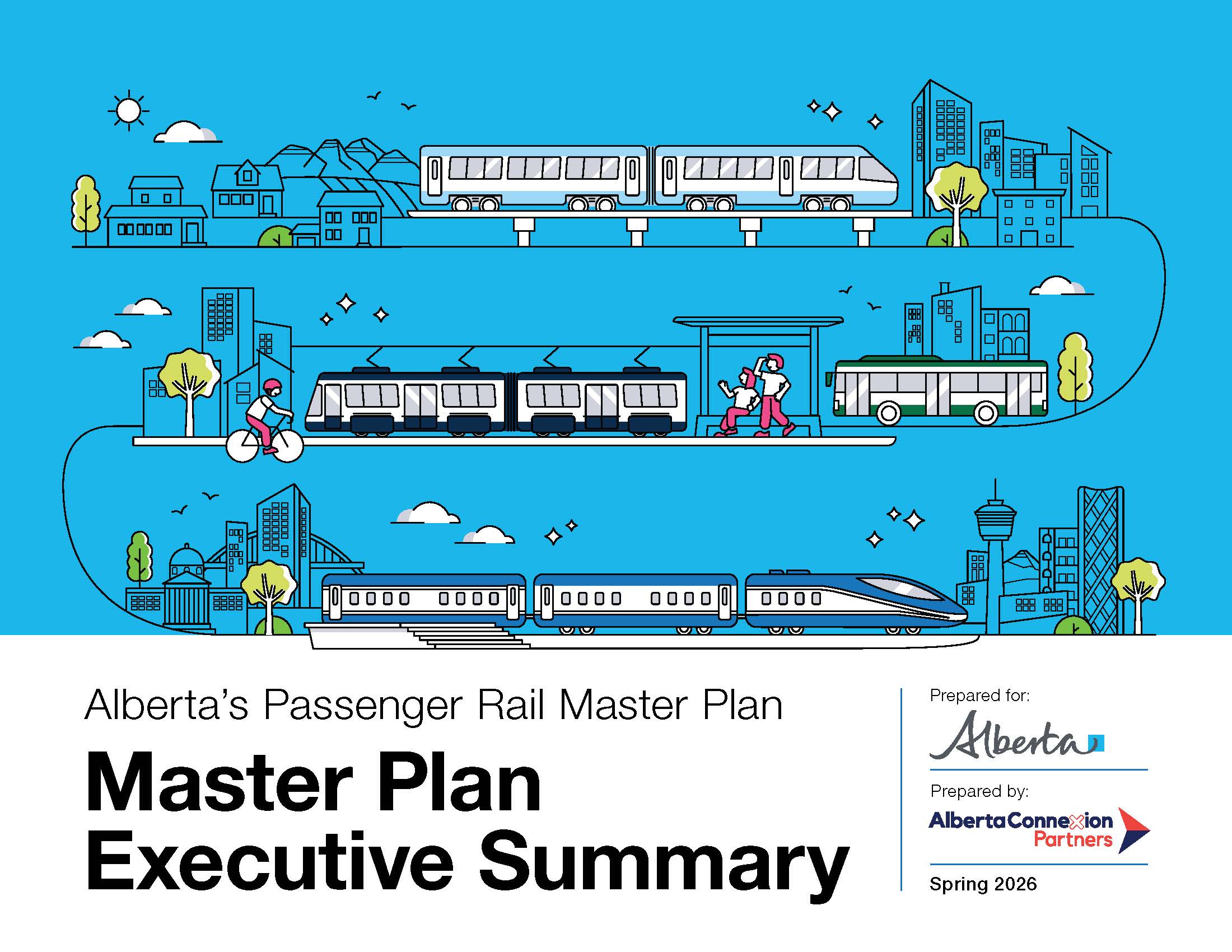
Through the creation of consultation materials and the planning and facilitation of meetings and open houses, we enabled meaningful, two-way conversations with stakeholders and the public, equipping the Government with the insights and public perspectives needed to advance passenger rail decision-making in Alberta.


