

Experts Talk: Seismic Resilience in Bridge Design With Lee Andrews
Experts Talk is an interview series with technical leaders from across our transportation program.
Creating Safer Structures Using Seismic Analysis in Bridge Design and Retrofits
Earthquake risks exist all over the world, but not always in the places we might think of first. In the U.S. and Canada, the West Coast, Alaska, and Pacific Islands dominate the seismic spotlight. However, significant seismic concerns extend well beyond those regions into parts of Quebec, Ontario, Kentucky, Missouri and Illinois near the New Madrid Seismic Zone. As our understanding of seismic hazards has evolved, bridge design codes have advanced as well, providing more accurate ways to assess bridge behavior and improve performance during earthquakes. These advancements are influencing how we evaluate existing bridges, prioritize retrofits and design new structures to support safer, more resilient infrastructure.
Lee Andrews, P.E., S.E., P. Eng., helps lead our bridge and structures practice in Washington state. During his 24-year career, he has served as project engineer or project manager for the final design of more than 30 bridge seismic retrofits and has investigated seismic vulnerabilities for hundreds of bridges throughout western Washington. His experience includes 10 bridges on the I-405 corridor and evaluation of all 123 Washington State Department of Transportation-owned bridges on I-5 through Seattle. In this interview, Andrews discusses the evolution of seismic design and how resilience is shaping the future of bridge infrastructure.
Q. What is resilience-based earthquake bridge design, and why is it necessary?
A. Seismic resilience is about more than maintaining functionality after an earthquake. It focuses on understanding how a bridge is expected to perform during a seismic event, what level of damage may occur and how engineers can develop solutions that support acceptable damage levels, rapid recovery and enduring performance over the bridge's design life.
Resilience-based earthquake engineering brings together multiple disciplines to account for seismic hazards and determine the earthquake demands used in bridge design. This process begins with seismic hazard analysis, which estimates the potential ground shaking at a specific location. Interpreting those results requires collaboration among geologists, seismologists, geotechnical engineers, structural engineers and other specialists. It also requires risk analysis and input from other technical fields, as well as weighing socio-economic and political factors. Our work on the earthquake-ready Burnside Bridge in Portland, Oregon, required the talents of a variety of engineering, environmental and even strategic communications professionals.
While complete bridge failures are rare during routine conditions, earthquakes can produce catastrophic consequences. Beyond the potential loss of life, property and infrastructure, bridge failures can disrupt supply chains and affect critical utilities carried by bridges, including water, power, gas and communications systems.
Some impacts are less obvious. Interconnected infrastructure systems can amplify the effects of seismic events. For example, portions of King County, Washington’s wastewater system rely on trucks to transport sewage. Damage to bridges on these routes could disrupt service and create cascading impacts.
Q. Most people in North America are aware of earthquake-prone regions, especially the West Coast. Should seismic resilience be considered only in these areas? Why or why not?
A. No. Regions with low levels of seismic activity should not be excluded from resilience planning because earthquakes can occur almost anywhere. Although hazards are generally highest in British Columbia, California, Washington, Oregon, Alaska and Hawaii, the U.S. Geological Survey has identified earthquake potential in portions of the South, Midwest and East Coast. Natural Resources Canada annually averages over 5,000 earthquakes with higher probabilities in southern Quebec and southeastern Ontario. Increased seismic activity associated with oil and gas exploration, along with continued fault mapping, has expanded our understanding of where risks exist.
A good example is the magnitude 5.8 earthquake that struck near Mineral, Virginia, in 2011. Even though Washington, D.C., is not typically considered a high-seismic region, the Washington Monument sustained significant damage despite being located nearly 90 miles from the epicenter.
Many highly seismic regions are located along coastal areas that serve as major gateways for goods entering North America. Communities with little seismic risk still depend on those transportation corridors and facilities to maintain the flow of commerce and essential services.
Q. Regardless of location, what types of bridge designs merit the most attention to seismic resilience?
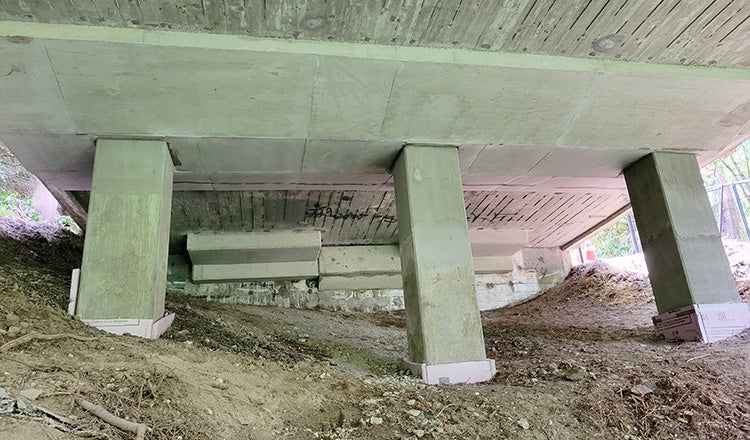
A. When evaluating seismic resilience, three types of bridges typically stand out: older bridges, new bridges with unique geometry and new bridges that require higher levels of performance.
For older bridges, we need to consider the year they were originally designed. Prior to 1949, seismic forces were rarely considered, and even in the 1960s many bridge designs accounted for relatively small earthquake loads. In Seattle, bridges from that era were designed for roughly 15% or less of today's seismic code requirements. Yet these structures remain essential components of transportation networks, as do hundreds of thousands of U.S. bridges built during the infrastructure boom between the 1950s and 1990s when the Interstate Highway System was constructed. While thousands of these bridges could benefit from seismic retrofit, limited funding makes prioritization difficult, and not all bridges can be reasonably upgraded to meet modern performance standards.
New bridges with unusual geometries also deserve careful attention. Unlike wind or gravity loads that are applied externally, earthquake loads are generated within a structure as the ground moves, meaning short, stiff, heavy bridges can attract larger seismic demands. Features such as highly skewed piers or sharply curved alignments create more complex load paths that require detailed analysis to understand expected performance.
The third category includes bridges that require a higher level of performance because of their importance to the community. These facilities are often designed to sustain less damage and remain operational to more readily carry emergency goods and services after a major earthquake. For example, Washington State Department of Transportation established higher performance requirements for portions of the SR 520 corridor connecting Seattle and Bellevue. The objective is to maintain emergency vehicle access immediately following an earthquake and restore ordinary traffic on at least some portion of these bridges within days.
Q. The idea of seismic resilience has been evolving. How have owners changed their priorities and how does it impact the life-cycle costs of a bridge, including operations and maintenance costs?
A. Infrastructure has always been expensive to build and maintain, and replacing it is even more costly. At the same time, a single major earthquake can render an older bridge unusable if critical structural details are vulnerable. Limited funding requires owners to be strategic, often implementing seismic retrofits incrementally through phased programs.
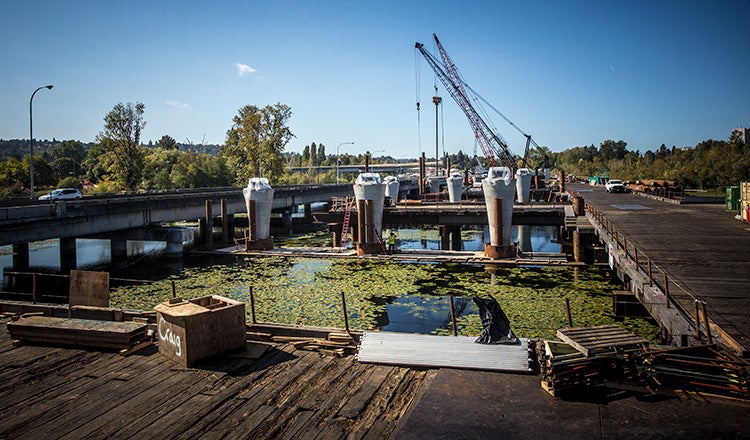
I’ve seen clients make a shift from evaluating individual structures. Thirty years ago, retrofit programs often focused solely on bridge type or vulnerability rankings. Now owners are considering the resilience of entire corridors and transportation networks, directing investments to strengthen overall system performance. In Washington, seismic retrofits have been coordinated with major corridor improvement projects to extend the resilience benefits beyond individual bridge assets.
Life-cycle cost analysis is also becoming a more common decision-making tool. Owners increasingly evaluate seismic improvements alongside operations and maintenance considerations, creating opportunities to address long-term maintenance challenges while also improving earthquake performance. The goal is to make the most effective use of available funding while maintaining a balanced approach across regions.
For new bridges, resilience requirements are often tied to a route’s importance within the transportation system. High-priority corridors and major structures may receive higher importance classifications, which require designs that limit damage and support faster recovery following a seismic event.
Design practices are evolving as well. Recent updates to AASHTO Seismic Guide Specifications incorporate risk-targeted approaches and fragility curves to better consider shaking intensities at a location over time which leads to a better understanding of the expected seismic damage. Owners are also using AASHTO’s 2023 Guidelines for Performance-Based Seismic Design of Highway Bridges to assess expected damage at different earthquake intensities and align bridge performance with specific route and transportation system needs.
Inspiration & Advice
Q. What inspired you to become a bridge engineer?
A. My interest in engineering started early. My dad earned his civil engineering degree from the University of Washington, and his example, combined with my enjoyment of science and mathematics, led me toward structural engineering when I entered college at UW. However, like most universities, they do not offer a standalone degree or broad concentration in bridge engineering.
Luckily, after completing my master’s degree, I got my first job at HDR. The breadth and complexity of the work immediately appealed to me, and I quickly discovered a passion for bridge engineering. Throughout my career, I’ve also benefited from exceptional mentors, colleagues and friends whose guidance and commitment to excellence continue to inspire me today.
Q. What advice do you have for bridge designers who are new to the profession?
A. Never underestimate the power of saying yes.
Early in my career, I worked in a smaller HDR office where team members often took on responsibilities outside their primary disciplines. As an engineer-in-training, I found myself helping address challenges involving roadway design, grading, drainage and project coordination in addition to structural work.
At times, those experiences were intimidating. But by maintaining a positive attitude, asking questions and seeking help when needed, I was always able to find a path forward. Saying yes opened doors to new opportunities, expanded my knowledge and gave me a broader perspective on the industry. It even led to two years of field experience that resulted in lifelong friendships and a lasting passion for river rafting.
The lesson is simple: growth often begins with a single word. When you say yes to challenges, responsibilities and opportunities beyond your comfort zone, you never know where that path may lead. It may expand your career, strengthen your skills and shape your life in ways you never expected.
Each Experts Talk interview illuminates a different aspect of transportation infrastructure planning, design and delivery. Check back regularly to discover new insights from the specialized experts and thought leaders behind our award-winning, full service consulting practice.


