Ashley River Crossing Pedestrian Bridge

Ashley River Crossing Pedestrian Bridge
Conceptual Design and Construction Inspection of a First-of-Its-Kind Pedestrian Bridge in the United States
- Extensive feasibility study to evaluate best alternative to improve river crossing for pedestrians and cyclists
- Helped secure an $18 million BUILD grant to support project development
- Identified standalone, innovative bobtail swing span movable bridge as most cost-effective and aesthetically pleasing solution
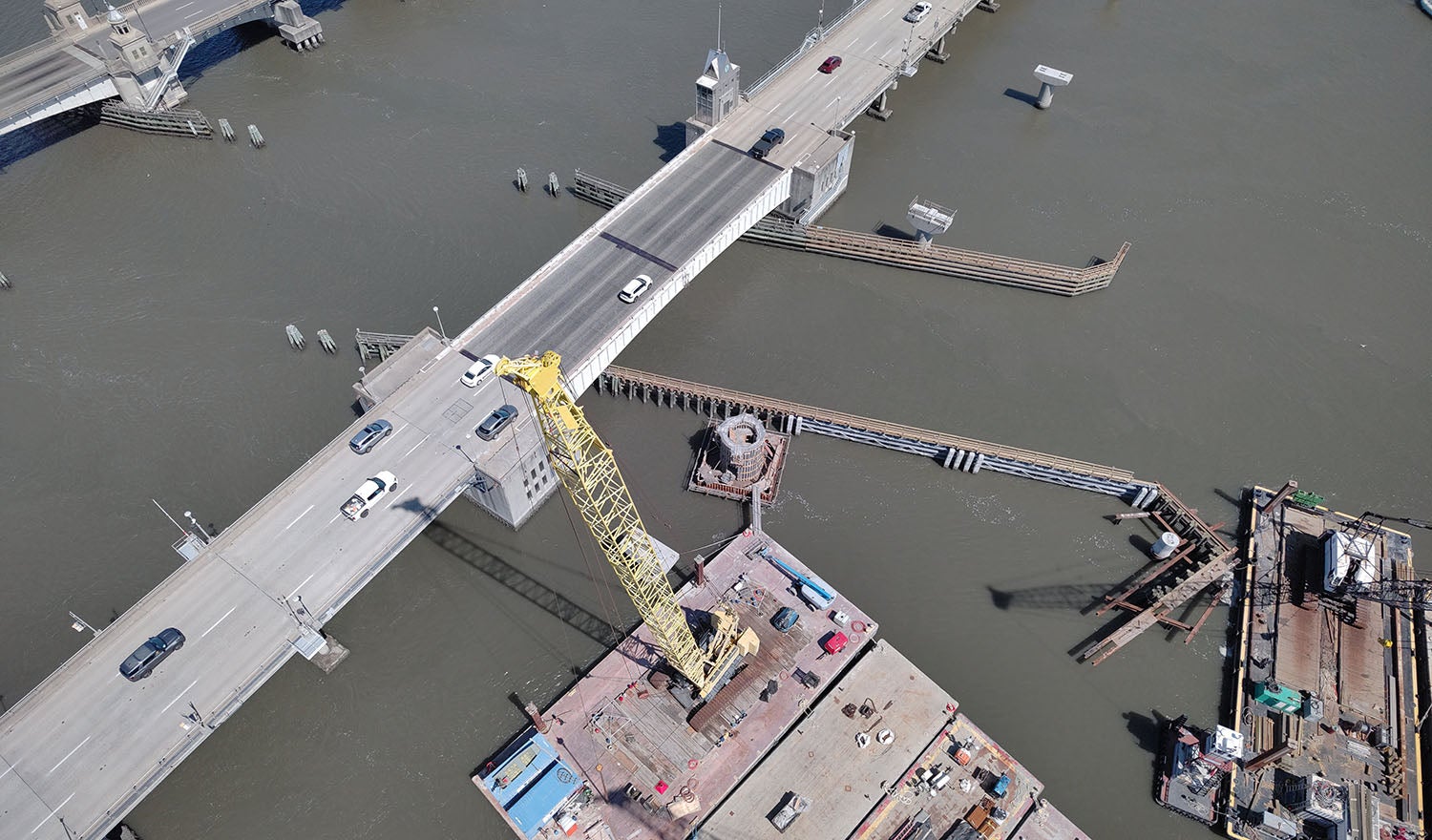
Two bridges carry U.S. Highway 17 over the Ashley River in Charleston, South Carolina, connecting the city’s largely residential West Ashley neighborhood to downtown. More than 63,000 vehicles cross these bridges each day. The route is also part of the East Coast Greenway, a network of non-motorized, multi-modal pathways stretching from Maine to Florida. But narrow sidewalks and heavy traffic on the two highway bridges have posed safety concerns for pedestrians and bicyclists crossing the river.
To improve safety and connectivity for pedestrians and bicyclists, the city initially hired HDR to study the feasibility of various Ashley River crossing improvements. Our role expanded to provide conceptual design, cost estimating, environmental documentation, design-build procurement support, contractor selection, final design reviews and construction services.
River Crossing Improvements Alternative Evaluations
Our team evaluated multiple options to improve pedestrian and bicycle mobility over the Ashley River, including:
- Adding a cantilevered pathway on northbound bridge
- Repurposing an existing vehicle lane for pedestrians
- Building a standalone movable bridge
A standalone pedestrian bridge adjacent to the current U.S. 17 northbound bridge emerged as the preferred alternative, avoiding congestion from reduced travel lanes and the addition of structural stress to the U.S. 17 bridge from the weight of a cantilever. To help the city fund environmental studies, design and construction of the project, we provided early grant support that led to securing an $18 million federal BUILD grant in 2019.
With a clear vision in place, we teamed up with the city to develop the conceptual design and conduct required environmental studies. Complicating the design was the requirement that the center of the bridge be movable to accommodate boat traffic on the river’s navigation channel. Determining the right type of movable bridge required an extensive alternatives analysis by our movable bridge engineers. The team ranked span types based on capital cost, maintenance, navigation impacts and aesthetics. This process led to the selection of a bobtail swing bridge as the preferred movable bridge type. This less common option includes an asymmetrical design with a short span on one side and a longer span crossing the navigational channel.
Enhancing Connectivity
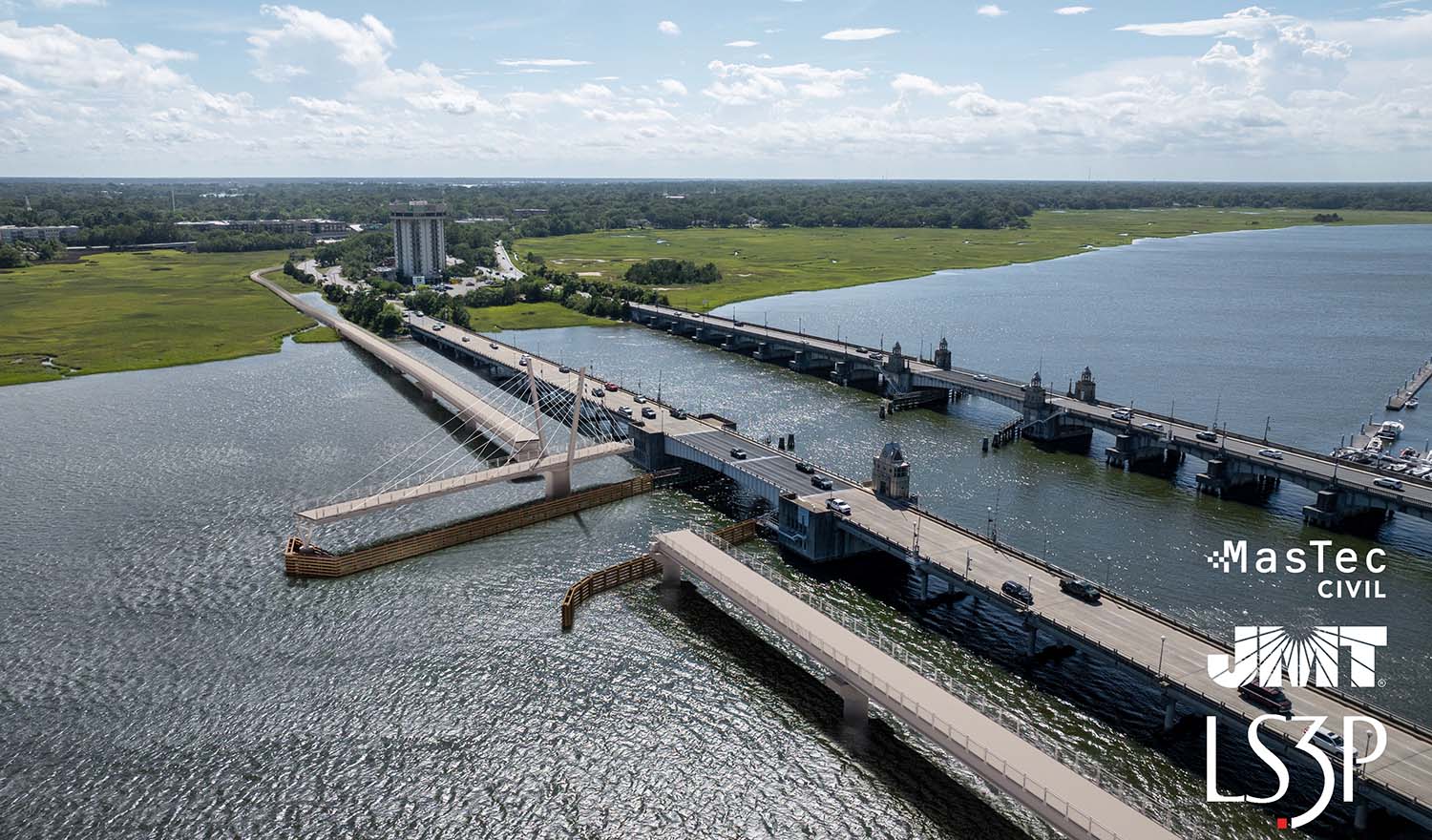
Stretching more than 4,000 feet across the Ashley River and its marshes, the final design of the bridge closely mirrors the original concept developed by our movable bridge engineers.
Unlike the adjacent bascule bridges that carry vehicle traffic, the bobtail swing pedestrian bridge features a center span that swings horizontally to allow marine traffic to pass. Its asymmetrical design, with a 150-foot front span and a 50-foot back span, meets the U.S. Coast Guard’s requirement for a 100-foot-wide navigation channel with a single movable piece, costing less than a symmetrical bridge by requiring fewer mechanical and electronic components. The cable-stayed towers in the bobtail design engage a counterweight in the bobtail to balance the span while also providing an aesthetic nod to the nearby Arthur Ravenel Jr. Bridge. While being cost effective compared with other span types, the aesthetics also pleased local historic preservation groups.
To further enhance the connection between the West Ashley Greenway and Ashley River Crossing and the overall user experience, nearby intersections are also being upgraded through improved crosswalks, pedestrian ramps, wider sidewalks and pedestrian signals.
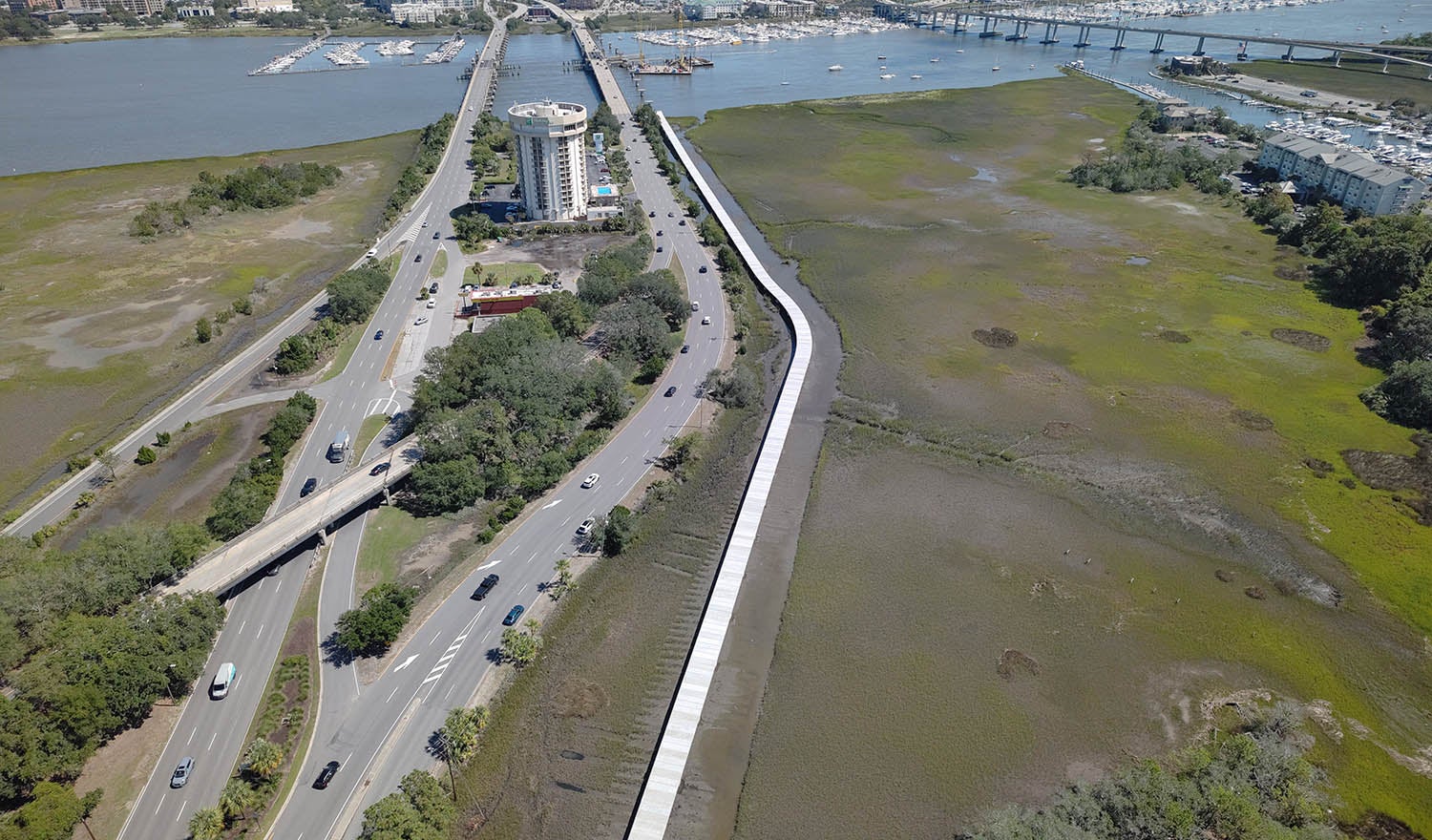
Since project construction began in January 2025, we have served as the city's construction engineering inspector (CEI), performing roadway and bridge inspection, movable bridge commissioning and environmental compliance reviews. Upon its estimated completion in 2027, the new bridge will be the first cable-stayed (or moveable pedestrian bridge) swing bridge in the U.S.