
Los Angeles County Public Health Laboratory Expansion Wins SEAW Structural Engineering Excellence Award
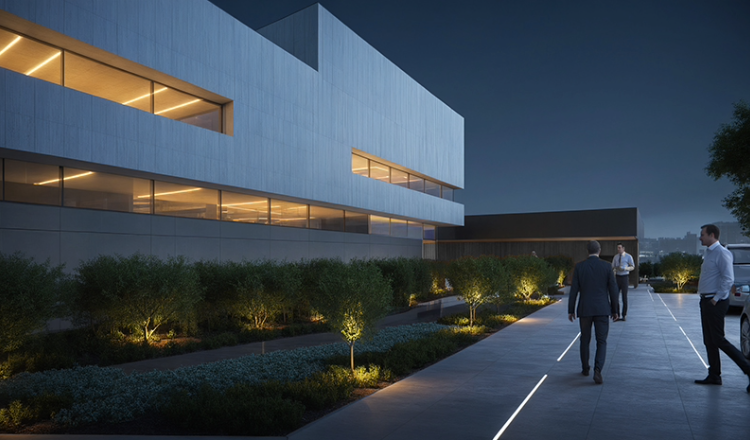
HDR is proud to celebrate an award-winning achievement for the Los Angeles County Public Health Laboratory (LAPHL) Expansion. This forward-thinking project has been recognized with a Structural Engineering Excellence Award in the Retrofit/Alteration/Historic Preservation category by the Structural Engineering Association of Washington (SEAW) Seattle Awards.
These awards celebrate projects that demonstrate creativity, innovation, sustainability, and technical excellence in structural engineering, showcasing the engineers and teams who help shape the skylines and infrastructure of Seattle and beyond.
The LAPHL expansion redefines sustainable, high-performance laboratory design. Housed within a renovated 1950s facility, the expansion supports one of the nation’s highest-volume public health labs while advancing Los Angeles County’s goal of becoming fossil fuel-free. By combining a hybrid mass timber and steel structural system with low-carbon materials and fully electrified building systems, the project significantly reduces both embodied and operational carbon, setting a new benchmark for zero net energy laboratory environments.
The project has been recognised for its structural engineering innovation and precision. Designed to support highly sensitive lab equipment, the team achieved extremely stringent vibration performance through a carefully engineered hybrid system. Exposing the mass timber and steel structure added complexity, requiring thoughtful coordination to minimise penetrations and maintain both performance and aesthetics. The result is one of North America’s first mass timber laboratories designed to such high stiffness criteria, demonstrating how advanced structural solutions can align with both technical demands and architectural vision.
Beyond performance, the design exemplifies collaboration, efficiency and long-term resilience. Prefabricated structural components, reduced floor-to-floor heights and a modular layout helped minimise material use, accelerate construction and reduce costs, while also supporting future expansion. Integrated with all-electric building systems and designed for seismic resilience, the facility meets today’s sustainability and safety goals and also positions LAPHL as a model for the next generation of adaptable, carbon-conscious public health infrastructure.


