

Designing for Quantum at Scale: What Research Facilities Must Do Next
Designing at the Forefront of Science
Quantum research is reaching a critical inflection point. After decades as a largely theoretical discipline, it is rapidly evolving into a technology-driven enterprise with ambitions that extend well beyond the laboratory. That shift is forcing institutions to reconsider not only how quantum science is funded and organized, but also how it is housed.
Those questions were at the center of a panel discussion that convened leaders from academia to reflect on where quantum research stands today and what it will require next. Moderated by principal planner Greg Aldridge, the discussion featured Brian DeMarco, Ph.D., of the University of Illinois Urbana-Champaign, Jeff Grover, Ph.D., of MIT, and Mackillo Kira, Ph.D., of the University of Michigan.
While their perspectives varied by discipline and institution, the message was consistent: the pace and complexity of quantum research are beginning to outperform the environments originally built to support it.

From Scientific Pursuit to Research Platform
Over the past decade, quantum has shifted from an exploratory scientific field to a hybrid of science and technology. That transition has changed both the scale and the expectations of research.
“For a long time, quantum was primarily a scientific endeavor,” Kira said. “Roughly 10 years ago, it really started to convert into technology.”
Advances in quantum materials, photonics and fabrication have expanded what is experimentally possible, while artificial intelligence has become an increasingly important tool for analysis and discovery. At the same time, supporting technologies have matured. Equipment that once demanded years of custom development is now often commercially available, allowing researchers to focus less on enabling systems and more on integration and scale.
“There were people who would spend their Ph.D. building a dilution refrigerator,” Grover said. “Now you can buy one, turn it on, and it works well and is very stable and robust.”
The result is faster experimentation, higher expectations and a growing emphasis on system-level thinking and exponential capabilities.
Impact Beyond Quantum Computing
Although quantum computing attracts the most public attention, panelists emphasized that other quantum technologies are already reshaping research in impactful ways.
DeMarco pointed to quantum sensing as an area where new techniques are enhancing classical methods. Examples include the use of defects in diamond to detect molecular biomarkers and optical lattice clocks capable of measuring relativistic time dilation across extremely small distances.
“These are quantum tools that have already changed how research is done,” he said.
At the same time, the panel was candid about the current state of quantum computing. Fully fault-tolerant, commercially viable systems remain a long-term goal, and today’s machines have not replaced classical approaches. Even so, their existence has introduced new research questions around modularity, networking and hybrid computing that are shaping the field’s direction.
Why Partnerships are Essential
As quantum research moves closer to application, its dependence on collaboration has only increased. The cost, risk and technical difficulty involved exceed what any single institution or sector would like to manage alone.
“This is a very hard research and development problem,” DeMarco said. “No one has all the expertise, funding or people required to do it independently.”
Public-private partnerships, venture investment, regional alliances and federal initiatives are playing a central role in advancing the field. But panelists stressed that no single funding or partnership model fits all of quantum research.
“Quantum is not one thing,” Kira said. “Some areas are maturing faster than others, and funding needs to reflect that.”
Grover added that partnerships with industry often serve an educational purpose. Many organizations are still learning what quantum technologies can realistically deliver and on what timeline. Early collaboration allows companies to explore potential applications without assuming immediate returns.
Collaboration at Scale and Its Challenges
While collaboration is essential, making it effective is not straightforward. Quantum research frequently spans physics, engineering, materials science and computer science, often across multiple institutions.
“Collaboration does not happen automatically,” Kira said. “It starts with conversation and shared understanding, and it takes time and effort to sustain.”
Grover highlighted a persistent challenge within large research consortia: ensuring that collaboration is substantive rather than simply administrative. Without intentional alignment around intellectual property, commercialization priorities, or project timelines, research groups can operate in parallel rather than together, limiting the return on large public investments.
What Quantum Research Buildings Must Deliver
Panelists agreed that there is no single model for quantum research space. Instead, institutions need a portfolio of environments that serve different functions and evolve over time.
Highly specialized laboratories remain essential, particularly for work involving trapped ions, neutral atoms and superconducting systems. These spaces demand stringent control of vibration, temperature and utilities, and those requirements are only becoming more exacting. Increasing the size of quantum systems introduces exponentially greater engineering complexity.
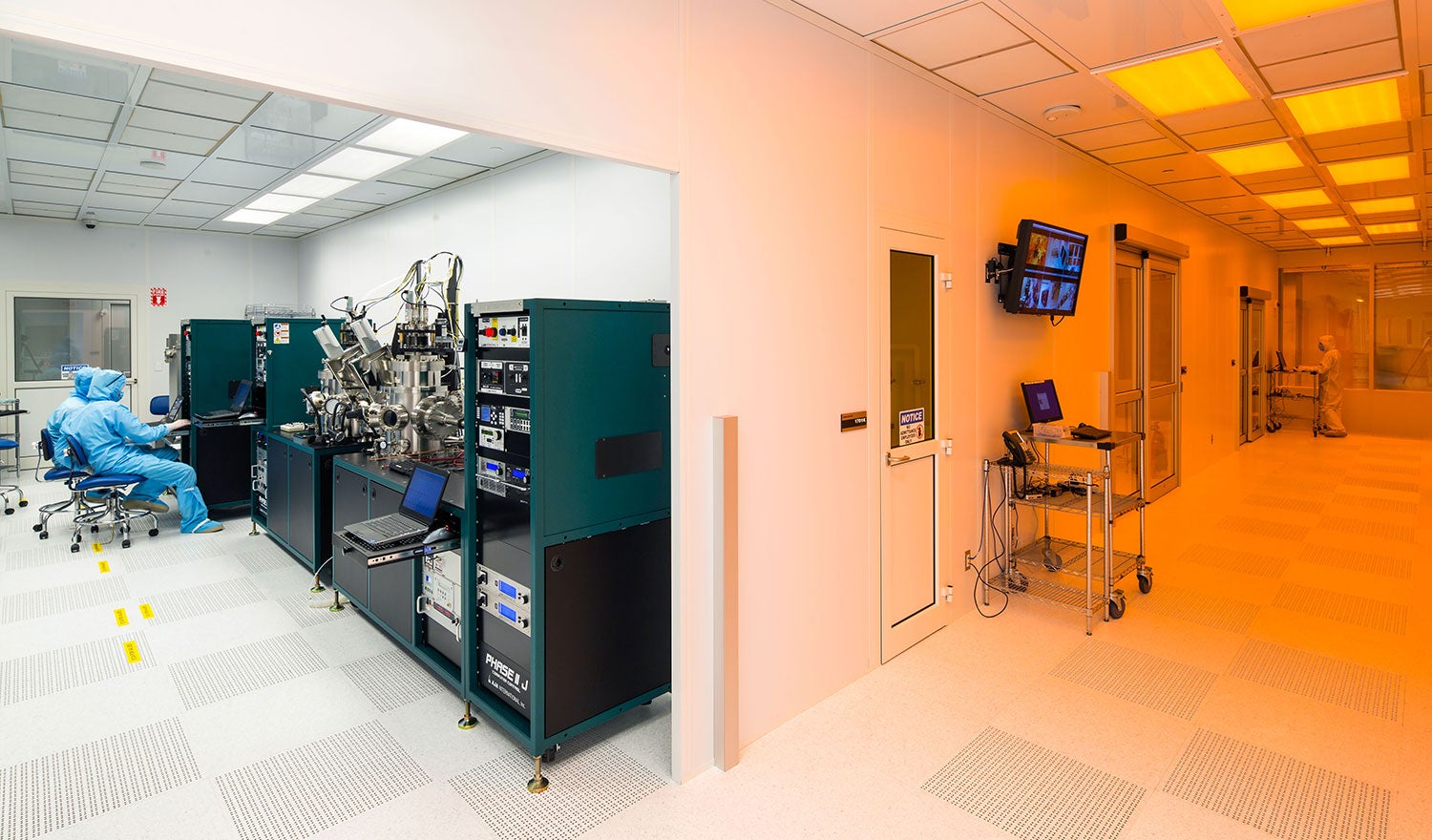
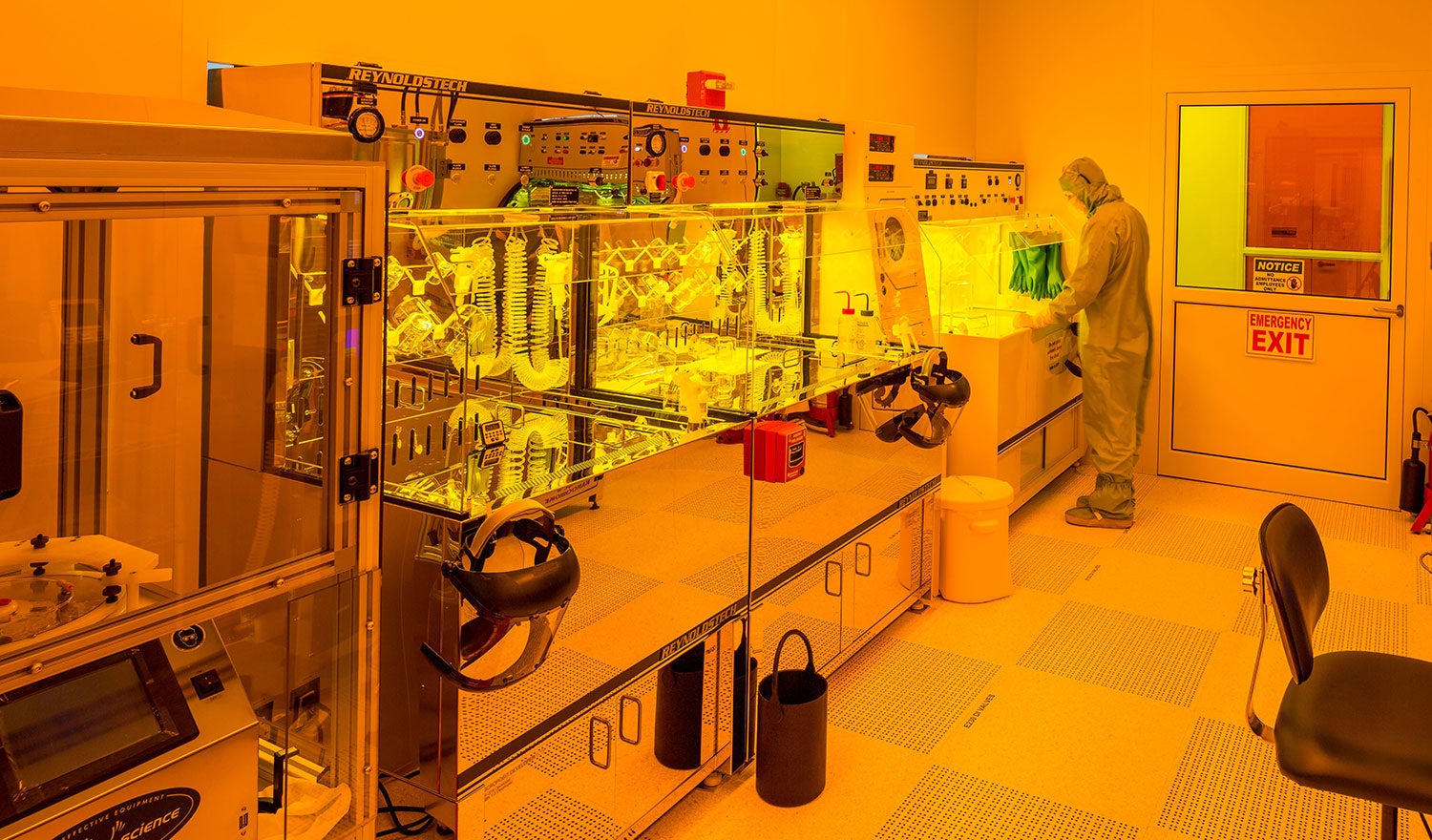
Shared facilities or quantum ecosystems are equally critical. Cleanrooms, nanofabrication spaces, cryogenic systems, packaging labs and shared testbeds lower barriers to entry and enable interdisciplinary work. DeMarco described shared experimental platforms as increasingly important places where theorists, engineers and materials scientists can work around a common system.
Panelists also emphasized the value of advanced prototyping and electronics spaces that support rapid iteration.
“Being able to prototype quickly changes how you work,” Grover said.
Across all facility types, flexibility emerged as a defining requirement. Not flexibility as generic space, but adaptability at the infrastructure level. Insufficient power, cooling or mechanical capacity can quickly become a constraint on research potential.
“The worst-case scenario is having the idea and the funding, but not the utilities,” DeMarco said.
Planning for What Comes Next
As quantum research continues to mature, its primary bottlenecks remain scaling and integration. Progress will depend on sustained investment, engineering rigor and collaborative environments designed to evolve alongside the science.
“We did not know how programmable computers would be used until we built them,” Grover said. “Quantum will follow a similar path.”
For institutions planning new quantum facilities, the challenge is not simply delivering shared space but creating platforms that translate discoveries into scalable technologies, encourage interdisciplinary collaboration and create long-term partnerships that are viable amid uncertainty.
The infrastructure decisions made today will help determine not only what research happens next, but also who leads in the field and how quickly discoveries move from theory to impact.

