

A Hospital Within a Hospital: Reimagining Pediatric Care in Kentucky
Identity Through Design
At the heart of UK HealthCare’s current transformation lies a bold idea: How can a children’s hospital continue to thrive, and even improve, within the walls of a larger academic medical centre, not as a tucked-away department, but as a fully realised entity with its own identity, purpose and future?
That’s the vision behind the paediatric hospital within the UK HealthCare Albert B. Chandler Hospital expansion. Golisano Children’s at UK, formerly known as the Kentucky Children’s Hospital, has experienced tremendous growth since its launch more than 25 years ago. With the NICU volume up 45% between 2018 and 2023 and the Makenna David Paediatric Emergency Centre exceeding capacity, this design effort addresses a critical facility need and establishes a benchmark for co‑locating adult and paediatric care, balancing shared infrastructure with distinct operational, emotional and experiential needs.
From Basement to Beacon
For years, Golisano Children’s at UK operated from borrowed spaces as a patchwork of wings, closets and converted adult units. It lacked a front door, a brand and a sense of place. As paediatric volumes surged, especially during COVID‑19 when other hospitals closed their units, the need for a dedicated, flexible and resilient paediatric environment became urgent. Children’s care spaces could not meet the quality of care provided by clinicians.
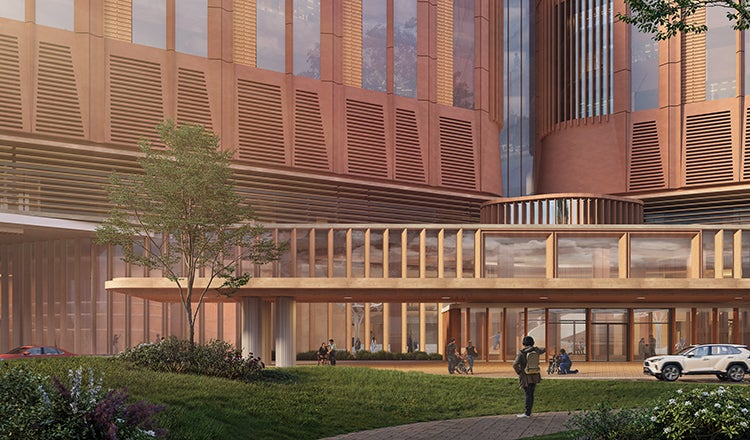
“We don’t have a front door. When you think about children’s care, having a building that you can point to and an aesthetic that matches the quality of care is important,” said Chief Medical Officer Lindsay Ragsdale, M.D., of Golisano Children’s at UK.
The expansion offered a rare opportunity to build a “hospital within a hospital” that could grow, contract and evolve, all while remaining deeply integrated with the adult health system and elevating the care environment.
Designing for Duality and Flexibility
The design team embraced a concept called “Same, but Different,” a duality that allows paediatric and adult spaces to coexist within one building, sharing a central core, while maintaining distinct identities. Paediatric services are vertically stacked in one tower, with dedicated entrances, elevators and circulation paths. Shared services like imaging, surgery and staff spaces are centrally located, enabling operational efficiency without compromising patient experience.
Security and safety were paramount. Behavioural health units, NICUs and birthing centres require controlled access and separation, achieved through thoughtful zoning and flexible infrastructure.
The design anticipates growth and contraction. If paediatric volumes rise, the hospital can expand into adjacent adult spaces. If needs shift, shared operating rooms and procedural areas can flex between populations. This adaptability is embedded in the building’s DNA; from universal room sizes to modular infrastructure, the hospital’s character is to welcome change.
Operational Strategy Meets Emotional Intelligence
Planning a hospital within a hospital meant navigating complex workflows, shared governance and deeply held cultural norms. Leaders from paediatrics, obstetrics, anesthesia, critical care and other specialties came together to rethink everything from resuscitation room layouts to sedation workflows.
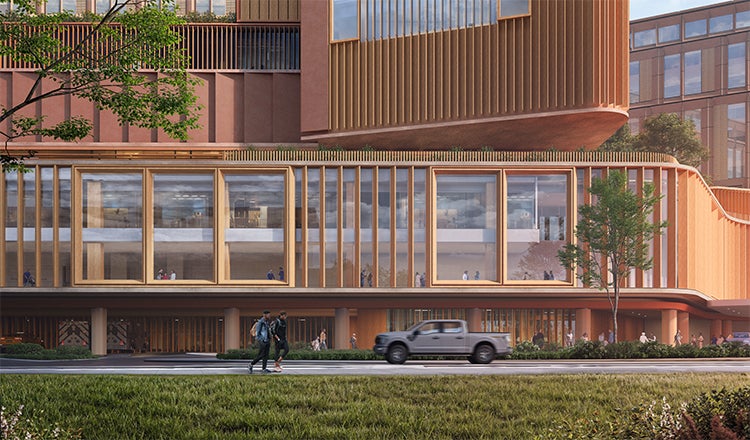
Mock-ups, whiteboard sessions and family council feedback helped teams move beyond “how we’ve always done it” to “what’s possible.” One breakthrough came when families advocated for keeping newborns in the same room as mothers during resuscitation, a shift that required both spatial reconfiguration and cultural change to maintain maternal connection at birth. Finding moments to design for personal connection is important in a facility of this scale.
In what could otherwise be a large, overbearing environment, the hope of the design is to demystify the patient journey through familiar elements, natural light and a form that recedes at human scale to create a calm experience of place.
Lessons in Leadership and Collaboration
The project also became a crucible for leadership development. Local leaders learned to manage uncertainty, absorb emotional energy and guide teams through change. Our immersive design process helped align vision, scope and budget, so that every decision was grounded in data, empathy and strategic foresight.
When complete, the paediatric hospital within the UK HealthCare Chandler expansion will be more than a building. It will be a symbol of Kentucky’s commitment to its children, a place where all families feel welcome and where care teams feel supported, and where healing begins the moment you walk through the door.


