
North Station Draw One Bridge Replacement

North Station Draw One Bridge Replacement
Reconfiguring a Vital Rail Corridor Through Phased Delivery While Maintaining Service at Boston’s North Station
- Replacement of 95-year-old movable bridges at the critical rail gateway into North Station
- Expansion of bridge capacity from four to six tracks
- Construction of an additional platform, expanding the station from 10 to 12 tracks
- Reconfiguration of track and signal systems in a constrained terminal environment
- Coordination of phasing strategies to maintain daily rail service throughout construction
On Boston’s North End, a single rail corridor carries every commuter and intercity train into and out of North Station. There is no alternate route for the millions of passengers who depend on these trains every year, so any disruption at this location affects the entire northside network. At the same time, the drawbridge must accommodate frequent openings for boat traffic on the Charles River, particularly during the summer months when dozens of vessels pass through each day. In the closed position, the clearance is limited to small craft, such as kayaks or canoes, making reliable bridge operations critical not only for rail service but also for river traffic.
The Draw One Bridge Replacement program focuses on this critical gateway, modernizing the infrastructure that supports the Massachusetts Bay Transportation Authority’s (MBTA) commuter rail network and Amtrak’s Downeaster service to and from Maine, while allowing rail service to continue uninterrupted throughout construction.
More than a bridge replacement project, the $1.2 billion program reconfigures the track and signal systems that govern how trains move into and out of the terminal, improving capacity, flexibility and reliability across the network.
HDR is serving as program manager and construction manager (PM/CM), supporting MBTA from design through delivery. Starting in 2025, we provided procurement support and specialized technical analysis. Following the selection of a design-build team in May 2026, we began supporting project controls, scheduling, risk management and design reviews, with construction inspection and field support to follow.
Replacing Aging Bridge Infrastructure While Expanding Network Capacity
The Draw One project replaces the nearly 100-year-old North Station Drawbridge, which consists of two double-track, rolling-lift bascule spans. These will be replaced with two three-track vertical-lift bridges, increasing capacity across the Charles River. The work also includes complete replacement of the approach trestle structures, replacement of the Tower A control facility and construction of an additional platform and accompanying tracks at North Station. Overall, the program extends more than a mile along the corridor.
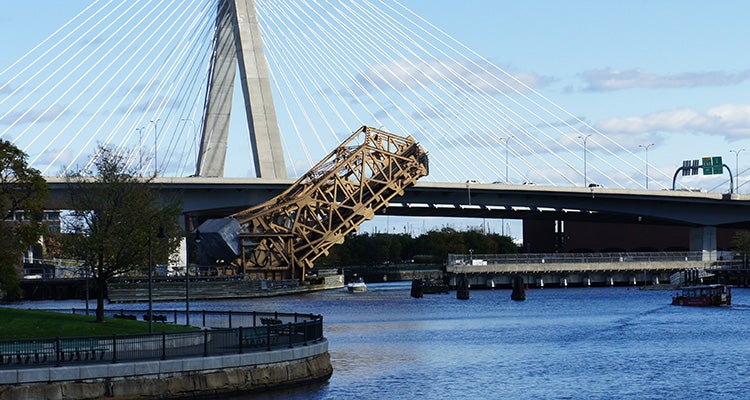
MBTA is using the upgrade as an opportunity to expand operational capacity. By the time construction is complete, the track configuration into North Station will have increased from 7-4-10 (approach – bridge – station) to 8-6-12, improving how trains move through one of the system’s most critical and constrained locations.
Keeping the System in Service via Deliberate Phasing Strategies
Maintaining uninterrupted service throughout construction will be a central challenge of the program. New infrastructure will be built alongside existing tracks where possible, then brought into service through coordinated cutovers. Once trains are shifted onto new infrastructure, older components will be removed and replaced. Throughout construction, four tracks must be maintained across the bridge every weekday, with a minimum of eight tracks active at North Station.
To meet requirements such as these, the work will be delivered in carefully sequenced phases. Our work as PM/CM includes evaluating construction means and methods to establish whether proposed phasing is practical and reduces disruptions. Drawing on our deep experience in rail operations and signalling, our team evaluates phasing scenarios, identifies potential conflicts and helps the team understand how each step will affect real-world train movements. We review detailed sequencing diagrams and track access plans to maintain operational continuity.
Working Within a Constrained Rail Environment
Designing and constructing movable bridges is already a complex undertaking, requiring specialized expertise in structural, civil and electrical engineering. These spans are also aligned along a skew to the waterway, further complicating design. The surrounding rail network adds another layer of complexity. North Station is a terminal where commuter trains arrive, unload and depart back in the direction they came. Tracks converge from multiple directions at the bridge, leaving little room to adjust alignment or establish long-term work zones.
The bridges carry trains across the river, but it’s the signal and interlocking systems that determine how many trains can move at once and how efficiently they can be routed. In this environment, even small changes to track layout or signal logic can have cascading effects on rail operations. The primary challenge is how to build the new bridges alongside existing movable bridges that must remain in service.
Construction must be carefully planned around active rail operations, with work occurring during the day as trains continue to pass through the corridor. Sequencing the work, determining when construction activities can take place and protecting trains moving through the site are central to how we are helping deliver the project.
The project is slated for completion in 2032. Additional tracks and platforms will improve how trains move through the terminal, while modernized infrastructure will help reduce the likelihood of service disruptions. As PM/CM, we are also supporting project controls and reporting for the program and assisting the MBTA with external stakeholder and public outreach. These efforts help coordinate a complex project in an active rail environment, where construction, operations and communication with multiple stakeholders must remain aligned throughout the work.


