

The Theater of Quantum Science Labs: Setting the Stage
Performing the Next Generation of Science
In theater, the stage is built for change. Scenery shifts, lighting transforms mood, and the same physical platform supports entirely different performances from one day to the next. But the stage visible to the audience is only one part of a much larger system. An enormous amount of offstage infrastructure allows the performance to succeed. As a result, the stage must be sturdy enough to hold complexity, adaptable enough to support new performances and organized so its mechanics do not distract from the performance itself.
Quantum science research laboratories operate on the same principle. What we typically think of when we refer to “the lab” is akin to the “onstage” environment. That space is supported by complex, largely hidden “offstage” systems that must work in concert to support highly sensitive research. The work that researchers are performing depends on an integrated “onstage” and “offstage” environment calibrated with precision and designed for reinvention.
“A well-designed stage can support a variety of performances without significant downtime in between. Similarly, a flexible laboratory, designed with a sophisticated understanding of infrastructural and operational needs, can keep up with the pace of change in research without having to rebuild the entire lab,” said Tzveta Panayotova, education and science principal. That idea sits at the heart of this typology.
Why Quantum Demands a Different Kind of Stage
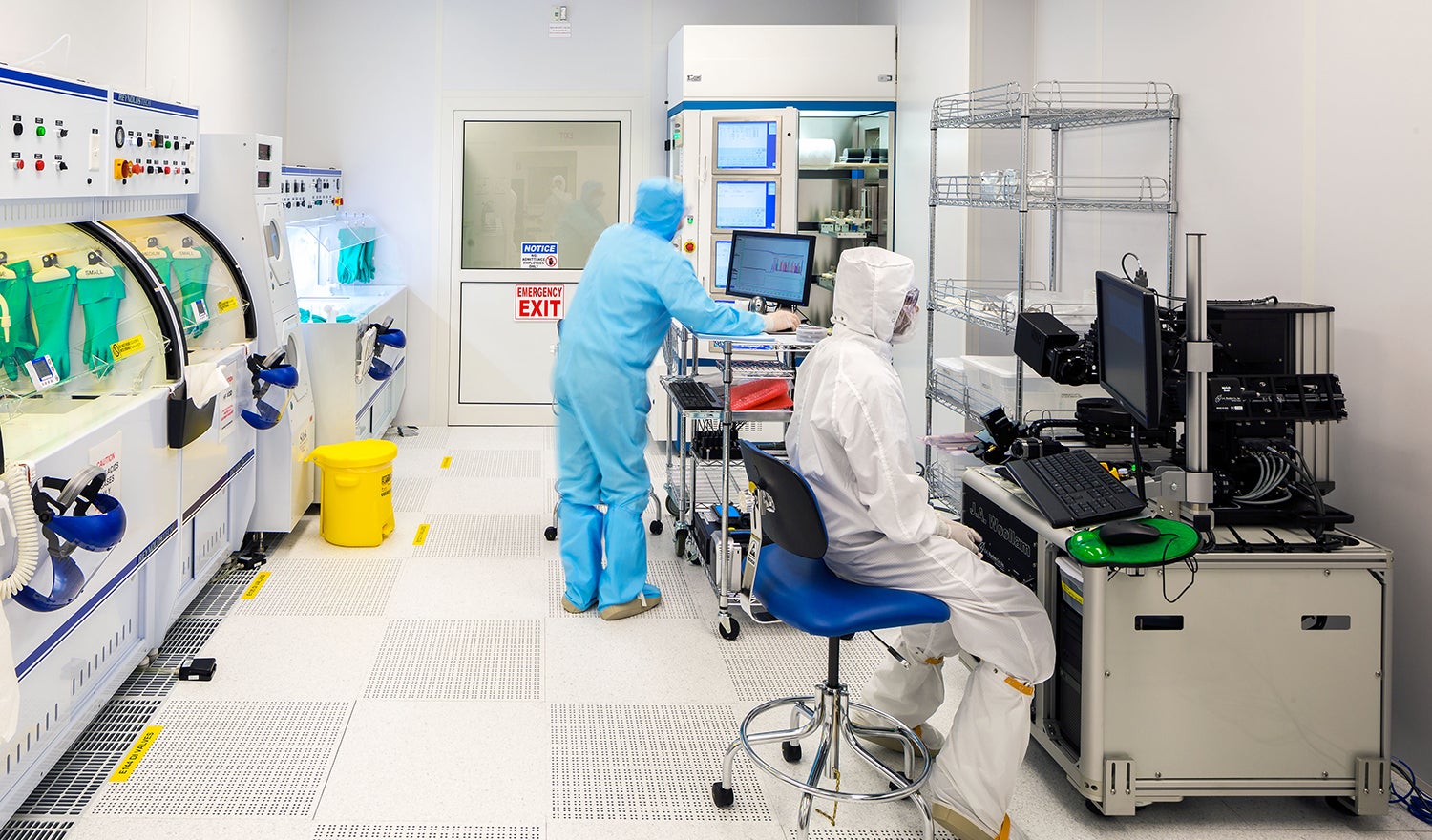
Quantum research involves equipment and processes that are extraordinarily sensitive and energy intensive. Temperature, humidity, vibration and magnetic interference all have the potential to disrupt experiments. Many quantum methods require extremely narrow and stable environmental conditions over long periods of time, even as equipment and people introduce heat, movement and electromagnetic noise.
These pressures often push design teams toward designing heavily isolated or buried spaces. While those solutions can control the environment, they often produce spaces that feel heavy and isolating for the people who work in them. Researchers spend long hours in these environments, and the stage should support them, rather than obstruct them.
“Typically, these spaces are solely focused on the technical requirements or the scientific environmental requirements,” said Matthew Fickett, principal planner. “Once you’ve achieved tight temperature stability, no vibration and no magnetic fields, there’s not a lot of room left to think about beauty. They can feel heavy and isolating, like a windowless basement room. Making these spaces better for people adds complexity, but it’s a problem worth solving.”
One approach is to accept that the most technically demanding functions still require isolation, while resisting the idea that every surrounding space must feel buried or disconnected. Highly sensitive equipment can be housed within tightly controlled zones that address vibration, temperature and magnetic requirements, while adjacent areas prioritize daylight, visibility and circulation. Even in lower-level or enclosed environments, access to light, visual connection to other researchers and a sense of orientation can make the space feel less isolating.
Quantum, AI and the Pace of Change
As quantum science evolves, new tools emerge, research directions shift and what begins as a specialized setup can quickly scale into a much larger enterprise.
Aided by advances in artificial intelligence (AI), quantum research is benefiting from faster analysis of increasingly large and complex data sets, accelerating modeling, simulation and iteration. AI increasingly acts as an “invisible partner,” helping researchers process information and adjust experiments more quickly. That speed places new demands on laboratory environments such as data connectivity, power and cooling, and shortens the window institutions have to adapt. The physical environment must keep pace without requiring constant reconstruction.
“Without flexibility, research environments risk strategic stagnation,” Tzveta said. “These facilities are costly investments, and if they cannot adapt to change, institutions risk losing agility, competitive advantage and long-term relevance.”
Much of that pressure is driven by quantum’s growing relevance to life sciences and health-related research, where problem sets can outpace even today’s most powerful classical computers. Modeling complex biological systems, drug interactions and personalized genomic responses are emerging as areas where quantum-enabled computation will fundamentally change how research is conducted.
“If you’re able to run simulations of the effect of a drug on a person’s specifically sequenced genome, that’s the sort of thing a quantum computer would shine at that a classical computer could never do,” said Greg Aldridge, principal planner.
Flexibility Beyond a Blank Floor
Accommodating changes for AI requires flexibility. But flexibility is often described as a blank-floor condition. In quantum science, it means something far more specific: capacity. It is the ability of a space to support equipment that may not exist when the building opens. It is power, cooling, structure and service distribution sized for future unknowns.
“Real flexibility is when a researcher can show up with something that did not exist yesterday, and the room can power it, cool it and accept it without major modification,” Matthew said.
In practice, this means pairing lab spaces with equipment chases, planning for higher power densities and designing environmental systems to operate across extreme ranges. A high-bay room alone is not flexible if the systems around it cannot support the next generation of instruments.
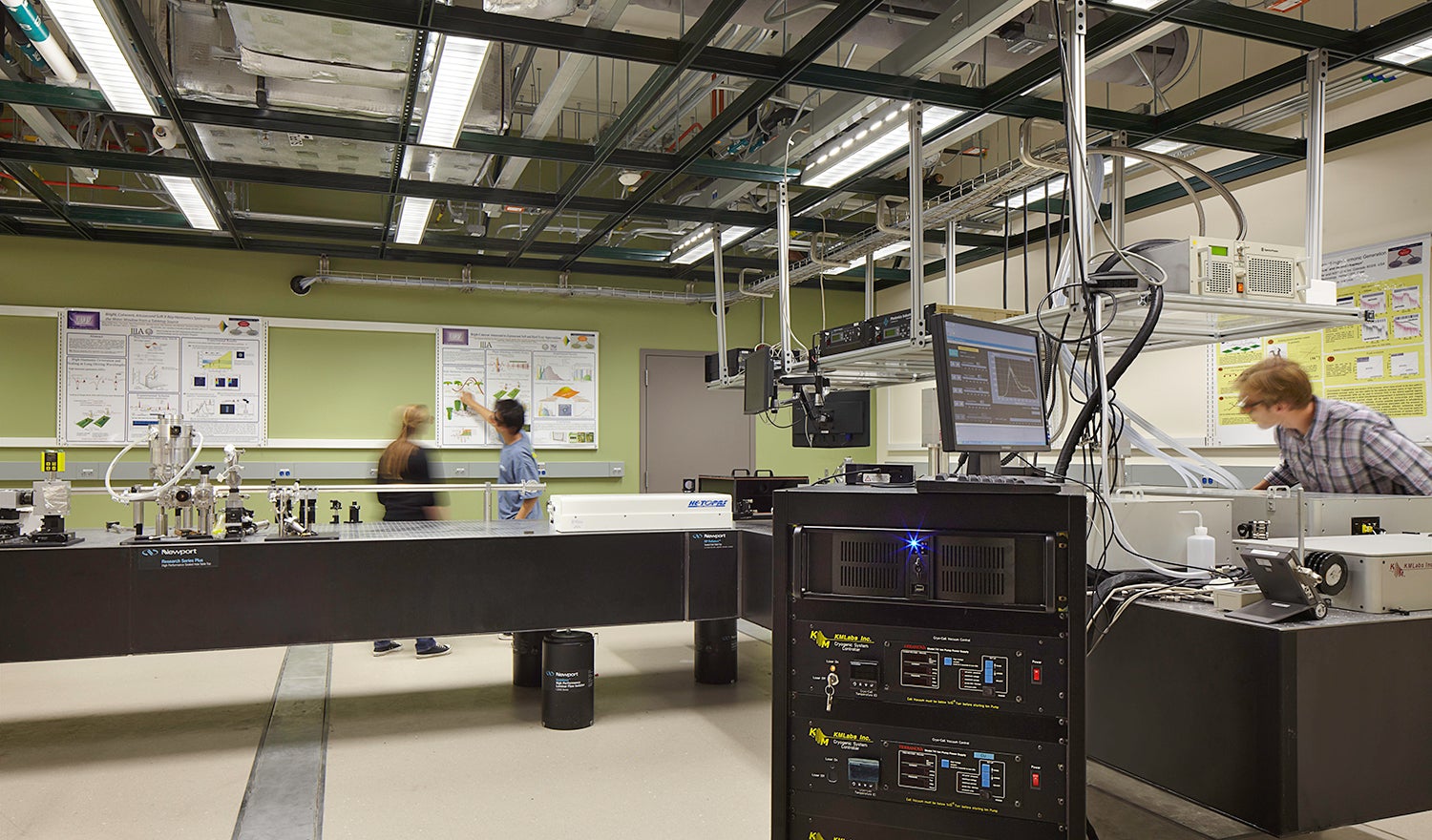
That need for adaptability is already evident in emerging research environments where disciplines converge. Aldridge points to bioelectronics laboratories — spaces where microelectronics are integrated with biological systems — as examples of research that can rapidly evolve as new tools and techniques emerge. These labs may shift from working with tissue cultures to entirely new delivery or sensing methods, placing a premium on infrastructure that can support changing power, data and environmental requirements without wholesale renovation.
As research priorities shift, a space that once supported one type of instrumentation can be reconfigured to support another, while adjacent labs continue operating. The goal is to accept that change is inevitable and allow each lab can adapt independently as technology and science evolve.
A Stage Built for Accessibility and Longevity
For decades, high-performance research environments have treated technical requirements as absolute and human experience as secondary. Modern laboratories challenge that hierarchy, recognizing that experience and precision must rise together. These decisions influence recruiting, morale, funding and outreach. Because quantum science remains unfamiliar to many audiences, these laboratories also play a role in making complex research visible, approachable and credible to students, partners and funders.
Institutions that treat the laboratory as a platform for continuous transformation rather than fixed square footage will be best positioned for the next wave of quantum- and AI-driven research.
However, a stage designed for reinvention is only one piece of the overall infrastructure. In theater, performance depends as much on what happens offstage as what unfolds under the lights. Quantum laboratories are no different. Their success depends on the systems that sustain performance and the people who bring the work to life. The next installments in this series will explore both.


