

Advancing Sustainable Construction: A Panel on the Future of Bio-Based Building Materials
Bio-Based Design and Construction, Now and Looking Ahead
In an increasingly sustainability-focused world, bio-based materials are becoming key solutions in the design and construction industries for their longevity, cost savings and eco-friendly properties. At Bio Innovations Midwest, a conference dedicated to advancing industrial biomanufacturing in North America, a panel discussion focused on the future of bio-based building materials examined the current state of sustainable construction and how these materials can be more broadly adopted.
The panel explored the transformative potential of design alternatives to reduce material carbon intensity. Panelists discussed technical, market and regulatory challenges surrounding material standardization, offering insight into the current state of bio-based materials and the steps needed to make bio-based construction the norm.
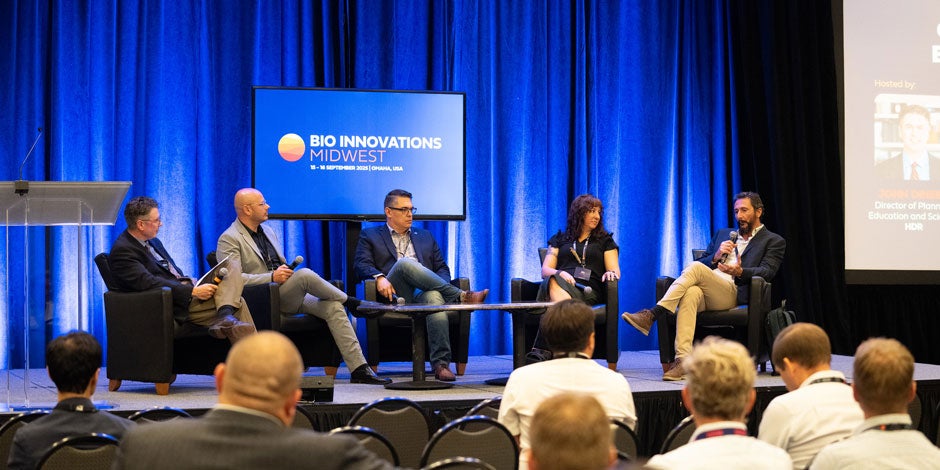
Host: John Dineen (Director of Planning Education and Science, HDR)
Panelists: Bill Deroin (Design Principal, HDR); Dr. George Berghorn (Assistant Professor of Construction Management, Michigan State University); Meg Bruce (Chief Commercial Officer, ekoa by Lingrove); Massimo Gatelli (Head of Material Science, Impact Acoustic)
What are some of the challenges or barriers that you face with the development, marketing, and adoption of some of these materials?
Panelists first pointed out the major challenge of the lack of education regarding mass timber. While architects and designers typically receive early education through wood-focused groups like WoodWorks, general contractors and construction teams often do not receive the same level of targeted education, creating gaps in understanding and trusting the material.
“Education is very important,” Gatelli said. “Sustainability is part of the process, but as a company, we need to develop something that is, at the technical level of performance, a material that people can use for decades and that they feel confident in.”
“[When] we come to a client and say, ‘Hey, we’ve got great news: We're going to be doing a mass timber project for you,’ the first thing they usually ask is, ‘What does it cost?’” DeRoin added. “This is where experience on the contracting side is important. When we did our first [mass timber] project here in Omaha, we saw a cost difference between what the contractor communicated to the owner of about 12-14% as a premium for wood versus steel construction. Working with that same contractor over several different projects, we better understand the costs and benefits together.”
As new bio-based materials are introduced and accepted throughout the industry, how is the market responding and evolving?
With the growing popularity of bio-based materials in design and construction, panelists noted the physical and cultural impacts of these products. In the development and marketing of materials that are not only aesthetically pleasing but also serve as high-performing materials, the success of the bio-based market relies on both creativity and a true commitment to sustainability.
“We talk a lot about strong, stunning and sustainable. So how do we make sure we're hitting all those targets?” Bruce said. “You can’t have that conversation if what you're making doesn’t do what it needs to do, if it’s not nice to look at, and if you aren’t sustainable. The challenge is helping people to understand the things that matter … [and] the key metrics.”
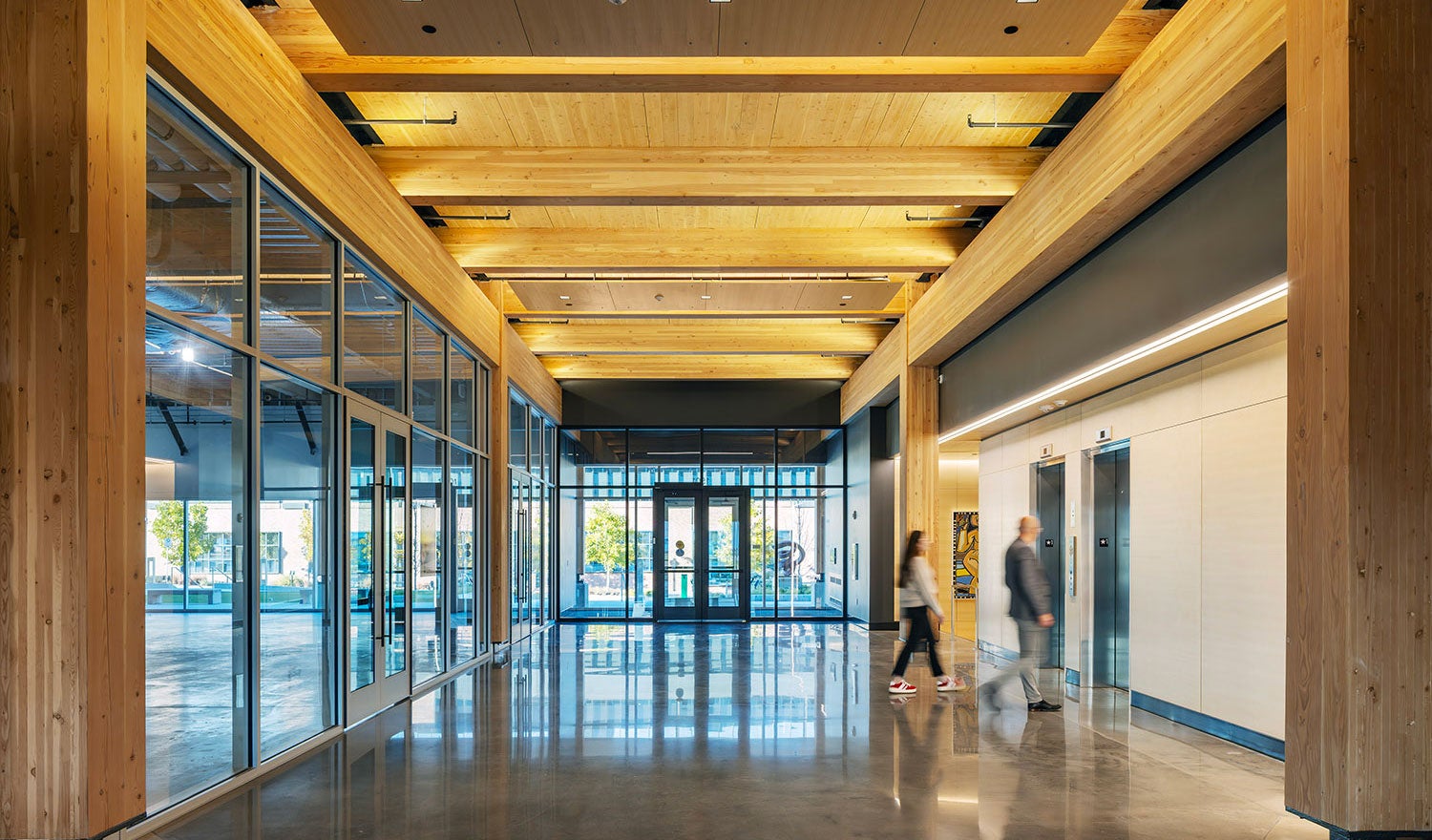
“When we came out of COVID, our studio hadn’t done any mass timber projects to date,” Deroin said. “We have a project just about 3 blocks west of here, 1501 Mike Fahey. It was a developer-led speculative office building. The owner cared about having a sustainable project that was designed to LEED certification standards … but they came to us with an interest in mass timber, and one of the main reasons was how the pandemic impacted the workplace market. What they were trying to find was a new way of approaching how they could get people back into the workplace and interested in [working in] an office environment [again], and mass timber played into that strategy. Those timber-based spaces are the first ones getting leased out by clients.”
What do we think the bio-based materials market will look like in the next 10-20 years? In what direction is it heading?
When it comes to the future of the bio-based materials market, panelists noted the rise in innovation to optimize products. With improved materials that are replacing fossil fuel-based chemicals with better carbon performance and alternative wood species for mass timber projects, bio-based construction is gradually becoming more efficient and environmentally responsible.
“The fact that there are so many standards makes it difficult to compare,” Gatelli added. “There are so many companies producing new products with good features. I think that in 10 years, the market will change quite a lot and go in the direction of having more sustainable materials. When I mean sustainable, I mean also the capability of having something reusable at the end of its life to reduce the consumption of resources.”
“I’m a huge optimist,” Bruce said. “I think there’s a lot of education that needs to happen, but it’s so exciting. We have lots of new materials coming into play that are able to meet the quality criteria for pretty heavy-hitting applications. Supply chain consistency, the cost of bio-based materials, and inputs will go down as the availability of bio inputs increases. It’s difficult to manage those supply chains to date, but as adoption grows, the barriers … will continue to lower."
“We expect it, industrywide, to continue to grow,” Deroin added. “I think it’s interesting to see what a Midwestern application of mass timber looks like. The eastern red cedar is seen as an invasive species, but maybe there are opportunities for small-scale mass timber applications … We can tap in more regionally to some of the hardwood-based forests in the upper Midwest. I definitely see it growing even beyond mass timber.”
Supporting a Bio-Based Future
As projects progress in complexity and scale, the importance of education is key to the advancement of bio-based materials in the design and construction industry. Through mediums such as AIA-accredited presentations, contributions to thought leadership and attending conferences and forums like Bio Innovations Midwest, HDR is committed to sharing the knowledge we have amassed through our project experience and supporting the future of a bio-based built environment.


