

Better Airport Asset Management Begins With Better Data Management
Executive summary: In this article, HDR Aviation Digital Delivery Lead Posh Supupramai explores how effective airport asset management depends on reliable, well-governed data. Establishing a single source of truth through an enterprise digital asset management system supports better maintenance, more informed capital planning, reduced operational risk and stronger long-term asset performance.
Moving Beyond Digital Models to Provide Consistent, Quality Data for Operational Needs Throughout an Asset’s Life Cycle
Any chef will tell you that before you begin cooking, your ingredients must be prepped, measured and placed within reach, so you’re not left scrambling while something is already on the stove.
A similar idea applies to digital delivery and asset management for airports. Data needs to be organized and ready to use, so teams can act on it instead of having to track down and verify information on the fly.
Airports repair or replace an enormous amount of infrastructure assets each year. The latest Airport Infrastructure Needs Study from Airports Council International estimates that U.S. airports alone have nearly $35 billion in annual capital needs from 2025-2029.
As airports have undertaken projects in recent years, the infrastructure industry’s shift to digital delivery strategies has paid clear dividends in terms of schedule, accuracy, clash detection and design clarity. But the promised benefits of improved asset management are still unevenly captured throughout aviation. One major reason is challenges with planning for data capture and a lack of enterprisewide data strategy at airports.
Those asset management benefits are typically realized in the enterprise asset management (EAM) system used by operations and maintenance teams. But an EAM is only as good as its data, and much of the information created during digital delivery never reaches it cleanly. The solution is a digital thread: capture asset data once and reuse it across planning, design, construction, and operations through a single source of truth.
Questionable Data Creates Friction and Operational Risk
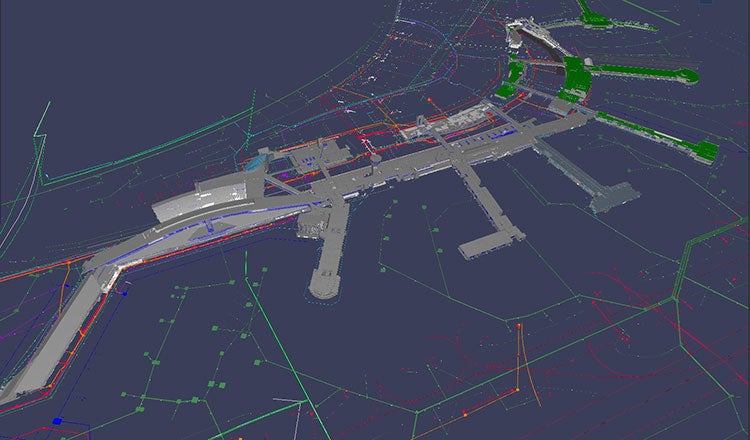
Airports rely on information from a variety of digital systems, including building information modeling (BIM), computer-aided design (CAD) and geographic information systems (GIS). Accurate, accessible asset information enables better decisions across airport operations, maintenance, and long-term capital planning. Yet at many airports, critical asset data remains scattered across BIM, CAD and GIS platforms, as well as outdated PDFs and paper records. Information is often fragmented across departments, resulting in multiple versions of the truth and making it difficult to maintain a consistent, reliable view of airport assets.
That can mean working from a mix of formats with limited clarity on the data’s recency and completeness. On our work with major airports across the U.S. on digital delivery efforts, “Is this the most recent version of this file?” is one of the most commonly asked questions.
Teams must pull from multiple systems to piece together the most current information. Consider a common scenario: Road improvements are planned to ease congestion and add capacity. But the designers need confidence in the utility and subsurface conditions, and there are conflicts in the as-built information saved. The gap between having data and being able to use it becomes a real operational challenge. For airport teams responsible for keeping facilities running, that lack of clarity adds risk and slows response when timing matters most. And when new project data finally makes its way into the EAM, the underlying data quality issues come with it, creating incomplete asset records, inaccurate work orders and preventive maintenance schedules based on assumptions rather than facts.
Improving Data Across Existing Assets and New Projects
The good news is that airports are increasingly investing time and effort in improving their data, work that will lead to much improved understanding of their assets. This happens on two tracks: gathering information about existing assets and starting new projects with best practices to better capture accurate and up-to-date information from the beginning of the asset life cycle.
For airports’ existing assets, the first step for airports is understanding what they already have. That means reviewing existing BIM/CAD models, GIS databases, PDFs and record drawings and identifying where information is missing, inconsistent or duplicated across systems.
From there, the focus shifts to validation. Data fields need to be checked for completeness. Naming needs to follow a consistent structure. Attributes must match across platforms so that information can move from one system to another without breaking.
At Philadelphia International Airport, for example, we've incorporated automated and semi-automated data quality reviews into our broader data governance strategy. Using software platforms such as FME, we check data against predefined rules, flag inconsistencies and standardize information before it moves between systems. That allows our team to identify issues earlier and spend less time manually reviewing data.
One example is naming conventions: Something as simple as naming conventions can cause cascading issues down the line. If one system refers to a location as “Terminal A,” another stores it as “terminal_A” and a third uses a misspelling that keeps getting copied and pasted; those records don’t line up. A simple search — either human or AI — can miss critical information. A dataset that looks complete on its own becomes unreliable when it needs to connect to something else.
Missing information or variations in information can also lead to messy data. For example, fields required in one system may be missing in another. Attributes like asset location, material, date of construction/installation, estimated replacement cost, design specifications or more might be entered differently, depending on how information was provided. Over time, those inconsistencies multiply.
Steps Airports Can Take Now
Airports that want to receive the benefits of data-rich asset management can begin with a few clear actions:
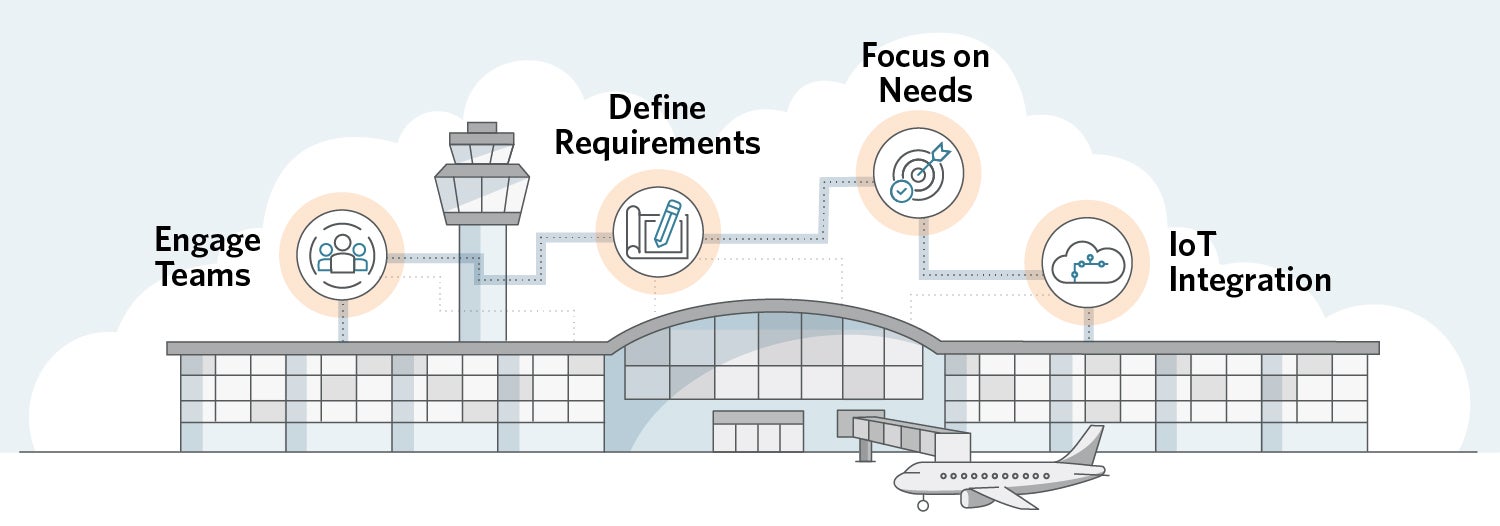
- Engage asset management teams early in planning, RFQs and project scoping.
- Define data requirements upfront so project teams know what information must be captured.
- Focus on operational needs, not just design deliverables.
- Consider IoT integration to provide ongoing operational data and support future digital twin capabilities.
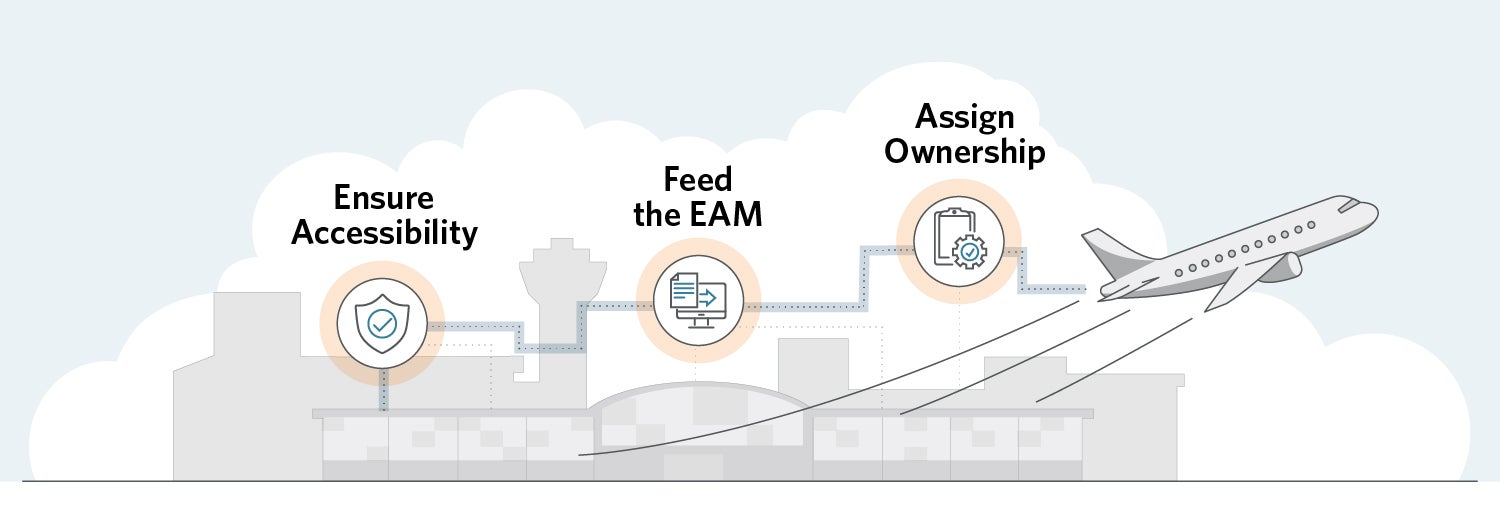
- Ensure data accessibility across the organization and avoid proprietary data silos.
- Continuously feed the EAM system with as-built, commissioning and operational data.
- Assign clear data ownership and establish processes for ongoing maintenance and change management.
Everything in Its Place
In a professional kitchen, nothing works smoothly without careful preparation and strong coordination among the entire team. The same holds true here: Everything slows down if the data isn’t ready to use.
At modern airports, where operations don’t stop, teams need to trust the information in front of them. That means refining data into a consistent, usable state early and maintaining it over time so it can support decisions over the life of an asset. The result is an asset management strategy and systems that help airports understand their infrastructure, improve planning of capital investments and deliver significant operational and financial benefits.


