

Thinking Outside the Box, Inside the Box: Using Constraints as a Catalyst at Nemours
Designing a World-Class Care Environment in a Challenging Envelope
Pediatric healthcare environments are evolving to support more than just clinical outcomes. Increasingly, they are being designed to promote emotional wellness, developmental growth and family engagement. At the Lisa Dean Moseley Foundation Institute for Cancer and Blood Disorders at Nemours Children’s Hospital, Delaware, this philosophy is central to care delivery.
But achieving that vision was far from simple. The existing unit was constrained by its footprint and infrastructure, and its layout reflected an older model of care. Long, sterile corridors split the unit in half, isolating teams and creating dead zones. Nurse stations were centralized, limiting visibility and slowing response times. Patient rooms were cramped and awkwardly configured, with headwalls and toilet doors competing for space. Families were squeezed into corners, and undefined alcoves sat empty or became cluttered storage. The environment worked, but only in the most basic sense. It met clinical needs while leaving collaboration, comfort and family engagement behind.
Nemours wanted more. The goal was to create a space that reflects a whole-child approach to care, supports multidisciplinary collaboration and encourages healing through thoughtful spatial planning, all without expanding the unit’s footprint. The challenge demanded creativity, speed and consensus-building.
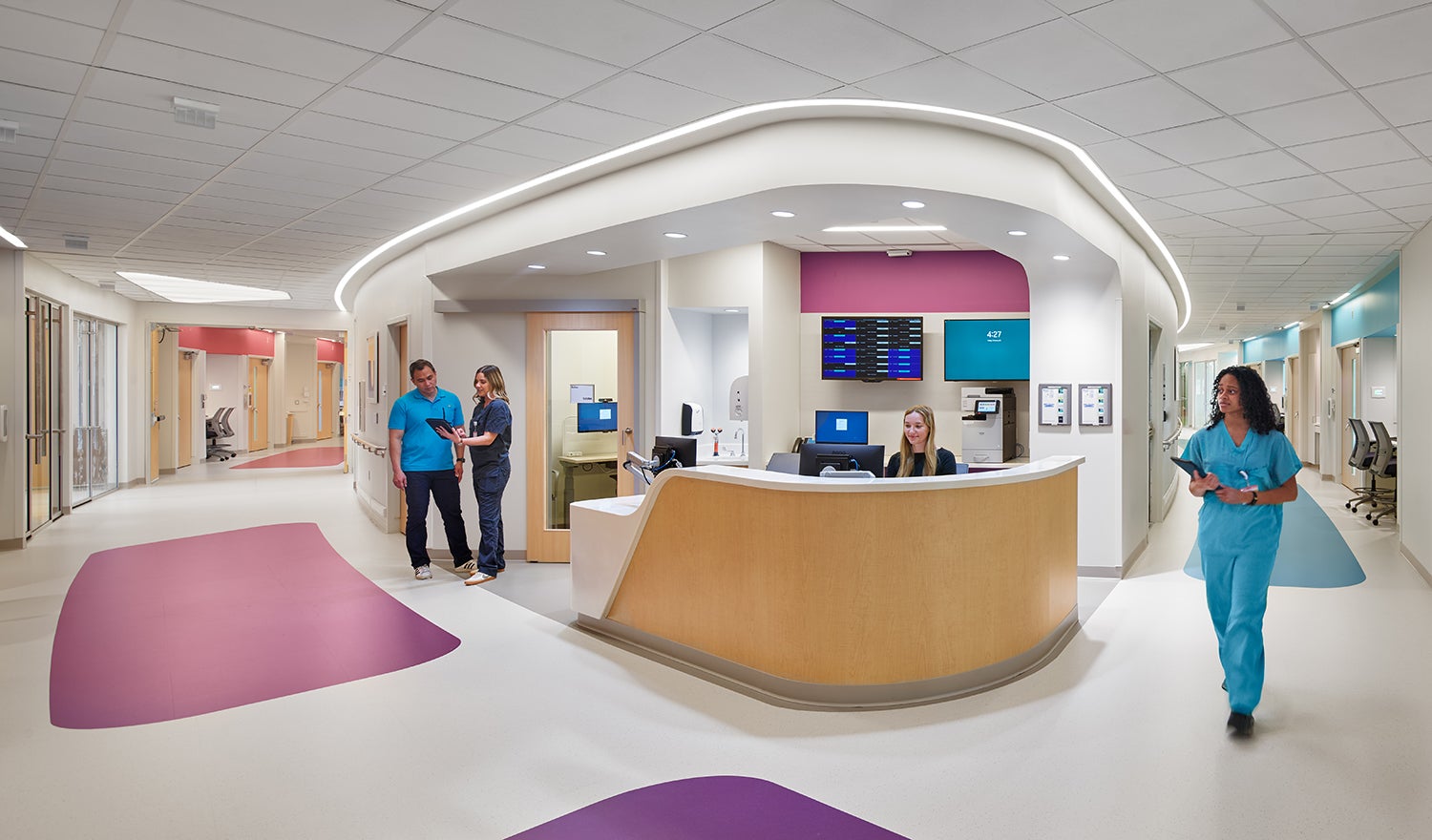
Turning Constraints Into Catalysts
To meet an aggressive 15-month timeline for design and construction, HDR and Nemours employed an Immersive Design Experience (IDE) that included multidisciplinary workshops, with input from the Patient and Family Advisory Council. This approach built consensus quickly, reduced design time and incorporated Lean operational planning to minimize changes and maximize efficiency.
Three key interventions — rerouting circulation, creating highly flexible multipurpose spaces and reconfiguring patient rooms — enabled the team to deliver a more collaborative, flexible and family-centered environment.
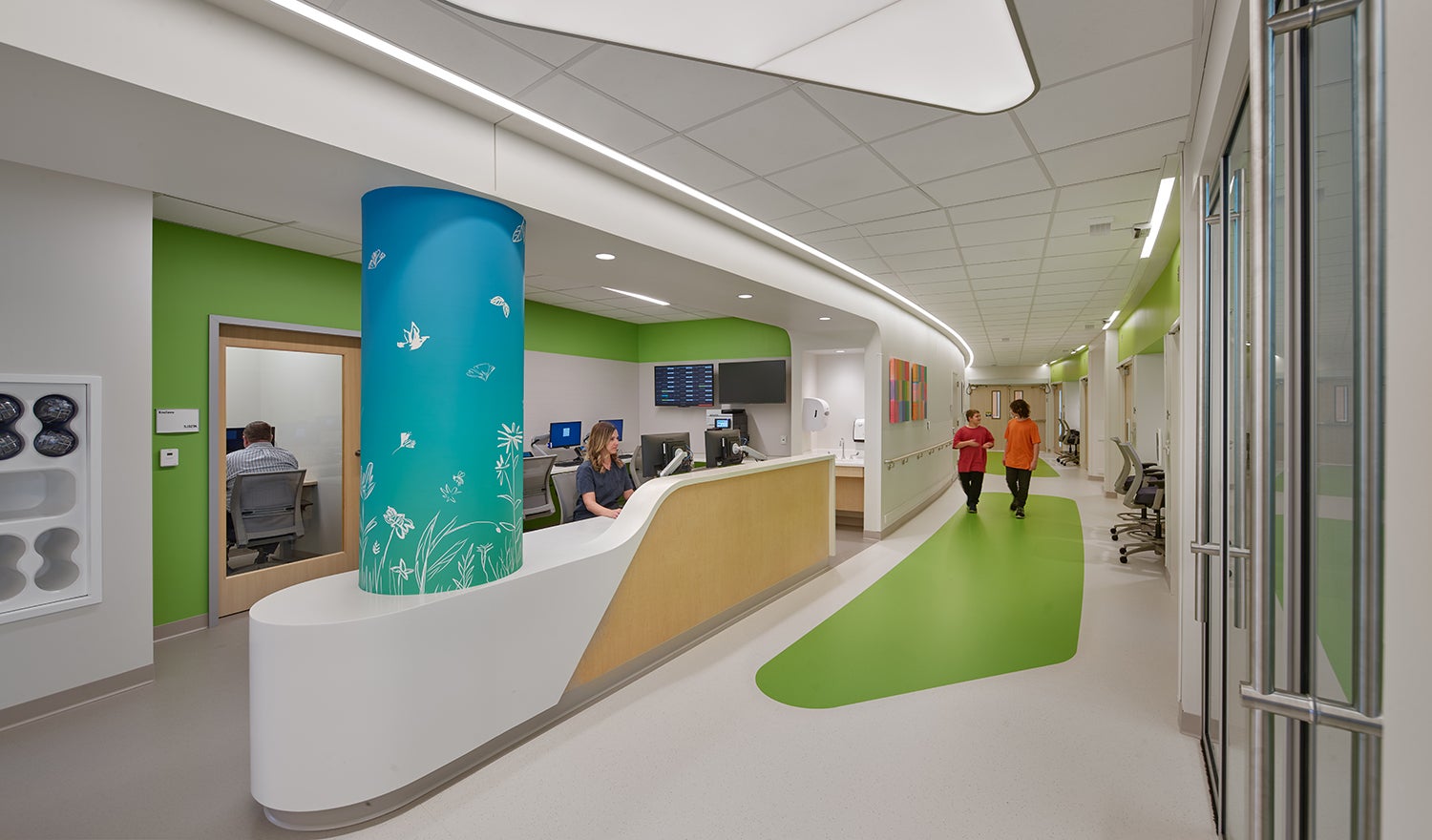
Rethinking Circulation to Enable Teaming
Previously, a single central corridor split the unit in two, creating physical and psychological barriers. Collaboration was difficult, and staff had few places for private conversations or focused work. Families navigated long, curved hallways that offered little comfort or orientation.
The new design flips that experience. Circulation now centers around a block of offstage teaming spaces where clinicians can collaborate, conduct research, and find respite without disrupting patient care. Nurse stations are decentralized, with one per pod and charting stations between every pair of rooms. This improved visibility, reduced response times and created space for an expanded care team that includes nutritionists, therapists, child life specialists and others. Circulation routes align with daylight and amenity spaces, providing visual cues and moments of respite for staff and families.
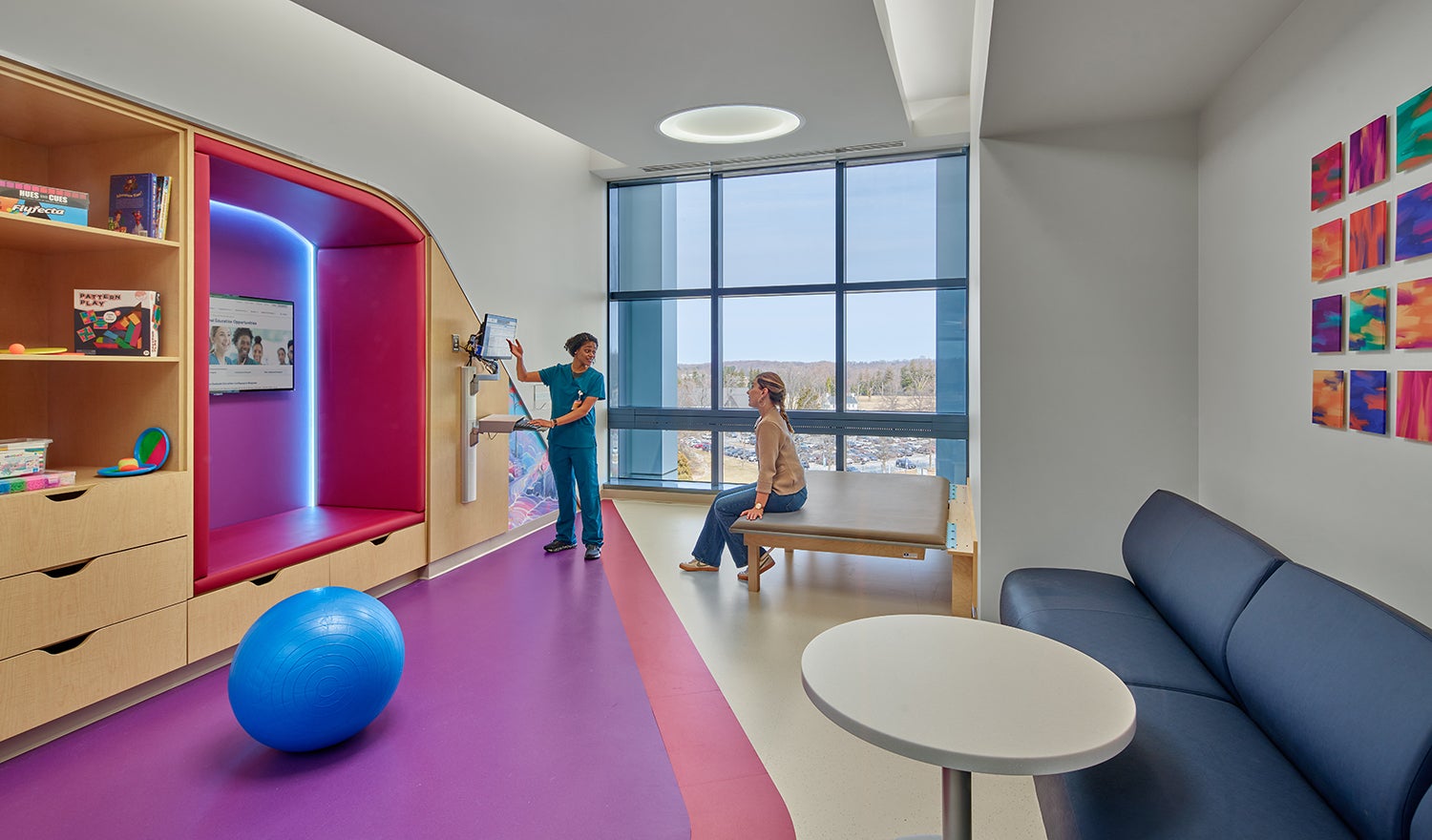
Activating Underutilized Spaces
Before, small alcoves defined loosely as “pocket parks” for family respite sat empty or became cluttered storage, reinforcing a sense of confinement. These spaces offered no value to patients or families.
Now, they are transformed into multipurpose spaces that support both clinical and personal needs. These flexible environments host schoolwork, meals, physical therapy and play. Designed for everyone from toddlers to teens, these areas accommodate individual and group interaction, with the flexibility to host therapeutic activities or casual family time. By layering clinical utility with psychosocial value, the design normalizes the care experience and promotes wellness beyond the patient room.
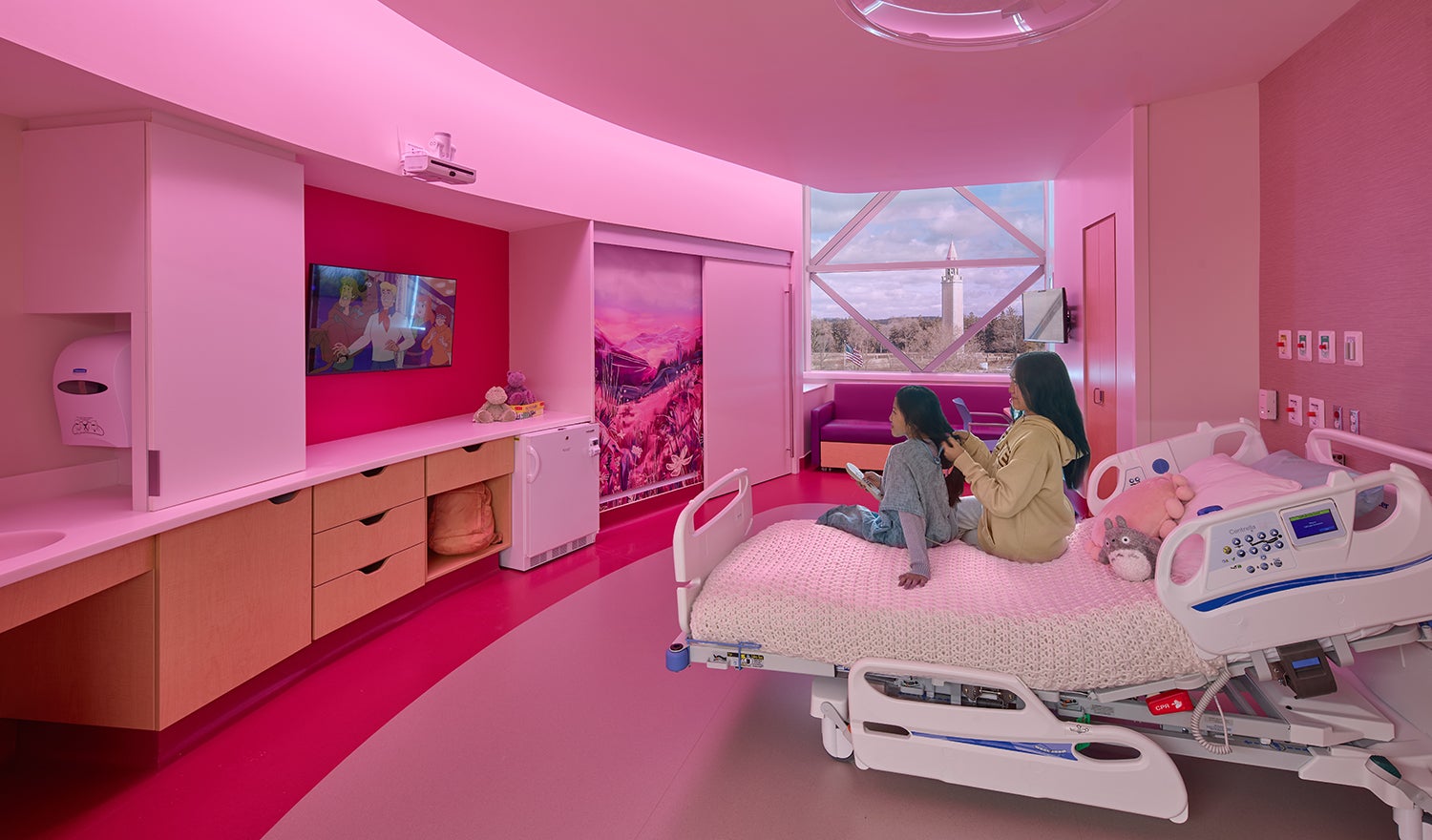
Transforming the Patient Room Experience
Patient rooms were among the most challenging constraints. The original layout placed the headwall and toilet room door on the same side, creating cramped spaces and limiting family interaction. Staff zones were segregated in the room, leaving families squeezed into corners and feeling disconnected from the care team.
The redesign flipped the bed orientation, integrated the in-room staff zone and added decentralized charting stations outside. This decompressed the patient zone and strengthened family connection. Smart glass and folding screens enhance privacy, while environmental controls such as lighting give patients greater control over their surroundings. Although the footprint remained the same, the new layout improves flow, visibility and comfort. The result is a room that feels larger, more pleasant and better suited to the needs of pediatric patients and their families.
A Model for Whole-Child Care
The transformation of Nemours Children’s demonstrates how thoughtful design can elevate care delivery, even within tight constraints. By focusing on circulation, multifunctional spaces and patient room design, we helped Nemours create an environment that reflects its mission and supports whole-child care. This project highlights our ability to maximize existing space, support multidisciplinary collaboration and design environments that promote healing, empowerment and family engagement.


