

Heavy Industrial Manufacturing: What's Evolving and How to Approach Project Delivery
Exploring Heavy Industrial Manufacturing, Trends and an Integrated Project Approach
Heavy industrial manufacturing in the United States is entering a period of renewed investment and strategic importance. Inflation-adjusted investment in new manufacturing facilities reached nearly $225 billion annually in 2024, more than double pre-pandemic levels, while semiconductor and advanced manufacturing firms have announced more than $645 billion in domestic investments since 2020. Industrial organizations are expanding domestic capacity across sectors such as shipbuilding, advanced machinery, pressure vessels and aerospace in response to evolving supply chains, increased infrastructure demand and shifting geopolitical dynamics.
Delivering these large-scale manufacturing programs, however, requires more than production capability. It needs an integrated approach — one that aligns infrastructure, workforce, energy and long-term planning from the beginning. Here are some things to know about what heavy industrial manufacturing is, its future and impact, and how to approach these unique projects.
What is heavy industrial manufacturing?
Heavy industrial manufacturing focuses on producing large, complex and capital-intensive systems that support other industries. These include equipment and materials essential to industrial facilities, energy production and transportation networks. In short, heavy industrial manufacturing is a cornerstone of North America’s economy, supplying the systems and materials that make infrastructure development possible.
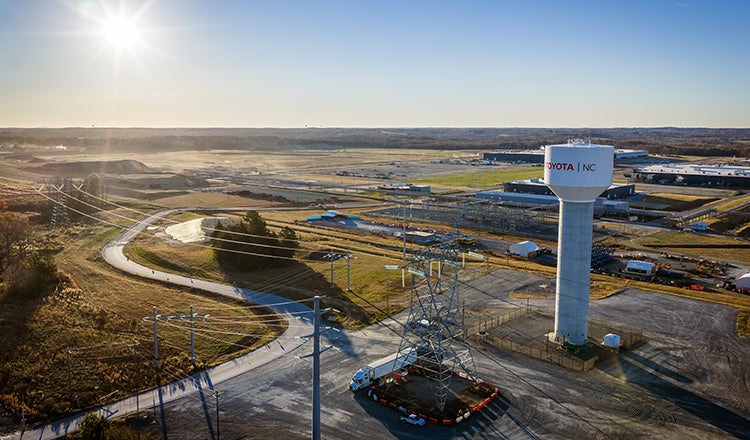
The sector also plays a key role in regional economies, supporting not only direct manufacturing jobs but also a broader network of engineering, construction and supply chain activities. In an interconnected North American market, these supply chains often span borders, reinforcing the importance of coordination and resilience.
At the same time, domestic manufacturing capacity is closely tied to national priorities. The ability to produce critical systems and materials within the United States helps support defense readiness, energy independence and long-term economic stability.
What are some trends facing the heavy industrial manufacturing Sector?
Trend 1: More Investment in the US
A notable shift in recent years has been the movement toward bringing manufacturing operations back to the United States. Organizations are reevaluating global supply chains and prioritizing domestic production to improve reliability, reduce risk and enhance responsiveness.
Public and private investment is reinforcing this shift. Federal and state programs are accelerating development in sectors such as advanced manufacturing, semiconductors and clean energy, expanding the geographic footprint of industrial growth with emerging regions offering new opportunities for facility development.
Energy availability also has become a central consideration in this equation. Large-scale manufacturing facilities require consistent, high-capacity power, and in many cases, alignment with evolving sustainability goals. As demand increases across multiple sectors, energy infrastructure is becoming a key differentiator in site selection.
In parallel, manufacturers are placing greater emphasis on securing access to critical materials. Efforts to strengthen domestic supply chains, including recycling and alternative sourcing strategies, are helping reduce dependence on global markets and improve long-term resilience.
For example, when a battery materials manufacturer was looking to build a new facility in the southeastern United States, we provided a comprehensive site selection study across five states to identify optimal locations for the new heavy manufacturing facility. Focus centered on sites that met specific criteria, including:
- Power availability
- Natural gas service
- Adequate acreage
- Permitting feasibility
- Access to a qualified industrial workforce
Our team conducted a desktop GIS analysis to screen potential sites and identify those best aligned with the client’s operational and logistical needs, positioning the battery technology company to make informed decisions about site viability and investment potential.
Trend 2: Interest in Nuclear Energy
The resurgence of nuclear energy development — driven mainly by artificial intelligence and data centers that require large energy resources — is creating both significant opportunities and challenges for reactor and pressure vessel manufacturers in the United States.
The primary constraint facing the U.S. nuclear supply chain is not reactor technology but industrial heavy manufacturing capacity. The needed large reactor vessels, steam generators, containment components and other nuclear-grade heavy equipment require specialized materials, highly skilled labor, stringent quality assurance processes and certified manufacturing facilities, all of which are in limited supply.
In response, the U.S. Department of Energy (DOE) has begun funding expansion of domestic heavy manufacturing capabilities, including facilities that assemble reactor pressure vessels, produce large nuclear components, install heavy machining equipment and increase nuclear-quality steel and forging capacity. These investments reflect the industry’s awareness that fabrication capacity must grow significantly to support expected orders over the coming decade. As a result, reactor and pressure vessel manufacturers are positioned to play a critical role in enabling the next generation of U.S. energy infrastructure.
Best Practices for Heavy Industrial Manufacturing Projects
Heavy industrial manufacturing facilities are typically characterized by their scale and complexity. They require significant physical infrastructure, operate with high energy demand and rely on continuous or highly coordinated processes. Investments are substantial and long-term, with assets designed to perform reliably over decades.
Because of this, early decisions — particularly around site selection, facility design and systems integration — have lasting implications. Flexibility, durability and efficiency should be built in from the beginning. Additionally, integration is essential. Site selection, permitting, infrastructure and design are closely interconnected, and addressing them in isolation can lead to inefficiencies or delays.
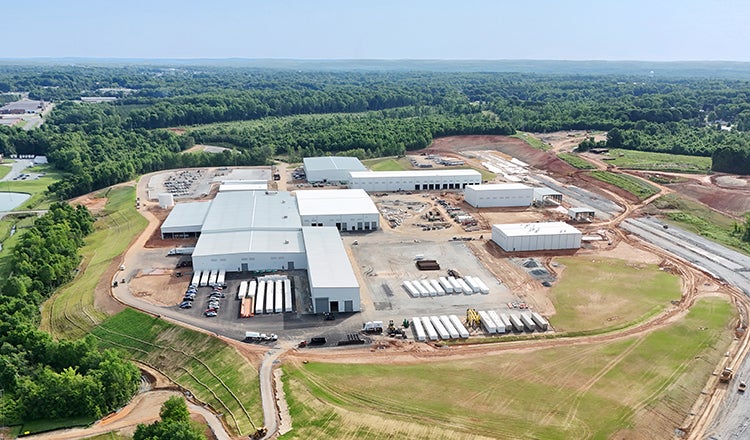
An example of this is our work with Siemens Mobility on its advanced manufacturing and rail services campus, which is designed to produce some of the most innovative and sustainable passenger trains in North America.
Early engagement was critical to the project's success. During conceptual design of the manufacturing facility, we developed a permitting roadmap identifying studies, engineering milestones, key decision points, permitting steps and schedule requirements needed to move the project forward. Our team gained comprehensive understanding of the site's civil and hydraulic constraints, permitting requirements at the local and state levels, and the regulatory expectations of the North Carolina Department of Environmental Quality (NCDEQ).
Equally important, our team established strong relationships and credibility with multiple Siemens divisions. By understanding Siemens' organizational priorities and aligning with the expectations and decision-making approach of its German stakeholders, we were able to streamline collaboration and support more informed project decisions. This foundation enabled us to develop an efficient site configuration that incorporated operational requirements for eight buildings, road and rail access, and the organization’s net-zero sustainability goals.
It’s also essential to have early alignment across disciplines — engineering, environmental, infrastructure and program management — which can help streamline delivery and improve outcomes. This includes proactively engaging with regulatory requirements, coordinating with energy suppliers and aligning facility design with operational goals.
In another example, we worked closely on a manufacturing facility project to refine the site concept and align it with local planning and engineering requirements. Our team developed the concept plan, incorporated feedback from the city and coordinated with the manufacturer to prepare a zoning meeting package and provided iterations of the concept plan to support the appeals process.
This phased approach allowed the manufacturer to move forward with zoning and permitting while maintaining flexibility in the site layout. The design also leveraged previously approved plans and stormwater infrastructure to streamline the permitting process. Our approach emphasized responsiveness to client feedback and regulatory expectations, resulting in a design that balanced operational needs with site constraints.
Organizations that take a comprehensive approach like this are better positioned to manage risk, optimize performance and adapt to evolving market conditions.
What’s next for heavy industrial manufacturing?
Heavy industrial manufacturing in the United States is evolving in response to a more complex and dynamic environment. Investment is increasing, priorities are shifting, and expectations around resilience and sustainability are growing.
For heavy manufacturers, the path forward will depend on the ability to navigate these factors together, balancing immediate project requirements with long-term strategic objectives. Delivering on that vision requires not only technical expertise, but also a clear understanding of how infrastructure, systems and stakeholders come together to support large-scale industrial development.


