
Understanding EPR: How Extended Producer Responsibility Shapes Waste Management in the US
Q&A With Our EPR Leaders Guiding Studies and Implementation in Multiple States
Across the U.S., extended producer responsibility (EPR) for packaging and paper products has gained momentum as states look for ways to improve recycling rates, reduce landfill waste and adjust how recycling systems are funded.
Seven states (California, Colorado, Maine, Maryland, Minnesota, Oregon and Washington) have passed EPR for packaging bills in just the past five years, and several more states are advancing similar measures.
Already widely adopted in Europe and Canada, EPR shifts financial responsibility from consumers, municipalities and service providers to the producers that generate packaging and paper products. It’s a significant change that brings new opportunities, challenges and questions for stakeholders across the waste system.
To better understand what EPR looks like in practice, we spoke with our experts, National EPR Lead Dan Bacehowski and EPR Technical Lead Jessica Lally, about the current landscape, the implementation process, the trends they’re seeing, and how it affects various parts of the waste system.
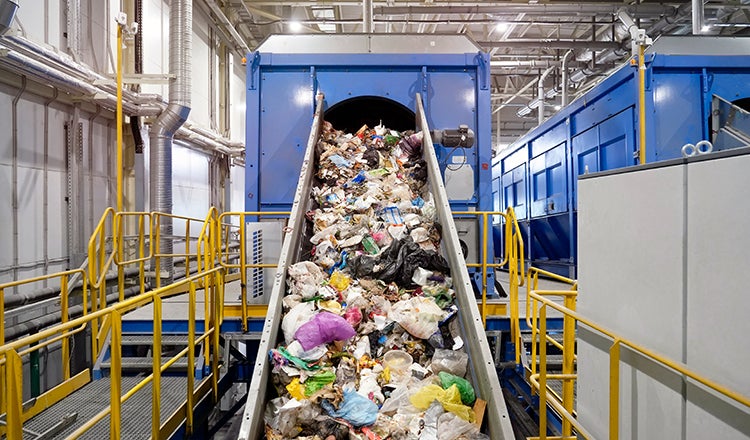
What is EPR, and how does it impact waste management?
Driven by the issue of plastic pollution, EPR is designed to create a more circular economy by shifting funding and, in rare cases, operational responsibility to producers, which can incentivize recyclable material design, increase access to services and develop end markets. The goal is to increase recycling rates and reduce the amount of recyclable material sent to landfills.
In practice, EPR typically means local governments and waste service providers may be reimbursed by producers for some or all of their recycling costs through a Producer Responsibility Organization (PRO), a nonprofit, third-party organization that manages the EPR program and funds.
More funding and incentives for recycling services like curbside pickup, drop-off locations, and material recovery facilities (MRFs) can have a dramatic impact on recycling rates. A needs assessment study we led in Maryland found that an EPR program in that state could increase the paper and packaging recycling rate from 34% to 50% or more. Another study we led in Colorado found EPR could more than double the state’s recycling rate for those same materials.
What we’ve seen in the first few states to pass EPR policy: Funding seems to flow toward upgrading what already exists. Rather than creating entirely new systems, stakeholders have looked to enhance current infrastructure, which would expand access, increase capacity and improve the quality of recyclable materials. In some cases, more aggressive recycling targets may require new facilities or additional investments.
Another important downstream effect of EPR is the packaging products themselves. As more states implement EPR — especially large and influential markets such as California, the largest economy in the U.S. and the world’s fourth-largest — producers are being forced to rethink materials and formats, moving toward options that are easier to recycle within existing systems, like paper-based products.
What are the steps toward implementing an EPR program?
Timelines and program structures vary by state, but most EPR programs follow a similar path.
- Policy development and bill passage: This can be one of the most complex steps. Drafting and passing legislation requires coordination across a wide range of stakeholders.
- Needs assessment: A needs assessment study establishes a baseline for current waste and recycling systems, like who has access to services, what infrastructure exists and where gaps remain. It also evaluates current costs and services and projected costs and services under an EPR program.
- Program plan: A PRO then develops an outline for how the system will function, including funding mechanisms, service delivery models, contracting structures and rollout timelines. The PRO introduces fees for producers based on the packaging they use, with easier-to-recycle materials costing less and harder-to-recycle materials costing more, funding the system.
- Implementation: Once programs and plans are set, eligible entities — such as municipalities, haulers and processors — can submit recycling costs for reimbursement through the PRO, which acts as an intermediary and collects fees from producers. These funds are intended to serve as an incentive for improved or new recycling services like curbside pickup programs, education and outreach, material processing or drop-off locations.
How does EPR impact local governments, waste service providers, producers and consumers?
Local Governments
For local governments, the impact of EPR can vary widely because of the range of involvement they may have in waste collection, education and processing. For example, some municipalities own and operate their own collection services and facilities. Others contract some or all of their services to private companies.
For that reason, municipalities must understand their own systems, documenting recycling-related costs across staff, equipment, education and operations to determine what may be eligible for reimbursement. This can be harder than it sounds, as many municipalities don’t track recycling costs cleanly.
Recycling has historically been difficult to sustain financially, often operating at a loss within broader waste systems. EPR can help offset those costs and open the door for service expansion. Communities that previously couldn’t justify the cost of recycling programs may now have an opportunity to introduce or grow those services.
Waste Service Providers
For haulers, MRF operators and other service providers, EPR creates a mix of opportunity and operational change.
On the collection side, there is an opportunity to expand services into areas that have historically lacked access to recycling. But this requires long-term planning. Procurement timelines for new facilities, trucks and carts can be lengthy, and education and outreach efforts take time to become effective.
For processing facilities, the focus shifts to capacity and capability. Many facilities will need to invest in upgrades, whether to handle higher volumes, process new material types or improve material quality to meet end-market expectations.
Similar to municipalities, waste service providers also need to untangle costs related to recycling to maximize reimbursement.
Producers
Producers are responsible for funding the recycling system that manages their packaging, including registering with a PRO, reporting packaging data and paying fees based on material types. Materials that are widely recyclable typically come with lower costs — a clear incentive to rethink packaging design. And because the resulting packaging is much more eco-friendly, producers can mark progress toward reaching any sustainability goals they have set.
Producers may also explore how their materials move through an MRF, which may help them understand how to alter their packaging design. In some cases, producers may pilot new collection methods for materials that don’t currently fit well within existing programs, like drop-off programs or curbside collection services for specific hard-to-recycle items.
Consumers
Expanded funding can also support improvements in education and outreach, helping residents better understand what can and cannot be recycled in their communities. It also supports greater equity in access to services, particularly in rural communities or multifamily housing where recycling services have historically been limited due to financial or demand constraints.
As education and outreach campaigns are consistently and increasingly rolled out statewide, behavior change is possible. Increased recycling for marketable materials could also improve end-market demand, benefiting the broader recycling ecosystem.
What is the current landscape of EPR in the U.S.?
EPR implementation in the U.S. is still in its early stages.
A few states, including Oregon and Colorado, are beginning to move programs forward into an implementation phase. Other states, like Washington, Minnesota, Illinois and Hawaii, are conducting or just finishing needs assessments, an early step in the process. Many states are still watching closely before advancing legislation, looking to early adopters to understand what’s working and what’s not.
But as larger states, like California, progress their EPR programs, we expect the ripple effects to extend well beyond state boundaries.
What are EPR-related trends to watch going forward?
While every state is different, a few key trends we’re watching are:
- Service expansion: As funding barriers are reduced, how will communities introduce or expand recycling programs?
- Infrastructure investment: Facilities may need to scale and upgrade to meet increased material volumes and new types of packaging.
- Packaging changes: Producers may shift toward material designs that align with recyclability requirements.
- State-by-state complexity: Program structures, eligibility, goals and timelines vary, requiring close attention at the local level.
- Reimbursement eligibility: With implementation underway in Colorado and Oregon, it’s important to monitor which services become reimbursable and how service providers may be incentivized to improve operations.
- Continued uncertainty: With limited implementation to date, many operational and financial details are still being worked out in real time. True program costs and effectiveness are still unknown.
For most organizations, the immediate priority is preparation: understanding potentially reimbursable recycling costs, identifying opportunities for expansion and staying on top of evolving state requirements.
Organizations that take the time now to understand their role and position themselves to take advantage of EPR programs will be better equipped as the landscape continues to change.


