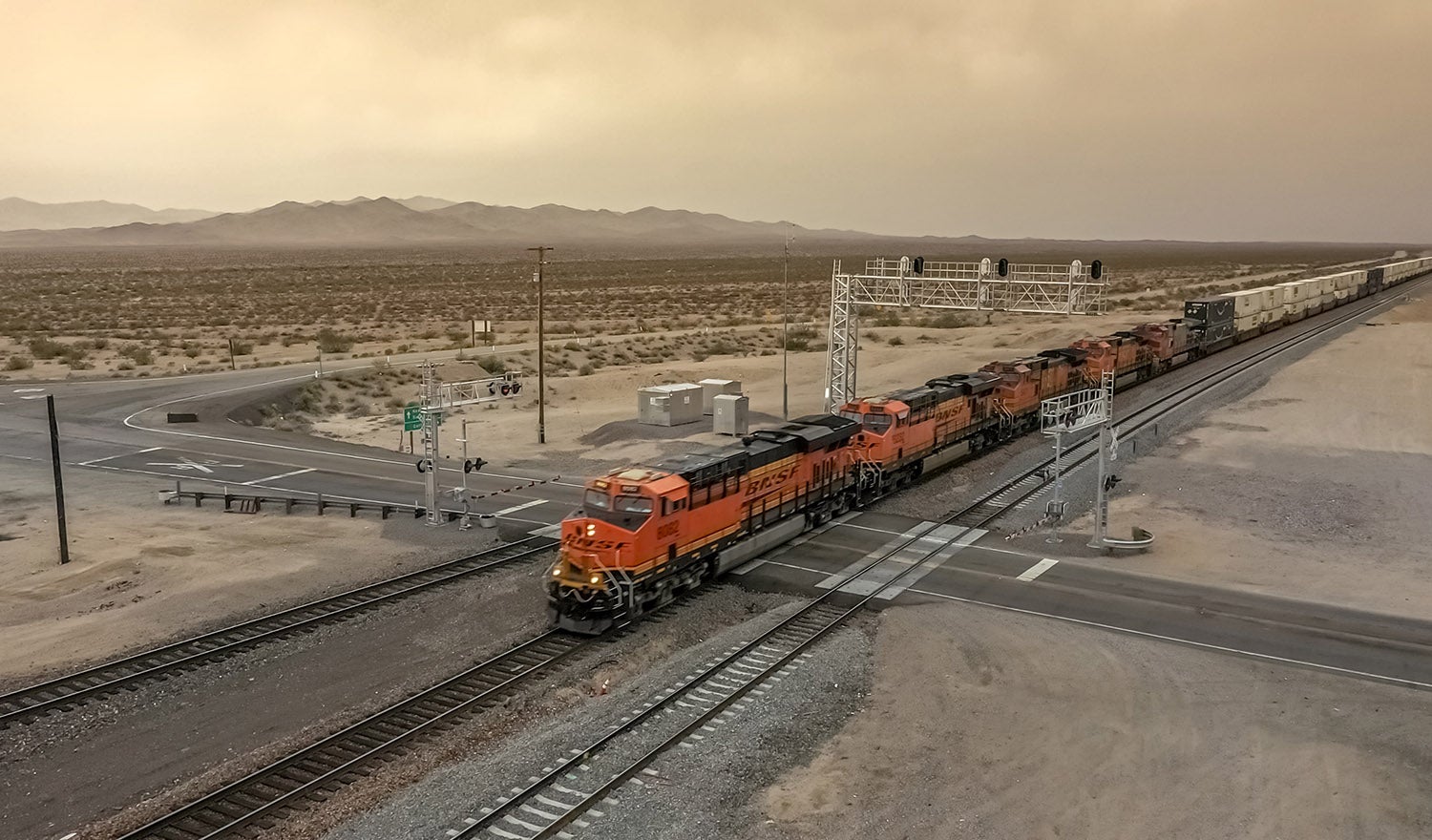
BNSF Needles Third Main Track Expansion

BNSF Needles Third Main Track Expansion
Designing and Managing Construction of Mega-Project in Southern California
- 50 miles of new triple track to increase capacity and improve freight mobility
- 53,000 feet of driven steel pile foundations to protect against flooding and scour
- 80-plus bridges and bridge widenings supporting safer, more reliable rail operations
- $8.5 million saved through geotechnical refinements of track bed
Nearly 50 miles of new third main track along BNSF’s Southern Transcon corridor through inland California will better connect Chicago to the California coast, supporting more efficient intermodal and freight movement in one of the busiest freight corridors in the United States, connecting the rest of the country with one of the largest trading seaports in the world.
As the design lead and project manager, HDR has supported BNSF with delivering its largest capital expansion project for freight line goods movement. Segments 1 and 2 between West Needles and Goffs added 30 miles of third main track and entered service in November 2023. Our support continues on Segments 3 and 4 between Bagdad and Ash Hill, where another 20 miles of third main track is under construction. Throughout the program, our work has included track alignment and embankment design, hydraulic analysis, geotechnical engineering, constructability reviews and construction support.
Improving Capacity in the Mojave Desert
Throughout the corridor, train lengths and freight loads have increased, requiring more power to navigate the grade which has created operational bottlenecks. Our team evaluated multiple options to identify an optimized track alignment that would increase capacity heading west of Needles.
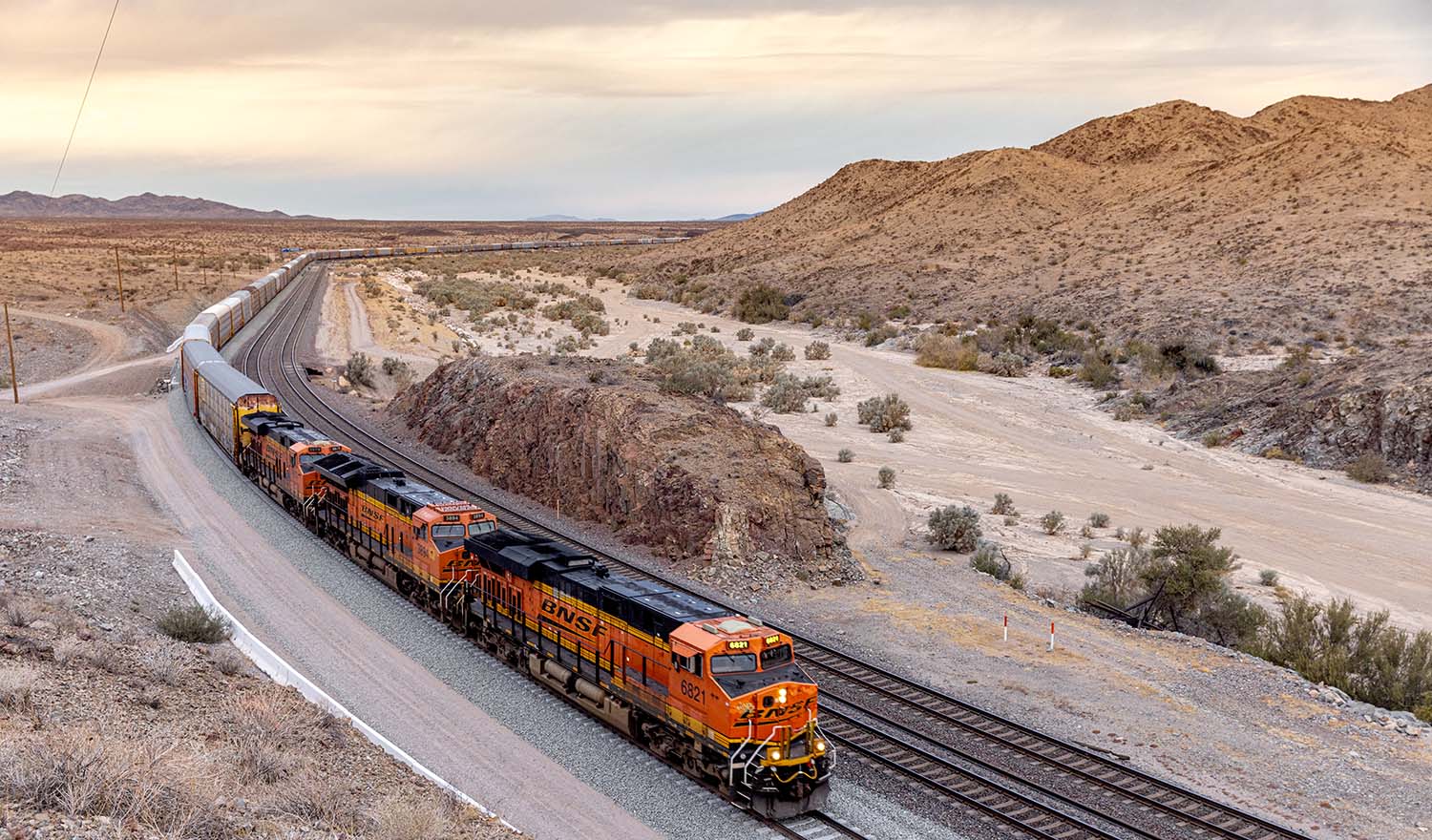
We developed the main track alignment, profile and embankment design for the third main track which included several new universal crossovers, control points, sidings and setouts that boost operational flexibility while also providing access for future maintenance, train mechanical setouts and construction.
The corridor experiences extreme temperatures, harsh terrain and high stormwater events. Our hydrologic and hydraulic analyses supported BNSF’s structural design of 50 railroad bridges in segments 1 and 2. We also supported the structural design of about 40 additional railroad bridges and bridge widenings in segments 3 and 4, along with numerous culvert extensions and drainage improvements. These evaluations informed bridge foundation recommendations and riprap protection measures intended to reduce scour and protect critical infrastructure from flood damage.
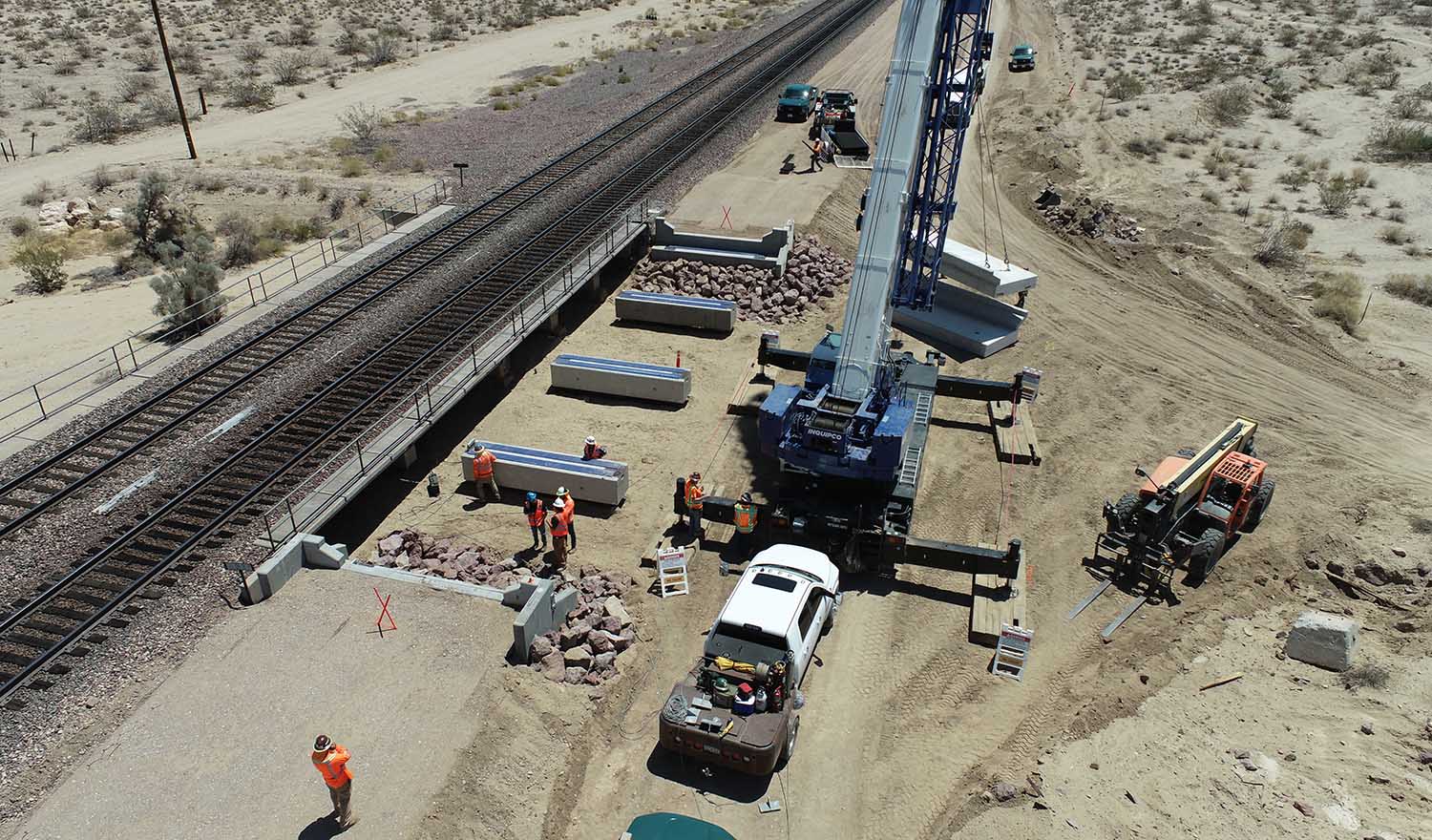
Understanding various subsurface conditions was critical to developing resilient bridge foundations. Extensive geotechnical investigations and analyses recommended more than 53,000 linear feet of driven steel pile foundations and nearly 2,000 linear feet of socket pile installations to expedite construction and reduce costs compared to mass concrete pours. This method also protects against anticipated scour due to the alluvial fan nature of the Mojave Desert.
Delivering Value
During design and construction, the project team sought ways to integrate sustainable and cost-effective elements into the project. Site-specific geotechnical data indicated that the standard 12-inch subballast section could be reduced to 8 inches without exceeding the subgrade's allowable bearing pressure. The refinement reduced the amount of subballast material by more than 80,000 cubic yards, eliminated thousands of truck trips required to haul construction materials and saved BNSF more than $8.5 million in construction costs.
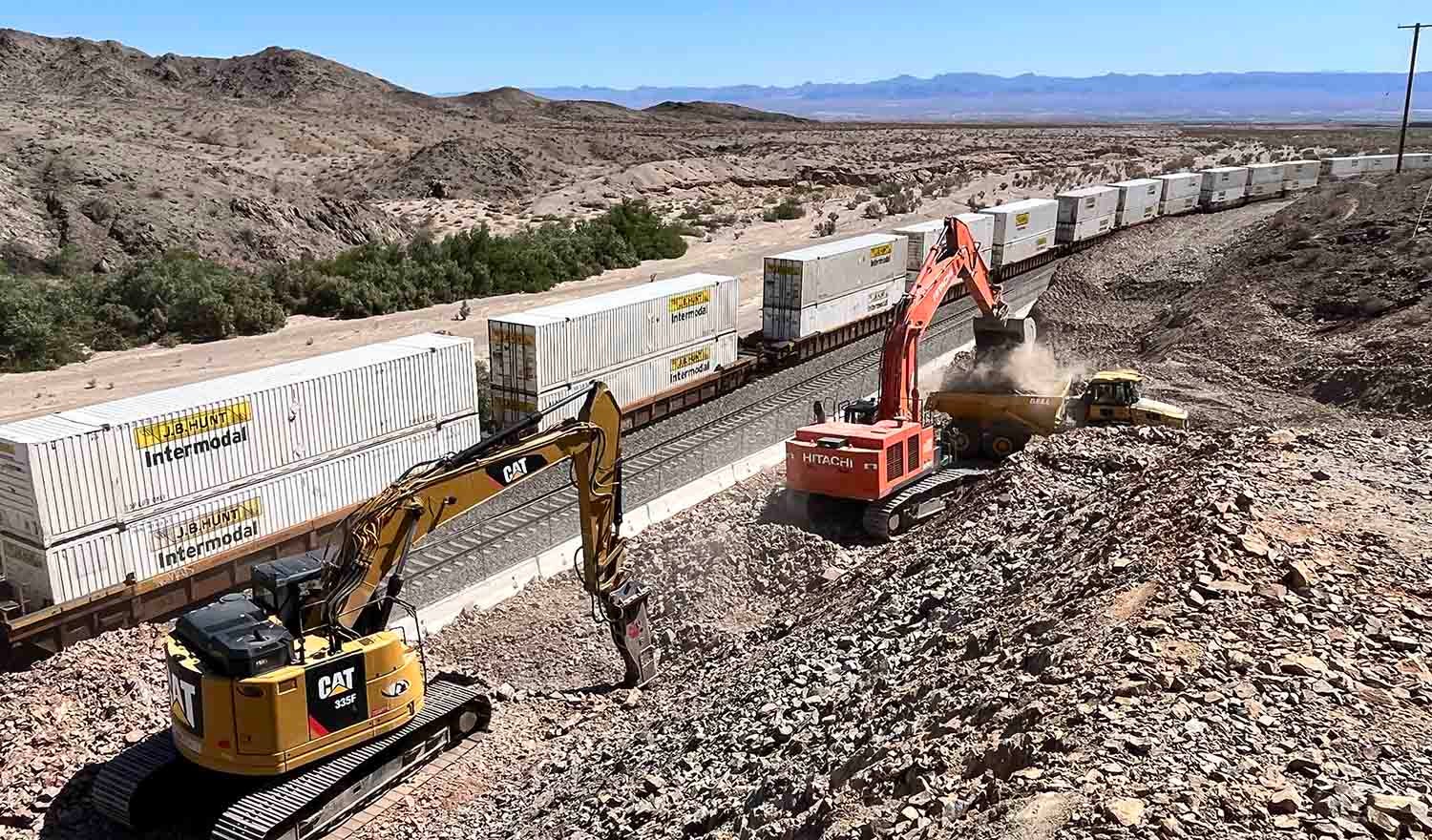
Additional geotechnical exploration and analysis improved understanding of rock conditions in areas initially expected to require blasting through hardened granite formations. This method helped reduce uncertainty and allowed for more traditional excavation methods that saved construction time and costs. It also avoided rail operational outages that would’ve been required for rock blasting.
Benefits are already apparent, with BNSF reporting increased corridor capacity in Segments 1 and 2, allowing five additional trains per day to move through the route.
Reducing Risk
During each phase through final design, we provided constructability reviews and cost evaluations as the owner’s representative, allowing BNSF greater visibility into capital costs, helping manage construction risks and contributed to tighter control of the project budget.
The project team also coordinated work around desert tortoise habitat, nesting bird habitat and other environmentally sensitive areas while limiting impacts to surrounding lands and active railroad operations. Our biologists provided environmental compliance monitoring and support for protected native wildlife and plants, including endangered and threatened desert tortoise relocations.
To maintain railroad operations during construction, Segments 1 and 2 were divided into and delivered in 10-mile in-service sections. This approach allowed portions of the new triple-track to begin operations nearly a year before the overall project was completed to increase freight mobility and ease congestion.
With Segments 1 and 2 in service since November 2023, our support continues on Segments 3 and 4 with construction of more than 20 miles of third main track and signal work.