
North Carolina Global TransPark

North Carolina Global TransPark
Program Management and Design for Innovative Off-Base Military C-130 Maintenance, Repair and Overhaul Facility
- Program manager and designer of record for the 700,000-square-foot MRO campus
- Assessed existing C-130 maintenance facilities to inform design operational workflow
- Planning, budgeting, procurement and design coordination from project inception through construction
- 100-plus HDR professionals supporting evolving project needs
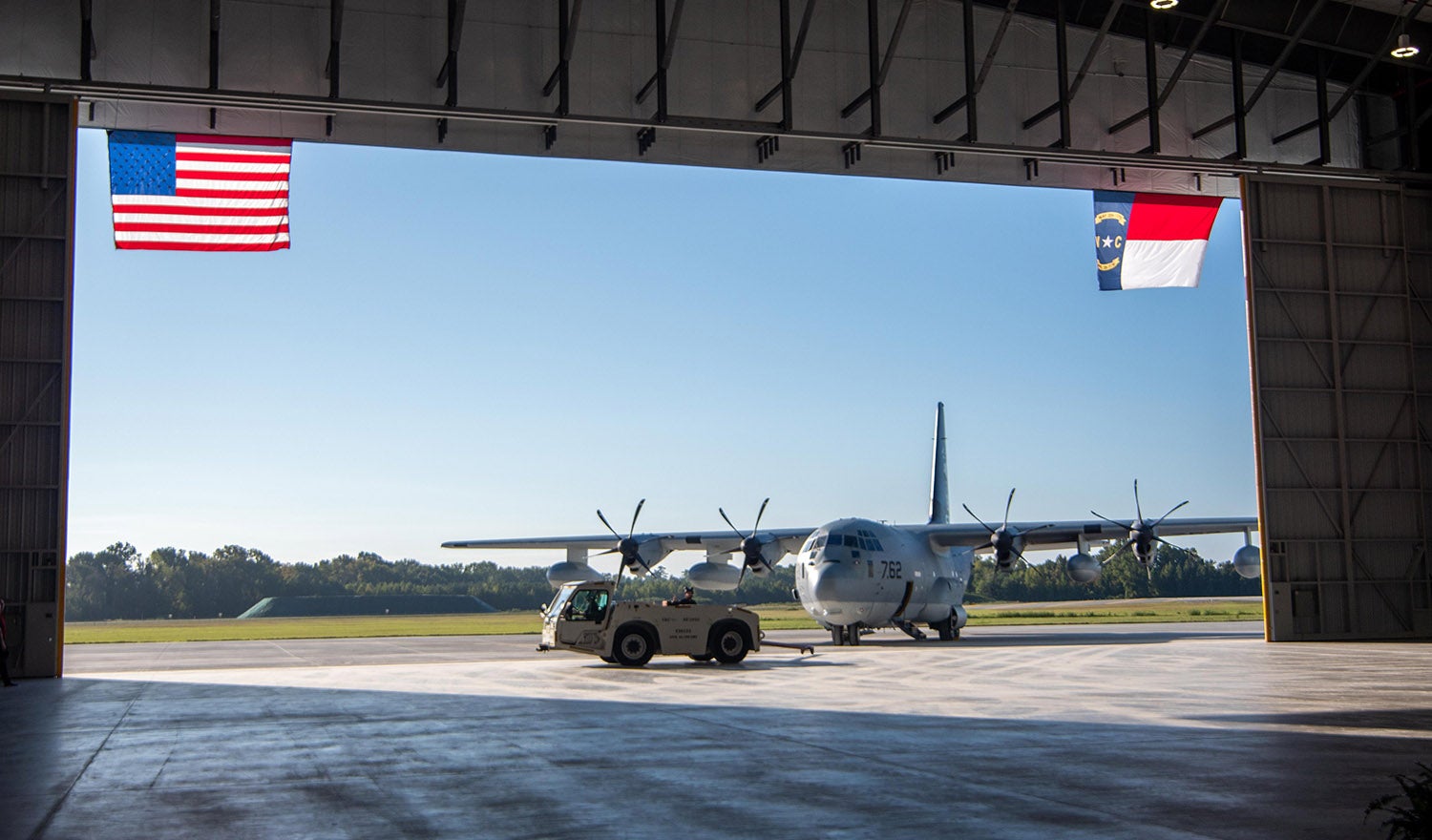
To meet maintenance demand for the United States military’s longest continuously produced aircraft, the C-130, U.S. Navy and North Carolina Global TransPark are developing a first-of-its-kind maintenance, repair and overhaul campus outside a military installation. Located in Kinston, North Carolina, the facility will serve as an extension of Fleet Readiness Center East, a naval aviation maintenance and repair depot located at Marine Corps Air Station Cherry Point.
The Global TransPark selected HDR to serve as program manager and designer of record for the approximately $350 million development on 75 acres. From the beginning, our team worked alongside Global TransPark staff to define the program, establish a budget, support procurement of the construction manager at-risk (CMAR) and advance design on an accelerated schedule driven by the U.S. Navy’s fixed September 2026 operational deadline.
Understanding Operational Requirements
Before design could begin, the project team needed to understand how C-130 aircraft move through depot-level maintenance, from inspection and disassembly to repair, testing and return to service. Our staff toured existing maintenance facilities in Utah, Georgia and the United Kingdom to study overhaul operations and the infrastructure needed to support them. That research informed our design of a campus that supports every stage of maintenance, including aircraft arrival, defueling, overhaul, painting, testing and return to service.
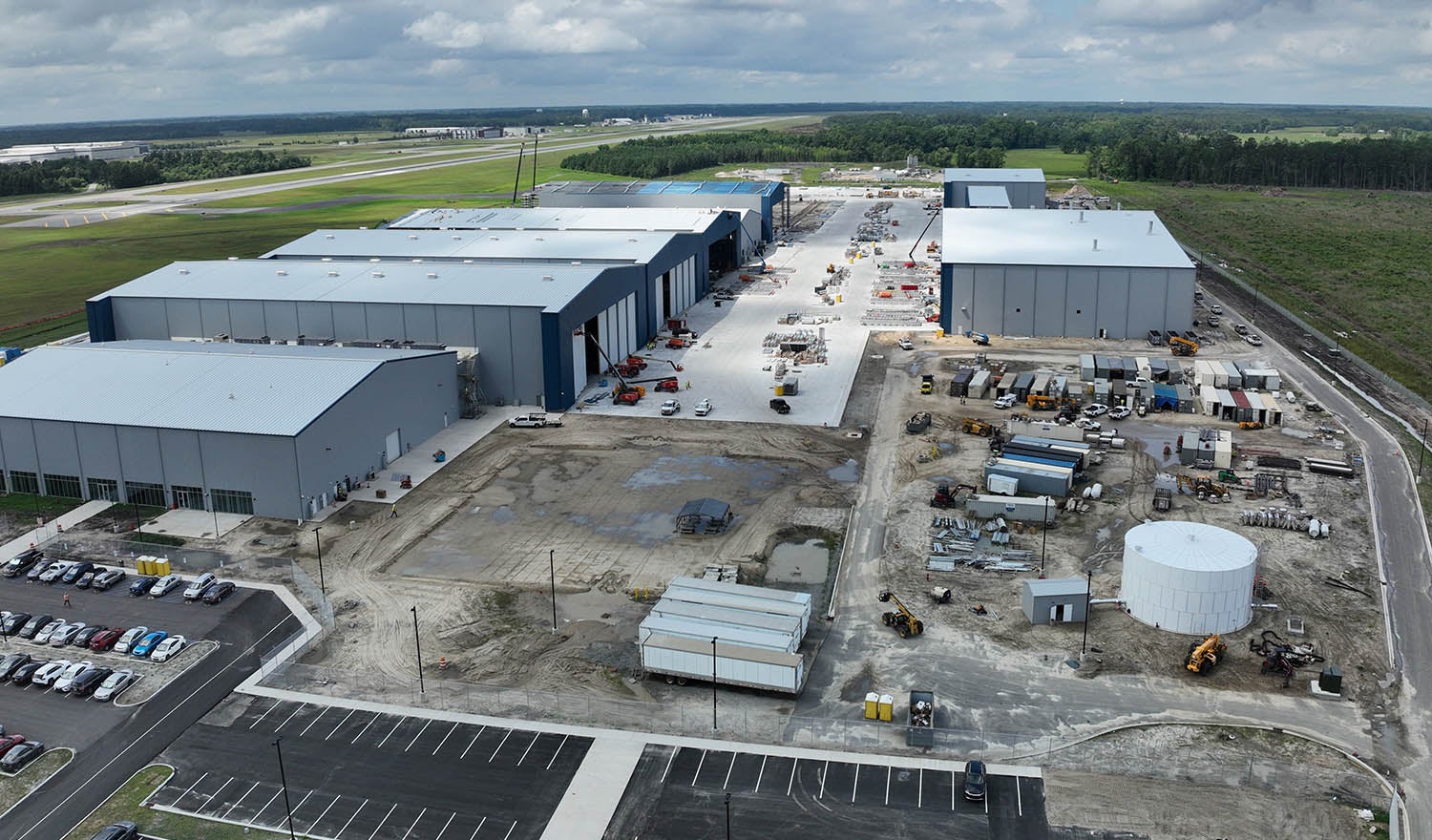
We led extensive design charrette that brought together stakeholders from the Global TransPark, Fleet Readiness Center East and the CMAR team to refine facility requirements and operational needs. The resulting project includes:
- 12-bay maintenance hangar
- More than 100,000 square feet of back-shop space
- Two paint facilities
- Flight test hangar
- Defueling facility and a parts warehouse
Our environmental and planning professionals also conducted a focused environmental assessment evaluating the impact of aircraft noise on nearby properties.
Adapting to Change
The project evolved throughout design and construction. As the U.S. Navy refined maintenance requirements for the facility, the team incorporated additional power capacity, compressed air connections, utility infrastructure and fire protection systems that were not fully defined at the outset of the project. We also updated portions of the facility design to support Apache helicopter maintenance, adapting the facility as operational needs continued to develop.
Meeting those challenges required input from more than 100 HDR professionals, bringing expertise in aviation planning, engineering, environmental services, cybersecurity, industrial waste treatment and program management. The team's ability to quickly address evolving requirements helped the project keep momentum despite the scale and complexity of the work.
The compressed schedule added another layer of complexity. To support the firm September 2026 arrival of the first C-130 aircraft, we worked closely with the Global TransPark and CMAR team to keep planning, design and construction aligned despite evolving requirements and a compressed schedule. Our team completed final design in December 2024 and has continued supporting project delivery as construction progresses.
Looking Ahead
The arrival of the first C-130 in September 2026 marked a major step toward full operations but work on the campus continues. Our team continues to support the owner as program manager and designer of record as construction advances and additional opportunities for expansion are evaluated. This initial phase is expected to be completed in summer 2027.
In addition to serving as a key MRO facility for the U.S. Navy, it serves as a blueprint for how state agencies and military partners can work together to deliver critical infrastructure through a unique partnership.


