
South Kihei Road Emergency Repair Project

South Kihei Road Emergency Repair Project
Restoring a Critical Maui Roadway Ahead of Schedule While Protecting the Shoreline Against Future Storm Damage
- Reopened South Kihei Road after severe flooding resulting from Hawaii’s March 2026 Kona Low storms
- Developed a shoreline stabilization system to protect against future storm damage and improve resiliency
- Helped Maui County effect timely repairs through accelerated design, construction support and FHWA funding coordination
- Less than a month after reopening, the improvements were tested by Hurricane Lowell and remained intact
South Kihei Road is one of only two primary north-south routes serving Kihei. When severe tropical storms, known as Kona Lows, struck the island in March 2026, floodwaters flowing down the slopes of the island's massive volcano, Haleakalā, overtopped the roadway. The resulting washout destroyed the road's supporting embankment and created an approximately 80-by-60-foot sinkhole that reached depths of 12 feet, forcing closure of roughly 150 feet of one of South Maui's most important transportation corridors.
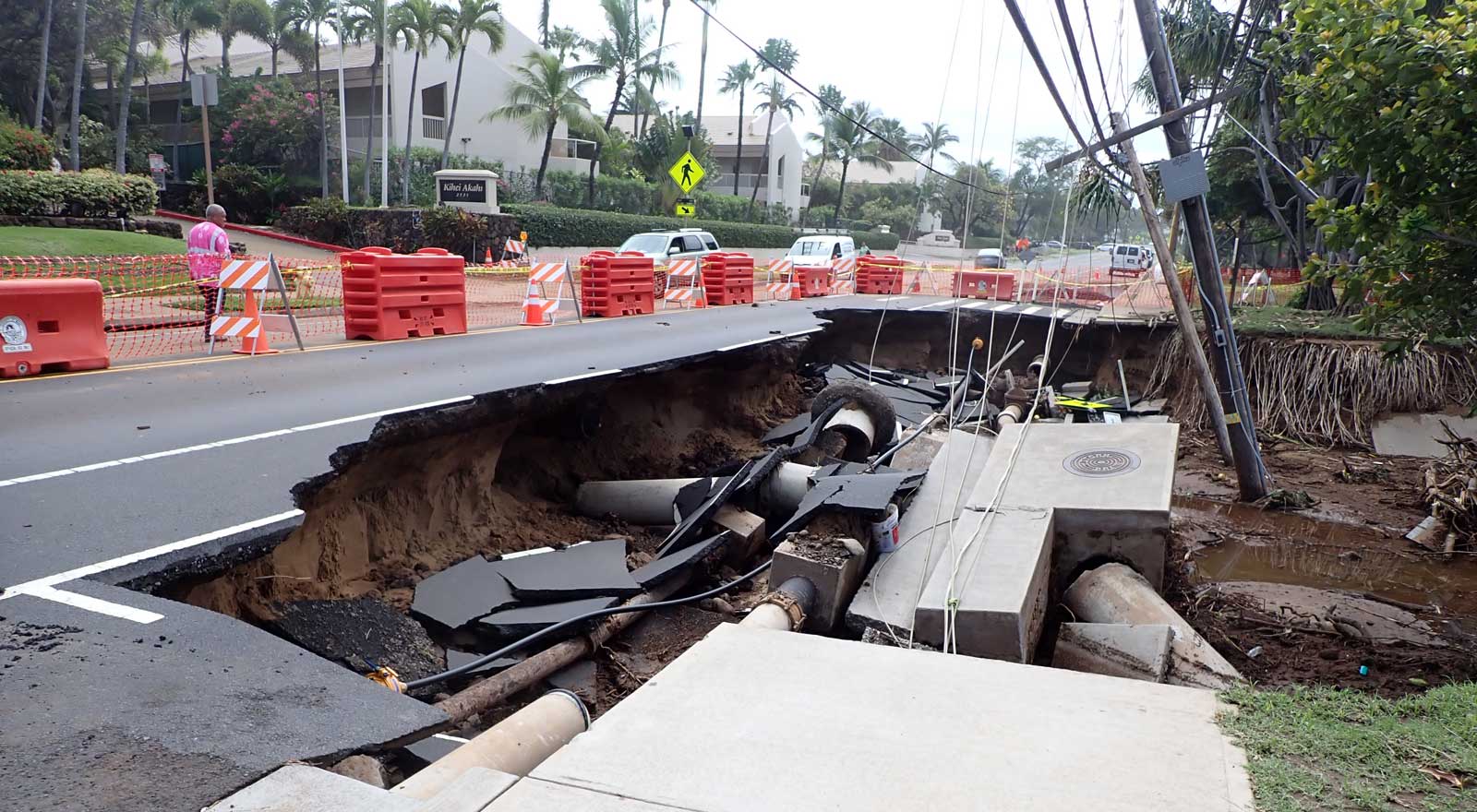
The Maui County Department of Public Works partnered with HDR to develop a solution that not only reopened this critical roadway quickly but also addressed the ongoing flooding, shoreline erosion and coastal hazards that caused the washout. What initially appeared to be a straightforward repair ultimately required a more complex redesign focused on long-term stability and resilience.
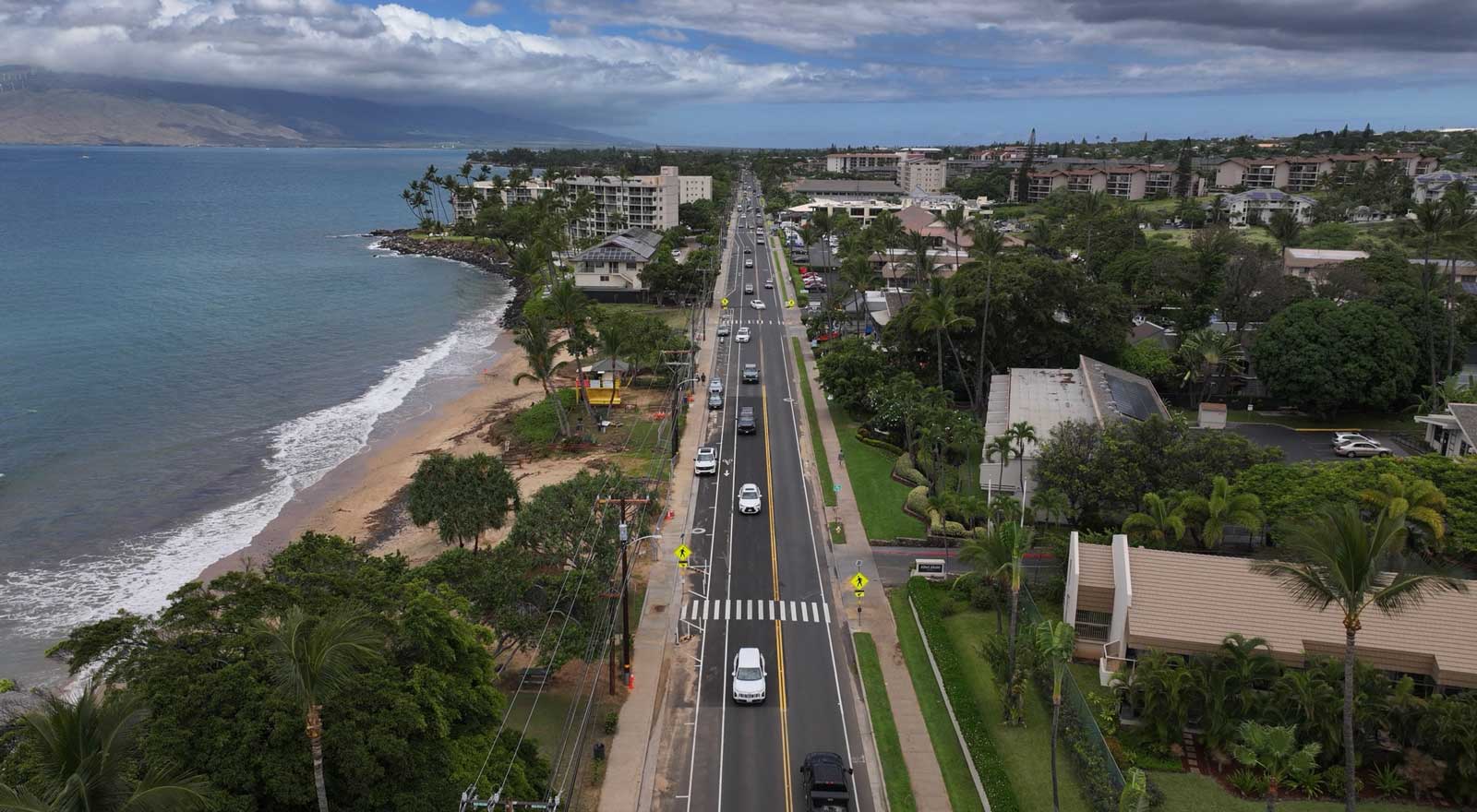
The roadway reopened on August 11, 2026, weeks ahead of schedule. The completed improvements were soon put to the test, withstanding high surf and storm surge associated with a hurricane just weeks after construction was completed.
Addressing the Underlying Vulnerability
Today, visitors see only a restored roadway. Beneath the surface, however, is a structured, multicomponent system designed to prevent future washouts and roadway collapse.
Our design incorporated 90 Kyowa rock-filled bags, 15 marine mattresses and 80 cubic yards of riprap beneath a restored layer of sand and landscaping. The project also included 635 cubic yards of controlled low-strength material backfill to rebuild and stabilize the roadway foundation.
The system was designed to protect the roadway's underlying support structure while avoiding many of the visual and environmental impacts associated with traditional shoreline armoring. The approach can also reduce the extent of future repairs. When another storm removes portions of the surface sand layer, those materials can be restored far more easily than rebuilding an entire roadway.
Accelerated Delivery for a Community in Need
The closure quickly became one of Maui's most visible infrastructure issues. Local news outlets covered the repair regularly, and residents documented progress through photos, videos and social media updates. Public sentiment evolved throughout construction. Early comments often reflected frustration over the closure, but as work advanced and the stabilization measures became visible, many community members began expressing appreciation for the effort to create a more durable solution.
The accelerated schedule depended on more than construction progress. Maui County also pursued emergency Federal Highway Administration (FHWA) funding to help cover repair costs. We supported the effort by helping the county navigate federal documentation and administrative requirements.
Through close collaboration among the county, the construction firm, P.B. Sullivan Construction, Inc. and HDR, the $1.14 million project reopened ahead of schedule, restoring a critical transportation link just months after the March storm.
Hurricane Lowell: An Early Test of Resilience
Less than a month after the project was completed, high surf and storm surge from Hurricane Lowell washed across the roadway in the same area that had recently been repaired. The Sept. 8, 2026, event approached the site from the opposite side of the March flooding, providing an unexpected test of the newly installed improvements.
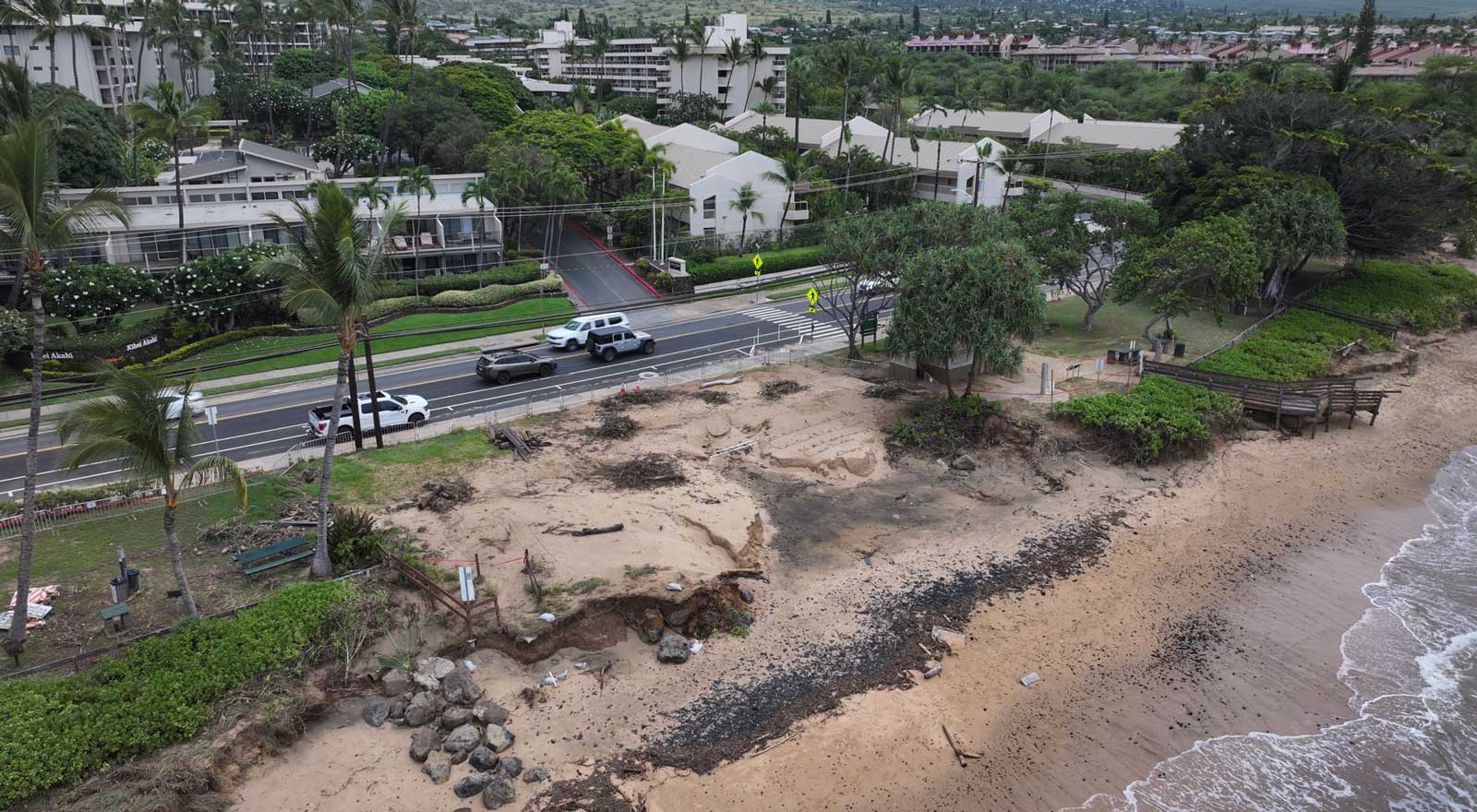
Throughout the storm, the stabilization measures remained intact, despite significant erosion of the adjacent beach, and the roadway performed as intended. For the project team, it was encouraging early evidence that the road’s resiliency improvements were working as anticipated and a demonstration that coastal infrastructure can be strengthened without sacrificing character.


