
Inside the Design of Complex Pipeline Crossings
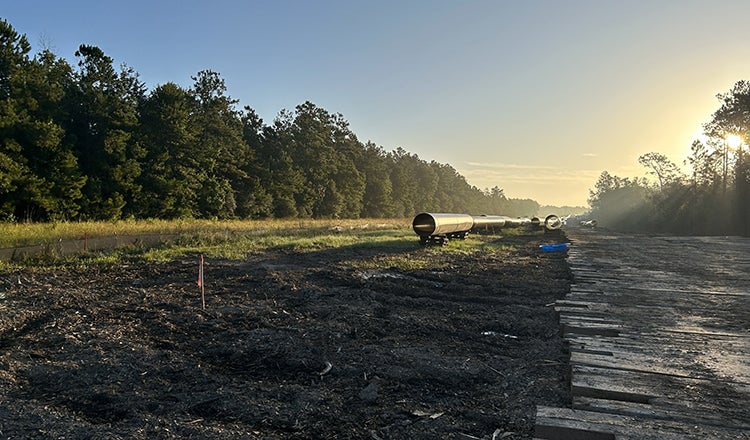
The Port Arthur Pipeline Louisiana Connector (PAPLC) project spans 72 miles of 42-inch-diameter pipeline across Louisiana and Texas, requiring 18 crossings — totaling more than 57,000 feet — through marshland, rivers and highways. HDR supported Sempra Infrastructure as the lead consultant for trenchless design, geotechnical engineering and construction, adapting each crossing to site-specific and environmental constraints.
In the design of complex pipeline crossings article in Underground Infrastructure Magazine, HDR’s David Paul Bearden Jr. and Reilly Schoo outlined how the team overcame these challenges to help complete the 72-mile pipeline.
Central to success was an extensive geotechnical investigation — 72 bores totaling more than 10,000 feet — that informed designs to mitigate risks and secure compliance with Federal Energy Regulatory Commission (FERC) guidelines. The investigations also reduced wetland impacts by more than 10 acres.
“The team’s strong geotechnical investigation and thoroughly considered trenchless design program prepared the construction team for site and subsurface conditions, minimizing construction and installation challenges,” the article reads.
Trenchless construction finished ahead of schedule despite weather and marine conditions. PAPLC will supply natural gas to the next-generation Port Arthur liquefied natural gas facility on the Gulf of Texas, which is expected to create jobs, boost the economy and expand access to U.S. natural gas for global markets.
“The project’s trenchless crossings exceeded all success indicators by finishing ahead of schedule and staying under budget while setting new benchmarks for responsible infrastructure development,” the article reads.


