
Metro Port Land Reclamation & Redevelopment

Metro Port Land Reclamation & Redevelopment
Photos courtesy of Port Tampa Bay.
Creating New Land to Expand Capacity at One of Florida’s Busiest Cruise Ports
- Planning, design and development support to reclaim 5.6 acres of land for expansion
- Environmental support to navigate permitting and regulatory requirements
- Multidisciplinary coordination to maintain schedule, manage risk and reinforce long-term performance
Port Tampa Bay is experiencing rapid growth, welcoming 1.6 million cruise passengers between October 2024 and October 2025. With three existing terminals near capacity and limited room for expansion, the port is advancing a plan to transform a defunct marine slip into usable land for a new cruise terminal. The effort will support a fourth cruise terminal and future commercial development while strengthening the port’s ability to maintain operations and accommodate growing passenger counts.
HDR serves as program manager and engineer of record for the land reclamation. Our team supported Port Tampa Bay with preliminary engineering, environmental permitting and final design of the reclamation and now is advancing the 30% design of a 1,100-linear-foot bulkhead.
Preparation and Ongoing Coordination
The project is focused on reclaiming the 5.6-acre slip and stabilizing the site to support another cruise terminal and supporting facilities. Our design includes placing 320,000 cubic yards of select fill material behind a berm at the mouth of the slip to displace existing water and create usable land.
We oversaw subsurface investigations to evaluate settlement and ground conditions. Based on these findings, the team developed a ground improvement strategy that uses surcharge loading, allowing for safe and efficient future construction.
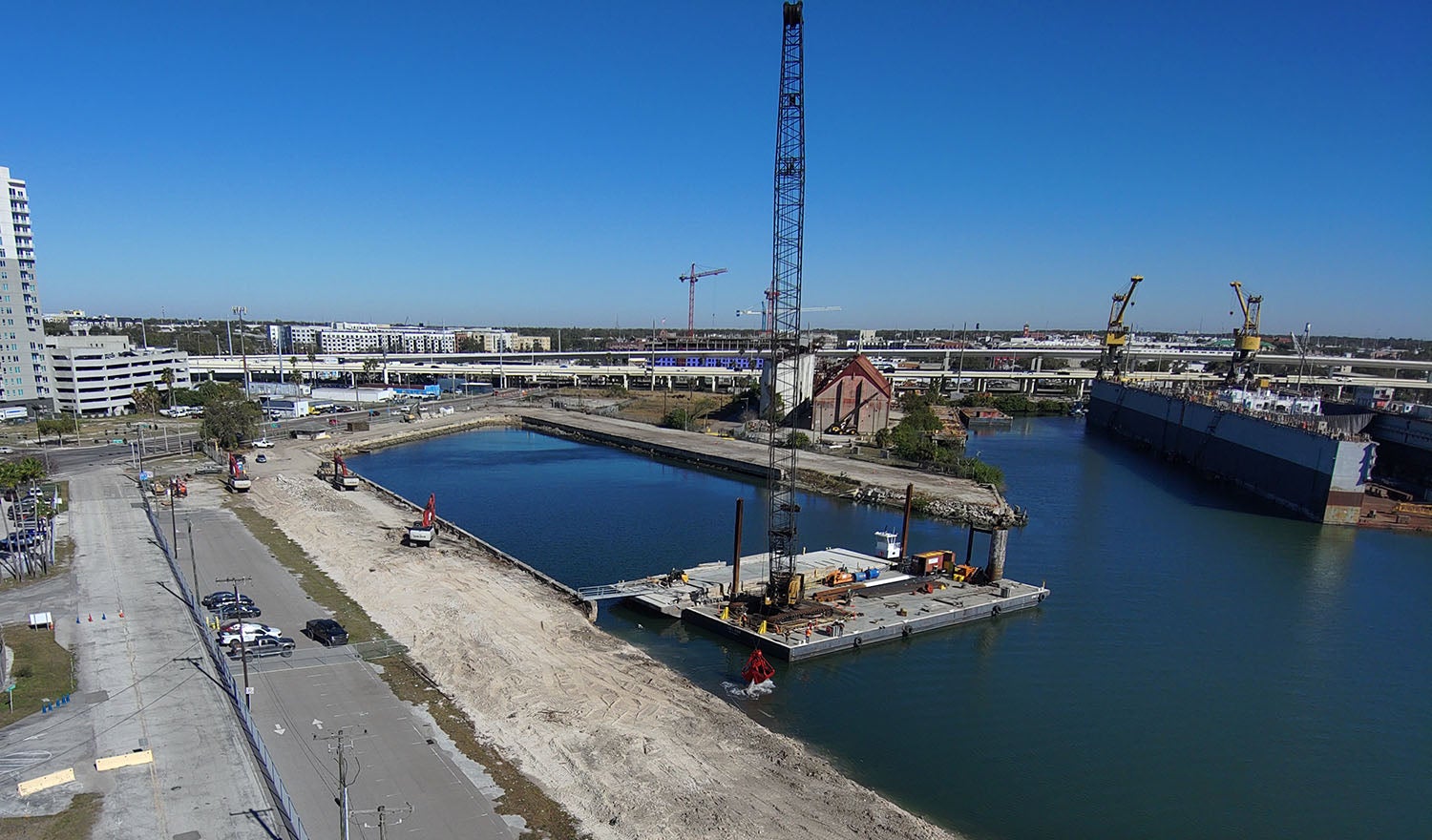
Once filled in late 2026, the site will undergo a settlement period expected to extend into 2027. During this time, our team will continue bulkhead design while also supporting Port Tampa Bay with reviewing contractor submittals, responding to RFIs, facilitating coordination across project partners, and aligning design and construction sequencing.
The project’s waterfront location and environmental sensitivity require extensive coordination with regulatory agencies and stakeholders. To support the port in avoiding delays that affect operations or future development, we have worked alongside the Army Corps of Engineers, City of Tampa, Florida Department of Environmental Protection and the Florida Department of Transportation to advance permitting and maintain the project schedule.
Engineering Around Constraints
Existing infrastructure and operational demands played a significant role in shaping design decisions, particularly for the bulkhead and stormwater systems.
One key challenge involves managing existing stormwater flows from portions of downtown Tampa that discharge near the project site. Routing the water through the proposed bulkhead structure could have required significant costly structures. In collaboration with the port, we created an alternative temporary solution followed by a permanent solution that routes stormwater through a large box culvert integrated with cantilevered retaining structure at the north end of the slip. This approach reduces structural demands on the bulkhead, simplifies construction sequencing and relocates discharge away from docked vessels.
Supporting A Modern Terminal
The reclaimed land will support the development of Terminal 5, the port’s first new cruise terminal since 2002. The planned facility footprint will include approximately 110,000 square feet of waterfront infrastructure to support passenger processing, parking, provisioning and landside circulation.
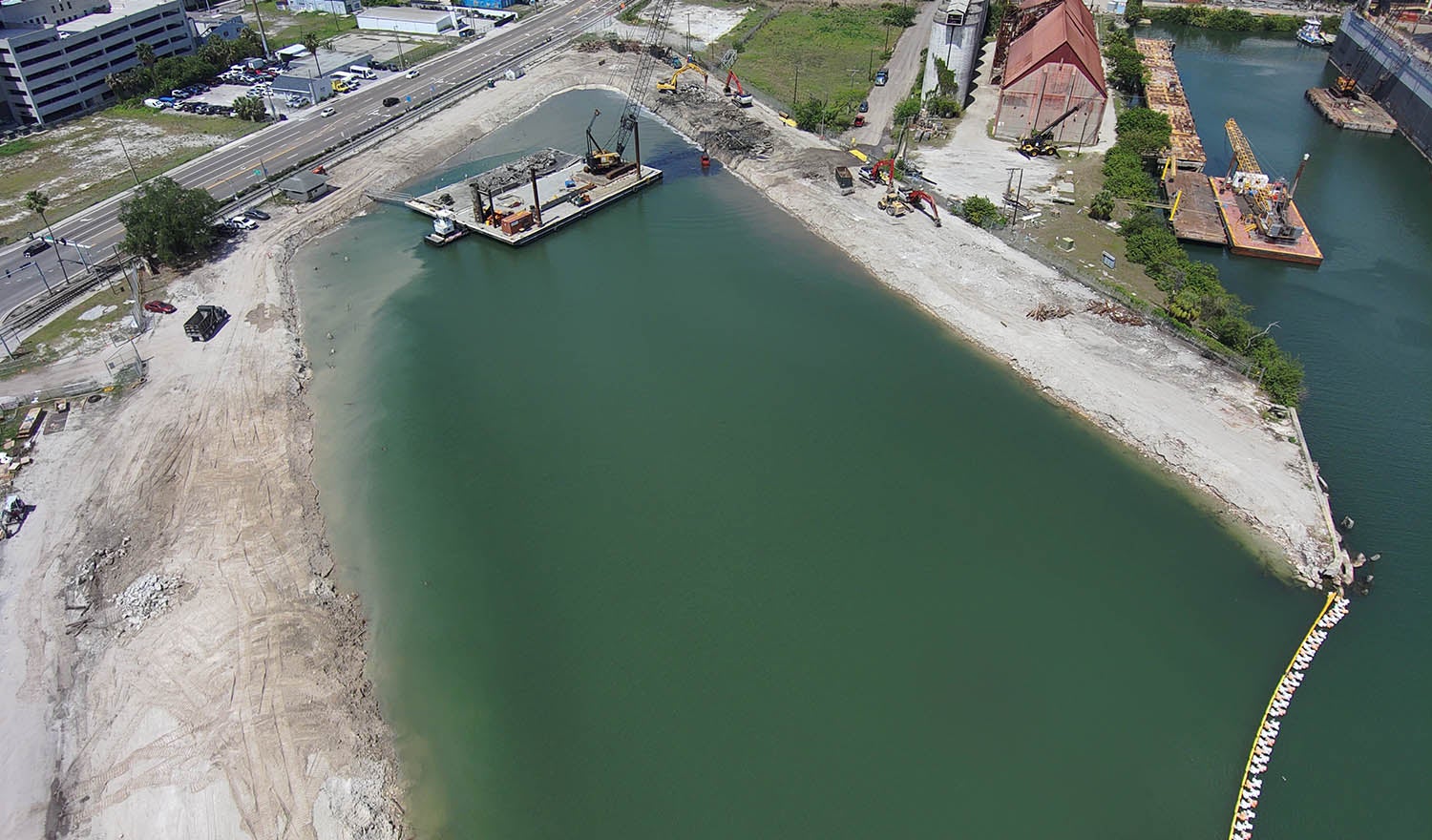
Design and construction will advance on the slip following completed land reclamation and ground settlement.
This staged approach allows Port Tampa Bay to align investment with operational needs and funding strategies while maintaining flexibility as demand grows.


